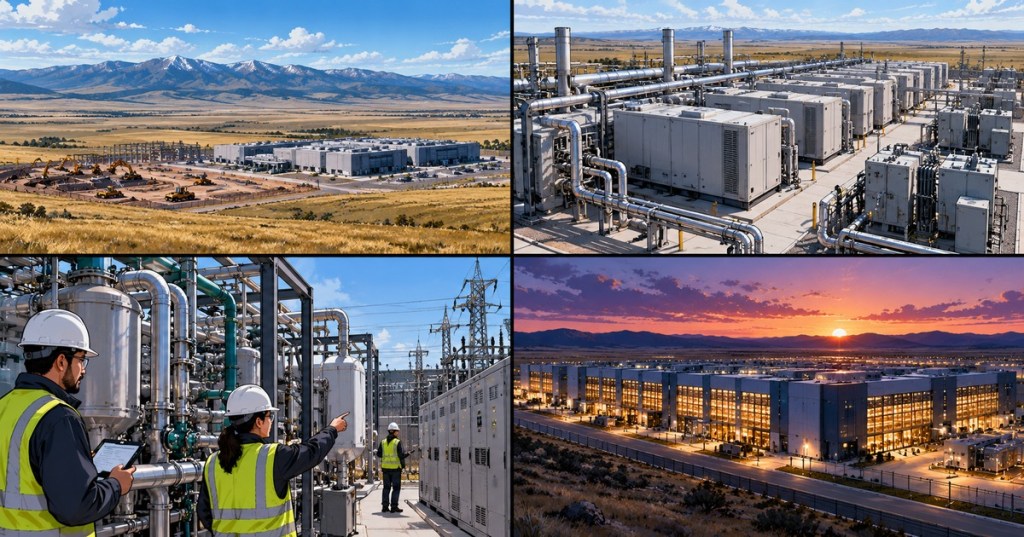
American Electric Power plans to invest about $4 billion in a 702-megawatt fuel-cell generation project near Cheyenne, Wyoming, under a 20-year power purchase agreement with Google. AEP announced the project on October 14, saying construction is expected to begin in 2026 and the facility should be fully operational by the end of 2028.
The project will use Bloom Energy solid-oxide fuel cells. AEP says the system will generate electricity from natural gas without combustion and that the project includes plans to add carbon-capture technology. That is different from saying the plant will have zero emissions: AEP describes the planned configuration as near-zero-emissions power once carbon capture is integrated.
Investor and industry discussion of the newly confirmed 702 MW Wyoming fuel-cell project.
Why 702 MW matters
A 702 MW plant is large enough to supply a major data-center campus continuously rather than acting only as emergency backup. The project company, Cheyenne Fuel Cell LLC, will be about 92% owned and controlled by AEP, with the remaining stake held by funds advised by Basalt Infrastructure Partners.
Bloom Energy’s data-center sales leadership explains how fuel cells are being used as primary on-site power, including the company’s work with AEP.
Reuters reports that AEP previously secured options for up to 900 MW of Bloom fuel cells. The newly announced Cheyenne project confirms 702 MW of that broader relationship for a specific site and customer.
Data centers are moving power closer to the load
The project fits the broader shift toward behind-the-meter and on-site generation as data centers face long interconnection queues and transmission constraints. BitcoinVersus.Tech has also covered 450 MW of on-site gas generation for data centers and the broader question of whether a data center can run entirely off-grid.
The confirmed development is a financed, utility-backed 702 MW fuel-cell project with a 20-year buyer. The remaining questions are execution: construction, fuel supply, carbon-capture integration, operating cost and whether the project reaches its end-of-2028 full-operation target.
BitcoinVersus.Tech Editor’s Note:
We volunteer daily to ensure the credibility of the information on this platform is Verifiably True. If you would like to support to help further secure the integrity of our research initiatives, please donate using the QR code provided

For best QR-code scanning results, please scan this donation code from a desktop or larger screen. Mobile screens may prevent camera recognition.


Leave a Reply