
Google has acquired Crusoe’s southeast Wyoming data-center development site, transferring control of an unfinished AI infrastructure project ahead of an estimated multiyear buildout. Crusoe confirmed the transaction November 6, 2026, one day after Google announced a $17 billion investment in its first Wyoming data center. The companies disclosed no acquisition price. The $17 billion is Google’s planned project investment, not the purchase price paid to Crusoe.
The transaction ends Crusoe’s role in early project development, including site selection, governmental approvals and the power strategy. Crusoe and Tallgrass Energy originally advanced the campus together. Actual construction, equipment installation and commissioned computing capacity are separate milestones; the announcement establishes ownership of the site, not an operating data center.

An AI project changes hands before power-up
Large AI data centers depend on more than servers. Operators must coordinate land-use permissions, high-voltage infrastructure, backup systems, network connectivity and cooling before advanced GPUs can deliver usable computing capacity. Handing the development site to Google moves responsibility for a major piece of the deployment directly to a hyperscale operator.
Earlier BitcoinVersus.Tech research on Wyoming’s largest proposed data centers tracked the project’s evolution from Crusoe and Tallgrass plans to Google’s proposal. Prior gigawatt-scale concepts should not be treated as commissioned capacity or as a final specification for the newly acquired site. Crusoe said it has more than 6 gigawatts contracted across its wider business and a pipeline exceeding 40 gigawatts; neither figure describes electricity currently available at the Wyoming campus.
702 MW of fuel cells is still a plan
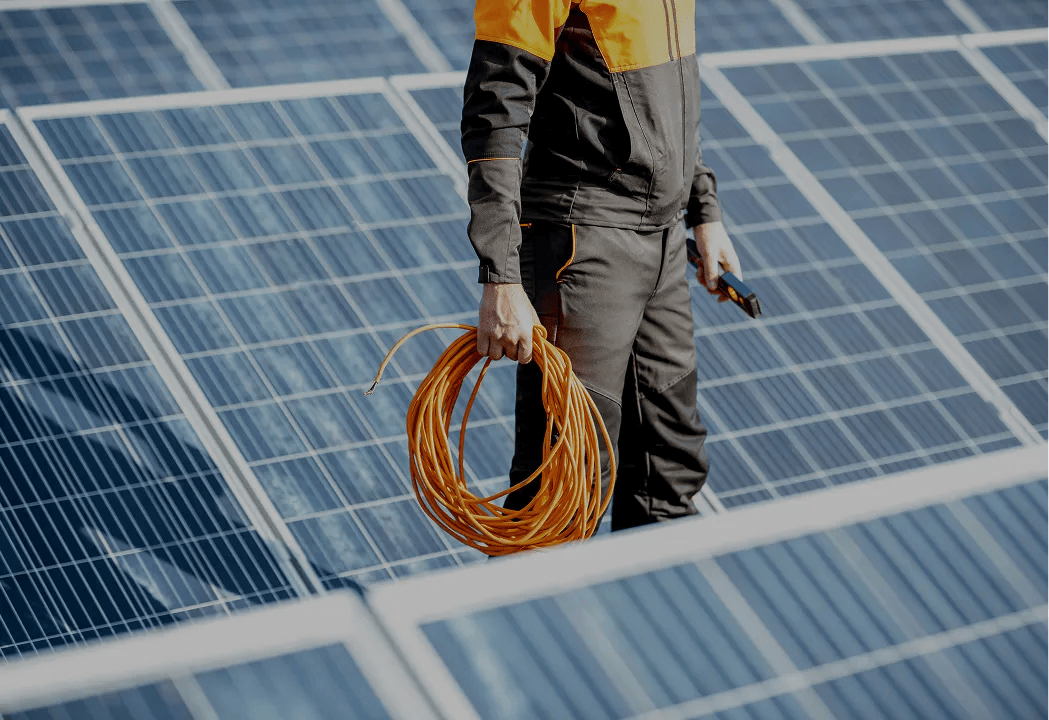
Google says the Wyoming project will use a planned 702-megawatt natural-gas fuel-cell development contracted through American Electric Power, with Bloom Energy manufacturing the units. Fuel cells convert chemical energy to electricity electrochemically; megawatts measure generating power, not electricity already produced. The proposal builds on the earlier AEP fuel-cell project reported by BitcoinVersus.Tech. No commissioned 702 MW of output was reported in the November announcements.
The wider power design combines fuel cells, grid electricity and natural-gas turbines. Google plans to connect carbon capture and storage to Tallgrass’s Eastern Wyoming Sequestration Hub, while evaluating additional turbine capture systems through a front-end engineering and design study. A study is not operating equipment, and company forecasts for future captured emissions are not verified performance results. Behind-the-meter generation can relieve some grid constraints but introduces fuel-supply, maintenance, emissions and reliability dependencies.

Investment, local impacts and unanswered questions
Google says the new campus will use air cooling to limit onsite water consumption and will cover electricity and infrastructure costs directly associated with its growth. The company also projects substantial local tax revenue and described a recent Cheyenne meeting attended by more than 200 residents. Those statements are commitments and projections, not independent measurements of eventual costs or benefits.
Crusoe remains a Google infrastructure partner at a separate Armstrong County campus outside Amarillo, Texas. Its financing and development model has also been covered in BitcoinVersus.Tech reporting on a $700 million power-equipment financing facility. Wyoming’s ownership transfer does not mean Google acquired Crusoe as a company or that work at other sites has ended.
The central test now is execution: permitted generation, real grid connections, verified carbon capture, local water accounting and energization of data halls. Google has publicly committed billions of dollars, but the companies have not disclosed a transaction price, a complete Wyoming commissioning schedule or operating results for the planned power systems.
Editor’s Note: Transaction details were verified against Crusoe’s November 6 announcement and Google’s November 5 infrastructure announcement. Reuters provided independent secondary confirmation. The $17 billion refers to project investment, not the undisclosed asset-sale price. The 702 MW refers to planned fuel-cell capacity, not commissioned generation. In-story imagery originates from Crusoe and Google; the company photograph of Hobbs is expressly not the Wyoming site. Images are official company assets and the featured image is a 1200 × 630 resize of a company-supplied announcement graphic. Independent desktop and mobile browser checks remain outstanding.

To donate 5,000 sats, open the article on a separate display and scan the original QR code with a compatible Bitcoin wallet. On mobile, use another screen or your wallet’s supported image-scanning feature. Verify the destination 3C9o19EH5HSiwEPyCTmEKzxhNCbo2X6TTb before sending.
We volunteer daily to ensure the information on this platform is Verifiably True. If you would like to support the research, please scan QR code.
BitcoinVersus.tech is not a financial advisor. Financial, technology and energy-market coverage is provided for informational purposes.


Leave a Reply