
Wyoming’s largest announced data center developments are taking shape around Cheyenne and Evanston, where developers are pairing enormous computing plans with new power plants and private energy infrastructure. As of October 30, the three largest documented, continuing campus proposals by disclosed power envelope are Google’s Project Tembo near Cheyenne, backed by a 2.7-gigawatt power-resource mix; Prometheus Hyperscale’s 1.25 GW Evanston campus; and Vantage Data Centers’ proposed 480 MW Project Latigo south of Cheyenne.
These are planned or resource-backed figures, not 2026 operating IT loads. Google’s 2.7 GW includes electricity supply reserves and is not a published server-power specification. Prometheus’s 1.25 GW is a developer’s design target, while Vantage’s 480 MW is the proposed initial campus rating reported through local zoning coverage. The order compares the largest disclosed project-scale figures rather than claiming all three have the same measurement basis or have begun operating. In a significant change to the state’s pipeline, Prometheus abandoned a separate Casper-area proposal on October 28, so that project is not ranked.
3. Vantage Project Latigo, Laramie County — 480 MW Proposed; Rezoning Approved
Vantage Data Centers is seeking to develop Project Latigo on approximately 1,835 acres along Terry Ranch Road, about 12 miles south of Cheyenne. The project is described as a roughly 480 MW initial campus, with discussion of potential future expansion. A September 1, 2026 Laramie County commissioners meeting approved the land-use change to a Planned Unit Development on a unanimous vote. That authorizes a zoning framework; it does not mean data halls are built, a tenant has signed, or 480 MW is energized.
The project’s public record describes proposed on-site natural-gas generation and a closed-loop cooling design. Vantage has discussed a requirement that the development restore more water than it uses, and county residents have asked how those promises would be monitored and enforced. Its construction timetable has been described as starting in 2027 and extending into 2030, contingent on further permits, detailed designs and power arrangements.
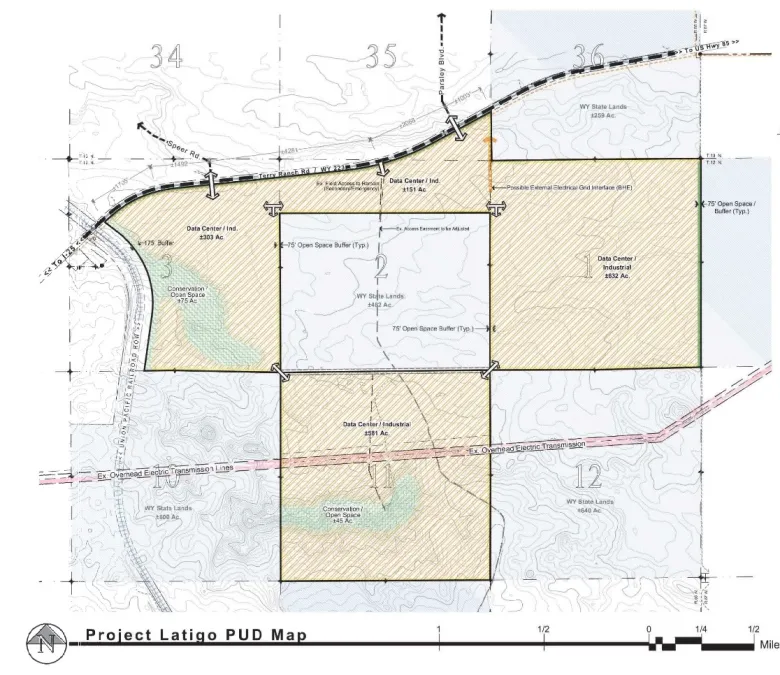
The county planning map shows development areas and open-space buffers, but a mapped parcel is not a construction completion photograph. Vantage’s future operating footprint will depend on securing a final building plan, an electrical supply arrangement and equipment installation. The most useful next disclosed figures would be the contracted data-center load and the first actually commissioned IT megawatts.
2. Prometheus Hyperscale Evanston — 1.25 GW Initial Plan; County Permits Approved
Prometheus Hyperscale is pursuing a 1.25 GW initial data center campus on approximately 506 acres east of Evanston in Uinta County. The developer has promoted a possible path to 5 GW through later expansion, but that larger number is not part of today’s initial ranking. On June 16, county commissioners unanimously approved the conditional-use permit for the data center, according to the company’s June 17 announcement.
The campus is designed around an islanded, or off-grid, power system using gas engines and turbines rather than relying exclusively on the existing public utility connection. In September, local reporting recorded county approval for the power-facility permit, following the planning commission’s August recommendation. These decisions support the project’s progress, but they do not demonstrate that the entire generating plant, air permits, data halls, tenant contracts or financing are completed. A county conditional-use approval should not be confused with operating authorization from every relevant regulator.
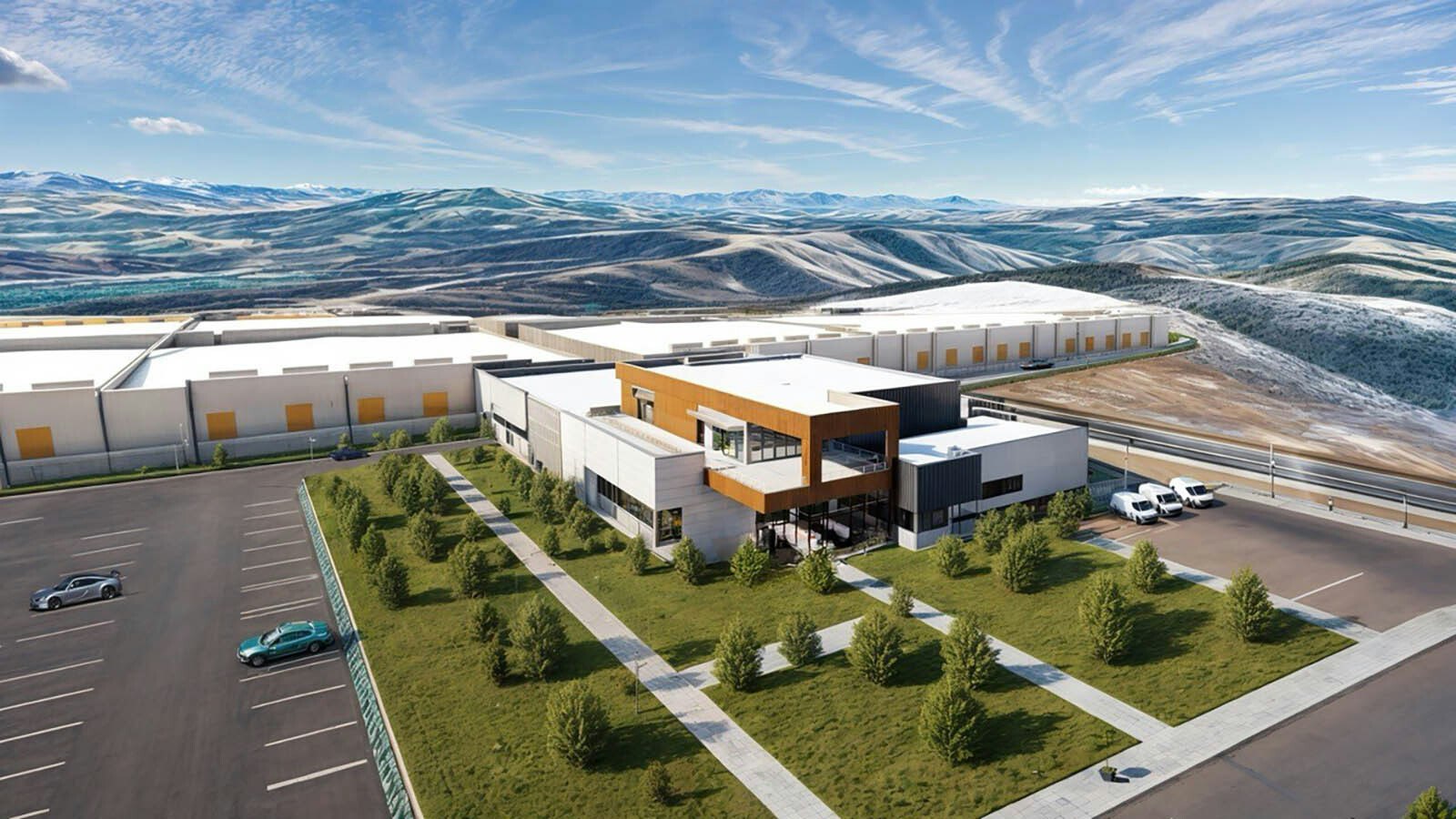
The architectural concept illustrates the developer’s intended campus rather than completed infrastructure. Prometheus has discussed liquid cooling and pairing computing with local energy resources. The benefits of such a design can only be established when generating equipment, operating water balances, emissions monitoring and actual IT power are disclosed. Independent research through late October still identified no verified operating building or named end-user tenant at the Evanston site.
The company has also experienced a major setback elsewhere in Wyoming. Its proposed 1.25 GW Casper-area data center was canceled on October 28. President Trevor Neilson confirmed the company would no longer pursue a project in Natrona or Converse counties but said the Evanston development remained a priority. The two proposals are separate sites; the cancellation of Casper does not cancel Evanston.
1. Google Project Tembo, Cheyenne — 2.7 GW Power-Resource Mix; Pre-Construction
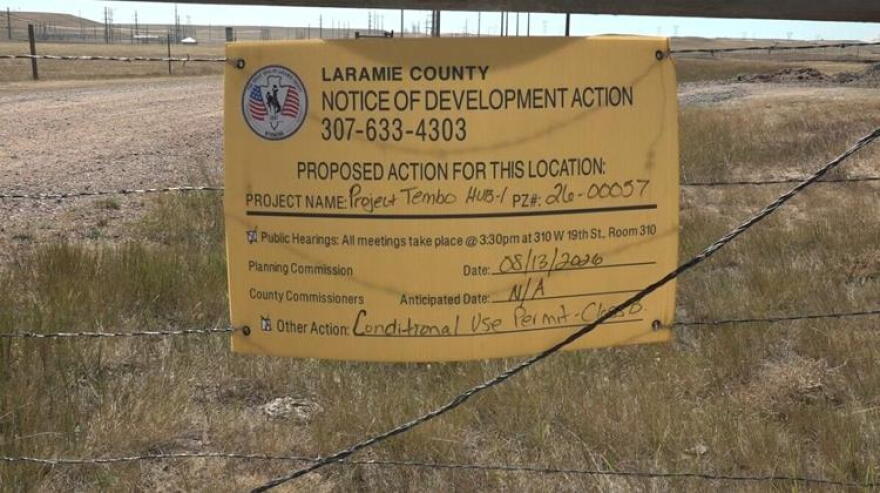
Google’s Project Tembo, located in the Switchgrass Industrial Park approximately eight miles south of Cheyenne, is tied to Wyoming’s largest disclosed data center power arrangement. The site was formerly Project Jade, a Crusoe-and-Tallgrass development initially described as a 1.8 GW computing project. Crusoe exited during 2026, and Google subsequently advanced a revised four-building concept. In September, the company presented the community with a planned investment of approximately $17 billion, according to Wyoming Public Media’s report on Google’s public meeting.
On October 6, utility provider Black Hills Corp. announced definitive power agreements effective September 30 and running through 2048. The arrangement covers approximately 2.7 GW of total resources, including reserve margins: up to 590 MW from grid-connected service and 2.1 GW of third-party contracted resources managed through a private microgrid. Black Hills proposes to invest about $1.8 billion in new gas generation. The 2.7 GW headline is the total electricity-resource mix, not Google’s stated critical IT load or currently running demand.
A separate October 14 American Electric Power announcement describes a planned 702 MW fuel-cell facility near Cheyenne supplying Google under a 20-year agreement, with full operation targeted by the end of 2028. That is additional evidence of the power buildout, not a separate data center to count. The companies did not establish that these fuel cells should be added on top of the 2.7 GW mix rather than representing a portion of third-party contracted resources.
The energy contract anticipates service beginning in late 2027, building toward expected peak load around 2030. Google’s site plan envisages construction continuing into 2031. As of its September open house, Google had not broken ground on its data center buildings, although related energy and pipeline works were being developed. The company’s promises about closed-loop or air-assisted cooling, groundwater sourcing and watershed replenishment remain plans to measure against future permits and operations.
A further issue is who ultimately pays for the electricity infrastructure. Black Hills’ SEC-filed agreement summary says the contract includes customer protections and that infrastructure and transmission applications are proceeding on separate timetables. Those provisions are material to ratepayers, but they do not guarantee that all construction will occur on schedule. Google has faced questions about land, roads, noise and generator emissions from residents near the proposed campus. The next verifiable milestones are final land and air approvals, the construction of data halls, first electrical service and commissioning of actual computer capacity.
Why the Canceled Casper Campus Is Excluded
An older version of Wyoming’s project lists would place Prometheus Hyperscale’s Casper-area 1.25–1.5 GW proposal near the top. That would now be wrong. On October 28, 2026, WyoFile reported that Prometheus had formally withdrawn the project, following local controversy and exploratory talks about permitting. The company said it would no longer seek development in Natrona or Converse counties. A landowner subsequently suggesting a possible future replacement would not restore an active Prometheus project without a newly identified developer and new filings.
Other Wyoming developments remain significant. Related Digital’s Cheyenne campus is described in Wyoming Business Council materials as a 302 MW IT-capacity project, under construction with CoreWeave named as its anchor tenant. It has a more concrete near-term customer and construction schedule than some bigger greenfield proposals. Microsoft operates established Cheyenne facilities and announced expansion applications in May, but the operator does not provide a directly comparable current campus-level megawatt figure for those projects.
Why Lost Cabin’s Proposed 500 MW Expansion Is Not Ranked
A potentially larger project is emerging near Lost Cabin in Fremont County. In October, County 10 reported that Aethel Energy was developing a small 1 MW prototype data center, powered by High Plains Power, while discussing a possible 500 MW future natural-gas generating campus. The planning director described a prototype building and a potential late-October or early-November commissioning, not 500 MW of operating hardware. The much larger plan had no detailed, approved campus-wide application or comparable firm construction program in the available record. WyoFile reported that county officials were still seeking basic details about the possible multibillion-dollar development.
Five hundred megawatts would exceed Latigo’s initial 480 MW if built, and therefore deserves explicit disclosure. It is not included in the three more developed, individually documented campus proposals because the supporting record is still a possible expansion concept attached to a much smaller prototype. If Aethel supplies a definite site plan, permits, generating contracts and data-hall phases, this ranking should be revisited.
Wyoming’s Real Test Is Delivered Power and Responsible Growth
The state’s fast-growing data center pipeline is driven by land availability, gas resources, transmission access and the possibility of privately supplied electricity. Those advantages do not eliminate the engineering challenges of providing reliable electricity to high-density IT equipment, along with cooling, networks, controls and operational staffing. Every proposed gigawatt should be traced to a specific development phase and verified against actual electrical infrastructure, not a marketing rendering or a permit alone.
A future update should report separately the site’s planned generation, contracted supply, approved connection, commissioned data halls, critical IT load and measured consumption. The public costs, water usage, emissions and job outcomes must likewise be evaluated through evidence, with proposed benefits separated from results. Readers can compare the Wyoming pipeline with Wisconsin’s data center projects, West Virginia’s energy-heavy campuses and the Texas Top 7. BitcoinVersus.Tech’s data center capacity-planning lesson explains the difference between forecast demand and live load.
BitcoinVersus.Tech
BitcoinVersus.Tech Editor’s Note: We volunteer daily to ensure the credibility of the information on this platform is Verifiably True. If you would like to support our work and help further secure the integrity of our research initiatives, please scan the QR code below to donate 5,000 sats. For best results, scan the QR code from a laptop or larger screen.
Bitcoin address: 3C9o19EH5HSiwEPyCTmEKzxhNCbo2X6TTb. Confirm the destination address before sending.

BitcoinVersus.tech is not a financial advisor. This media platform reports on financial subjects purely for informational purposes.


Leave a Reply