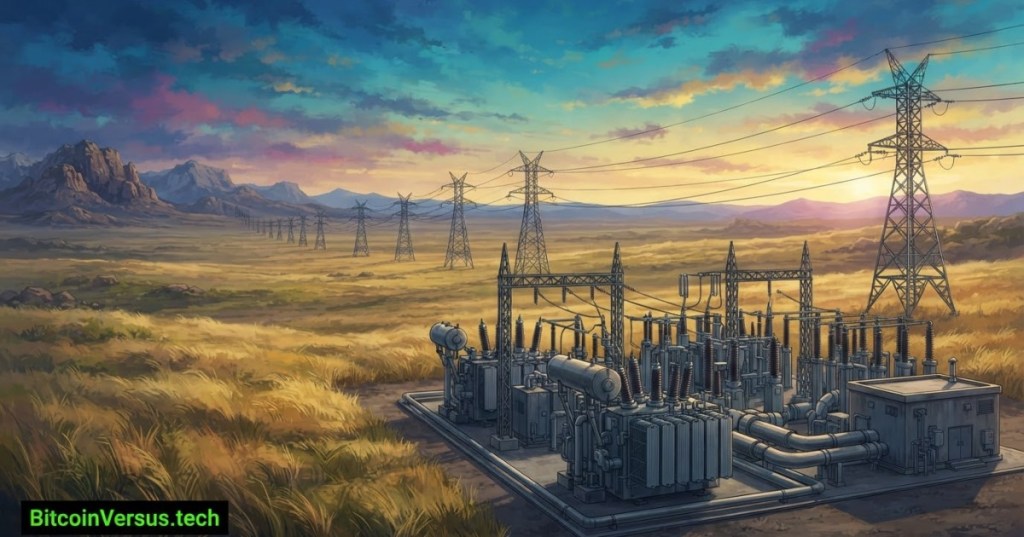
The U.S. Department of Energy has offered Grid United a conditional loan commitment of up to $2.8 billion for the Wyoming Intertie, a proposed high-voltage electricity link between America’s eastern and western grids. The November 17, 2026 announcement covers approximately 106 miles of new transmission infrastructure and up to 1,800 megawatts of electricity transfer capacity.
The federal financing is not a completed loan, construction authorization or operating transmission line. The developer must satisfy technical, environmental, legal and financial requirements before final documents and funding. The developer’s official project website says commercial operation may begin in the early 2030s.
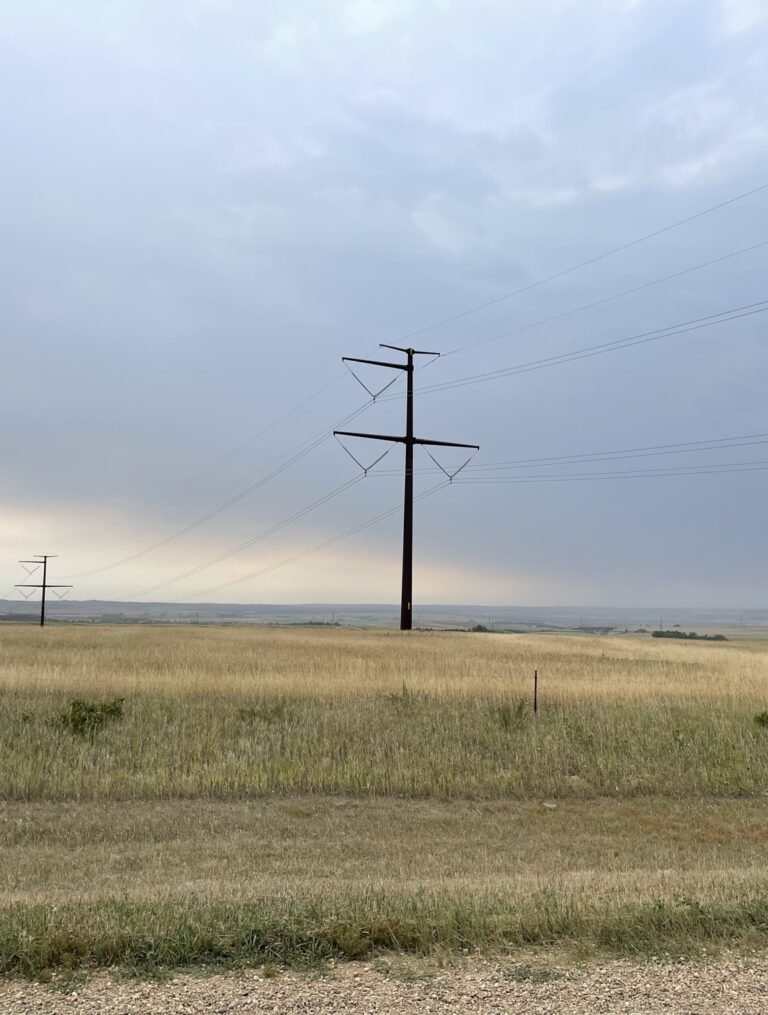
A 1.8 GW bridge between two asynchronous power systems
The planned line would extend from a substation near Medicine Bow in Carbon County toward the Laramie River area near Wheatland in Platte County, crossing Albany County. Grid United describes a bidirectional connection that can move electricity according to demand and available generation, rather than serving a single power plant or energy source.
The Eastern and Western Interconnections operate on largely independent alternating-current systems. Directly joining them without controlling synchronization creates engineering challenges. The proposed converter would use voltage-source converter technology and a high-voltage direct-current back-to-back interface to regulate electricity exchange across the boundary.
Converters perform AC to DC and DC to AC conversion using power electronics and controls. They can independently manage the amount and direction of exchanged active power while helping operators keep disturbances from propagating between the connected systems. Siemens Energy’s technical HVDC documentation explains the back-to-back configuration, although Siemens has not been named as the project supplier.
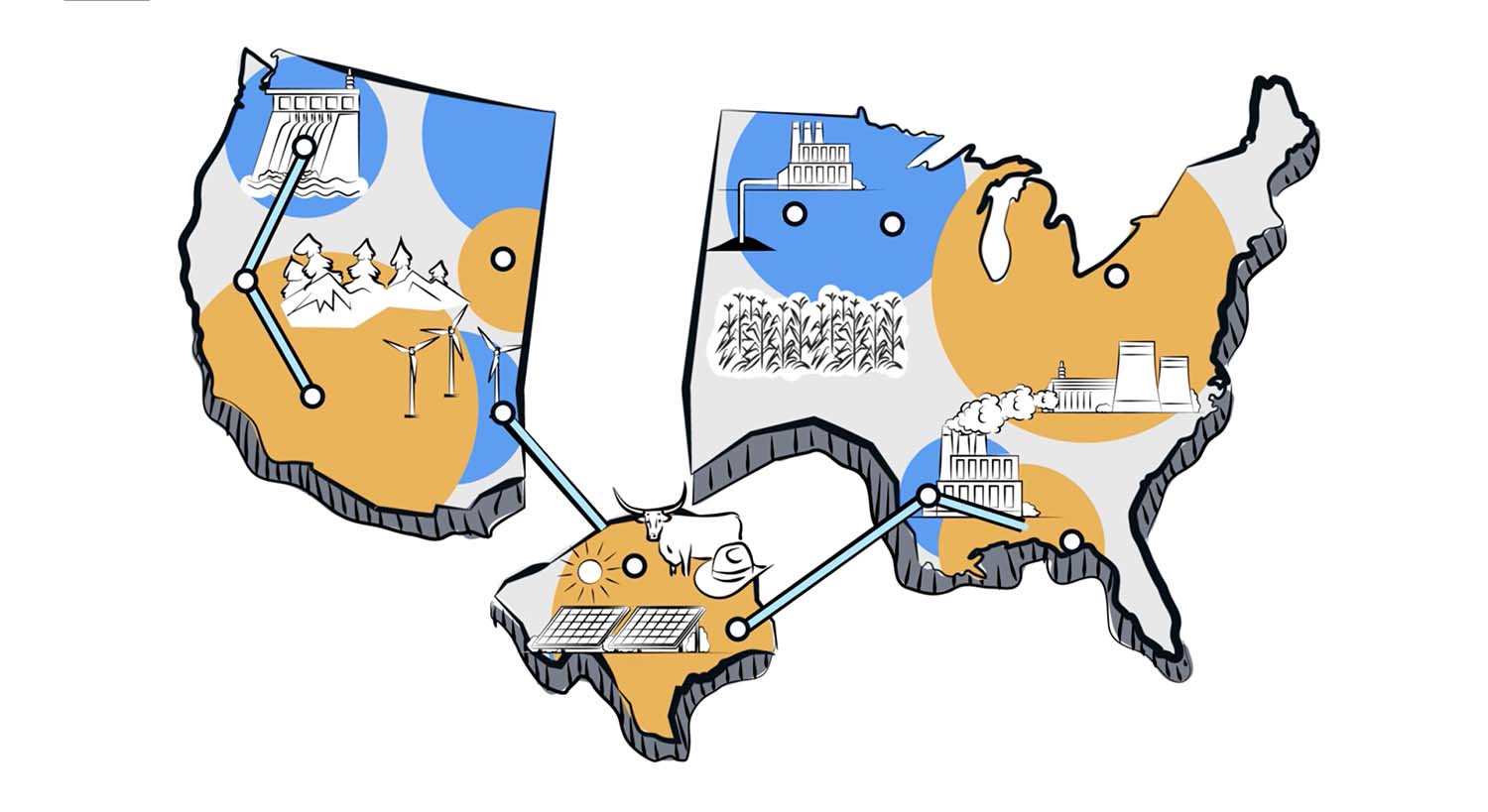
Where the projected $39 billion savings figure comes from
DOE estimates up to $39 billion in electricity cost savings for households and businesses across 17 states over the project’s modeled economic life. The savings figure is a forecast, not money already saved, a guaranteed household rate reduction or the amount of the loan.
The premise is straightforward: electricity can move from whichever grid has lower-cost supply toward the other grid during periods of high demand. Greater transfer capability may also help system operators respond to shortages or weather emergencies. Real outcomes will depend on future electricity prices, network congestion, operating costs and market rules.
Local reporting by WyoFile cites a current project estimate of about $4 billion, compared with earlier developer materials listing roughly $3 billion. Wyoming energy officials caution that reducing occasional wholesale price spikes does not necessarily translate into lower monthly residential bills.
The remaining obstacles are substantial
The developer says route selection is ongoing and requires coordination with landowners, communities and Tribal Nations. Necessary approvals include county permits, Wyoming’s industrial siting process and federal environmental review. The latest public schedule contemplates construction around 2030 and service later, assuming the project secures approvals and financing.
A multi-billion-dollar converter and transmission line also introduce technical and financial risks: converter equipment delivery, long-lead transformers, construction costs, reliability testing and future demand uncertainty. A conditional federal loan can reduce financing costs, but does not remove those risks.
Related technology is already appearing elsewhere. BitcoinVersus.Tech covered GE Vernova’s 6 GW HVDC project in India and high-power VSC valve development. Wyoming Intertie would address a different challenge: tying neighboring networks together, not transporting a single generator’s output over a long export corridor.
Why the project matters beyond Wyoming
Faster growth in data centers and large industrial loads is intensifying demands on transmission planning. Our reporting on 819 announced U.S. data center projects, major Wyoming data center proposals and long grid connection timelines illustrates the infrastructure pressure.
If completed, Wyoming Intertie could make existing generating resources more useful across regional boundaries without itself generating a watt of electricity. The next tangible milestone is not the announcement of federal support, but a closed financing package, approved route and firm construction timetable.
Primary documentation
- U.S. Department of Energy, November 17, 2026: conditional financing
- Grid United, Wyoming Intertie project status and capacity
- Wyoming Intertie developer FAQs: regulatory permits, route and generation neutrality
- WyoFile, November 17, 2026: budget, routes and ratepayer uncertainties
- Siemens Energy: technical explanation of back-to-back HVDC conversion
Editor’s Note: We volunteer daily to ensure the credibility of the information on this platform is Verifiably True. If you would like to support our work and help further secure the integrity of our research initiatives, please scan the QR code below to donate 5,000 sats.

For mobile scanning, open this article on a laptop or larger display and scan the original QR code using a Bitcoin wallet. Confirm the receiving address 3C9o19EH5HSiwEPyCTmEKzxhNCbo2X6TTb before sending.
BitcoinVersus.tech is not a financial advisor. This media platform reports on financial subjects purely for informational purposes.


Leave a Reply