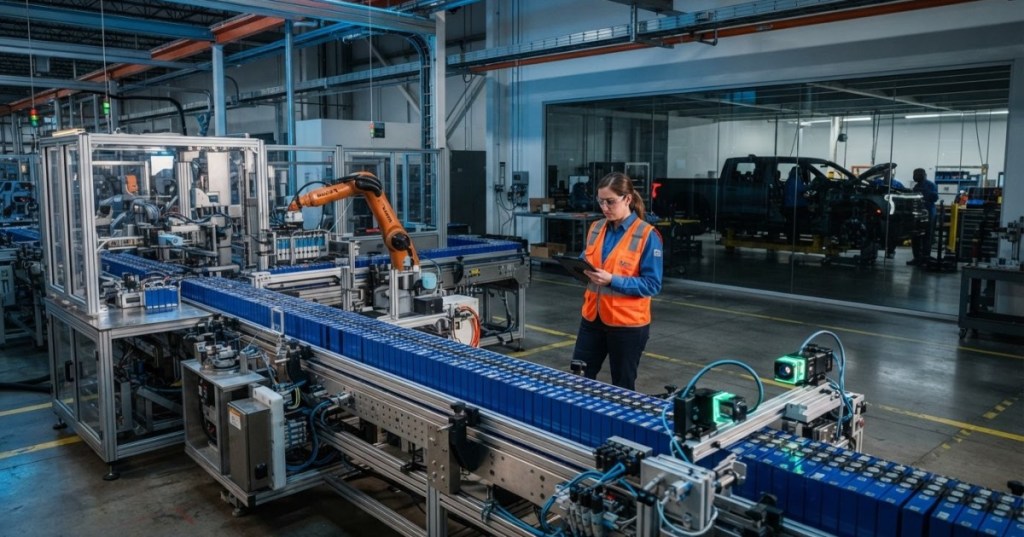
Ford Motor Company has begun shipping its first lithium iron phosphate battery cells from BlueOval Battery Park Michigan in Marshall for prototype versions of its forthcoming Fathom electric pickup. The November 18 development marks an industrial milestone for domestic cell manufacturing, although volume production of customer trucks remains scheduled for 2027, according to Reuters and Ford’s factory updates.
Ford owns and operates the Michigan factory while licensing battery technology from China’s CATL. The initial cells are headed to Louisville Assembly Plant in Kentucky, where engineers will validate them in prototype trucks. A shipment of cells is not the same as finished battery packs or retail vehicles.
Ford Motor Company, August 13, 2026. Official archival video showing preparation of Louisville Assembly Plant for Fathom production, not footage of the November cell shipment.
The hardware choice: prismatic LFP instead of nickel-rich cells
Lithium iron phosphate, commonly called LFP, uses an iron phosphate cathode instead of nickel and cobalt in the active cathode material. Ford is using rectangular prismatic cells, which can pack densely into a structural battery assembly. The chemistry can lower material costs and offer favorable cycle life, but generally carries lower energy density than some nickel-rich alternatives.
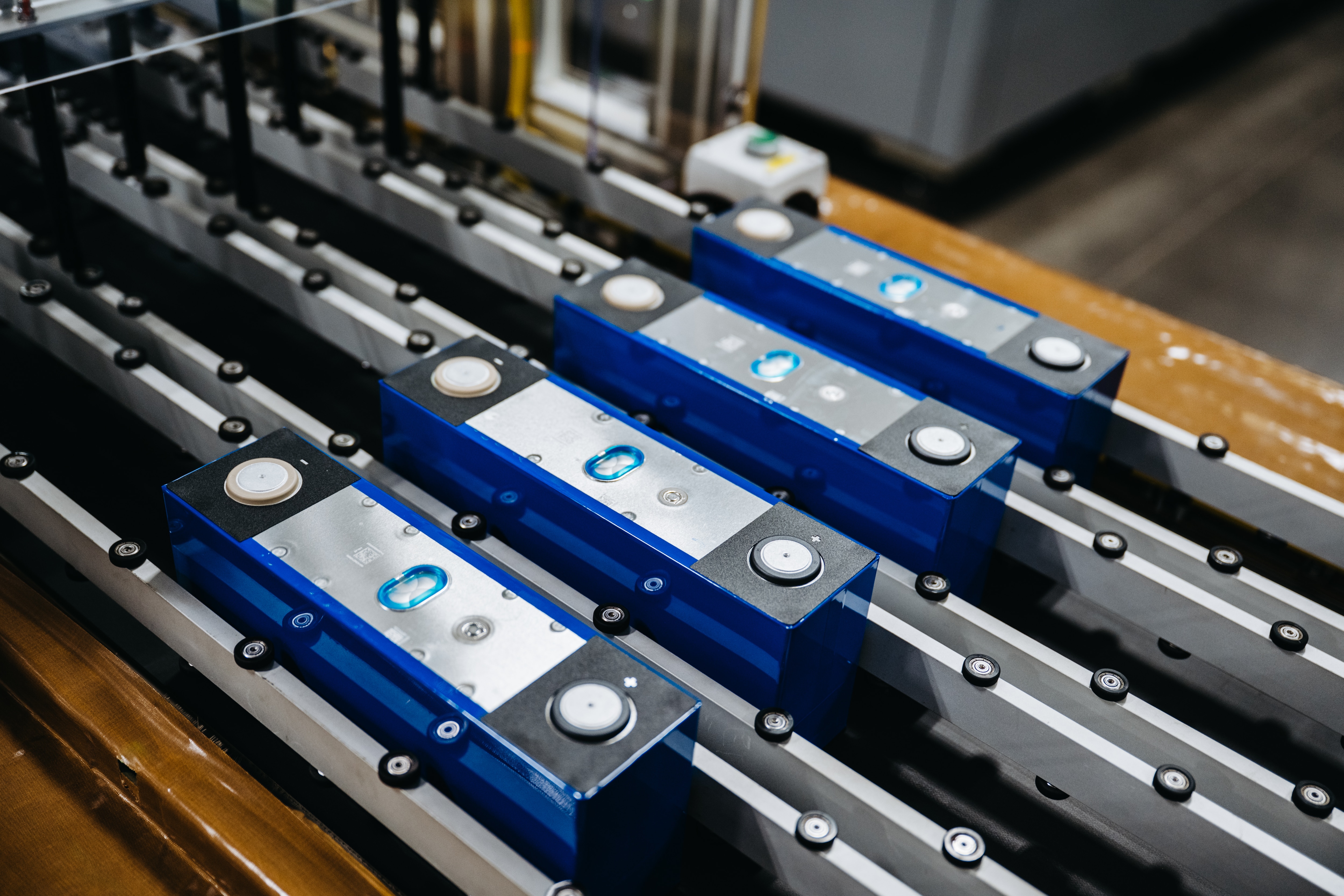
Ford’s earlier plant disclosure describes a complete process from slurry preparation through coating, formation, aging and final inspection. Reuters reports that the production line is designed to make up to 40 cells each minute. That is a rated cell-handling capability, not a verified continuous output rate and certainly not 40 completed trucks per minute.
Manufacturing yields, cell consistency, pack testing and thermal control will determine how efficiently the cells move into usable vehicles. LFP charging behavior in low temperatures and the repairability of structural packs will also matter after commercial deployment.
A new factory, but not technology developed entirely in America
Ford’s partnership with CATL accelerates access to established LFP manufacturing methods rather than requiring the company to invent every processing step. The arrangement has attracted scrutiny in Washington over reliance on a Chinese technology provider. Reuters reported a September letter from Transportation Secretary Sean Duffy raising concerns, while Ford defended the investment as a way to establish American manufacturing capacity.
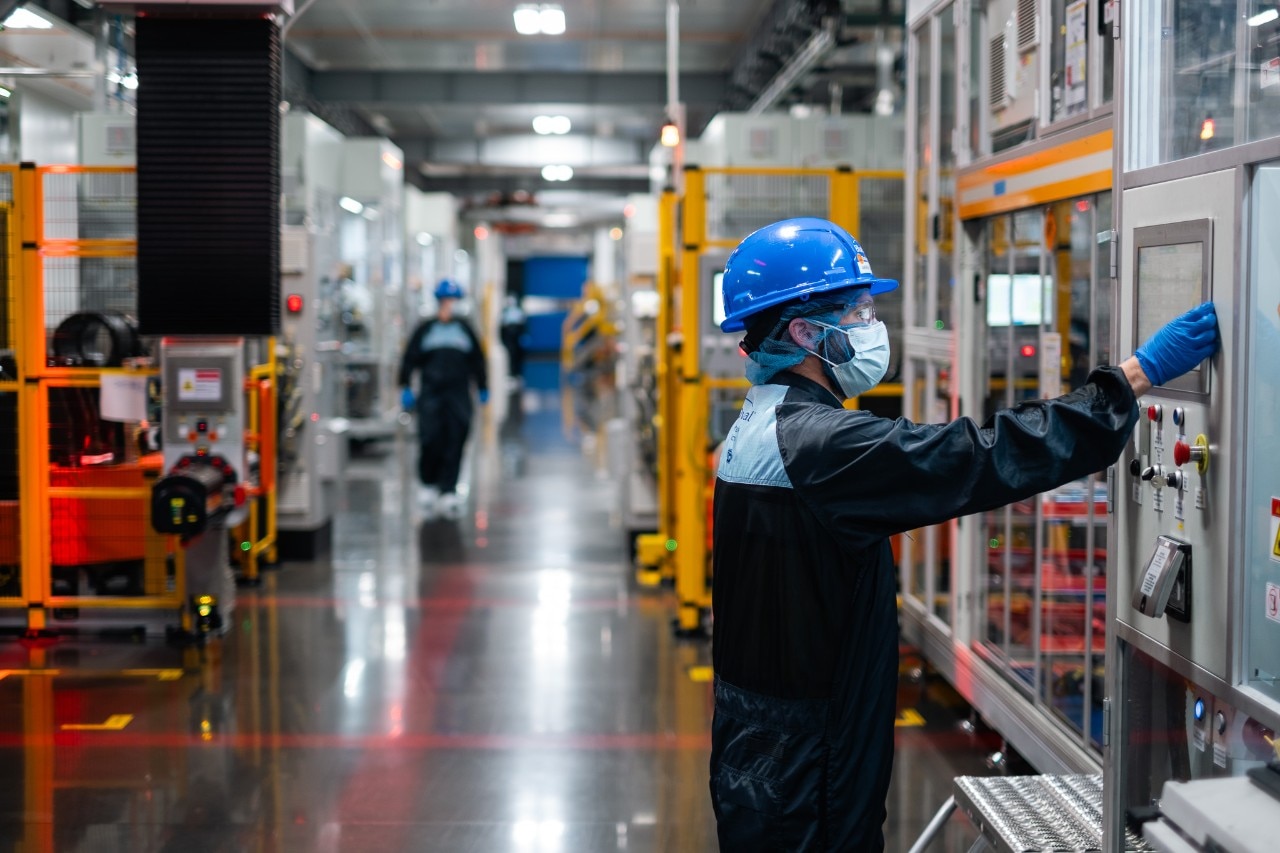
Physical location, ownership and intellectual property are distinct questions. The cells are being produced in Michigan, Ford controls the plant, and the underlying cell manufacturing technology is licensed from CATL. Domestically assembled cells do not automatically resolve every supply-chain or policy concern.
What the cells unlock for Ford Fathom
Fathom is the first vehicle on Ford’s Universal Electric Vehicle platform, with a published standard-range starting MSRP of $28,350. The company plans preorders in early 2027 and customer deliveries later in 2027. Ford has not published a final battery capacity, EPA range or charging curve for the production truck, so estimates for those specifications remain provisional.
Ford Motor Company, August 6, 2026. Official Fathom announcement video, archival product presentation rather than November 18 factory footage.
Ford says its new production approach divides vehicle assembly into parallel sections, including a battery deck, instead of relying entirely on a traditional assembly sequence. For an earlier technical look at the truck’s energy role, see BitcoinVersus.Tech’s analysis of Fathom’s bidirectional home power system. The starting MSRP excludes separate home backup hardware and services.
Factory automation is another cost lever. Our reports on FANUC’s Michigan robotics expansion and GM’s plans for more factory robotics provide context for the larger shift toward automated automotive manufacturing.
A manufacturing milestone, not yet a retail success
The same LFP expertise could support Ford Energy’s planned stationary battery business, although its Kentucky energy storage factory follows a separate manufacturing plan. Our coverage of U.S. battery storage capacity and Florida’s grid-scale battery projects shows why automakers see another market for cell technology.
The next tests are consistent cell quality, successful prototype integration, battery safety validation, and a reliable production ramp. Michigan-made LFP cells are an important step toward an affordable electric pickup, but commercial vehicle performance and cost claims still depend on completed testing and a successful 2027 launch.
Sources
- Reuters, November 18, 2026: Ford ships first battery cells using CATL technology
- Ford Motor Company, June 17, 2026: BlueOval Battery Park hiring and LFP production
- Ford Motor Company, August 13, 2026: Fathom assembly plant production system
- Ford Motor Company: Fathom official vehicle pricing and status
- Ford Energy: Kentucky stationary storage manufacturing plans
Editor’s Note: We volunteer daily to ensure the credibility of the information on this platform is Verifiably True. If you would like to support our work and help further secure the integrity of our research initiatives, please scan the QR code below to donate 5,000 sats.

For mobile scanning, open this article on a laptop or larger display and scan the original QR code using a Bitcoin wallet. Confirm the receiving address 3C9o19EH5HSiwEPyCTmEKzxhNCbo2X6TTb before sending.
BitcoinVersus.tech is not a financial advisor. This media platform reports on financial subjects purely for informational purposes.


Leave a Reply