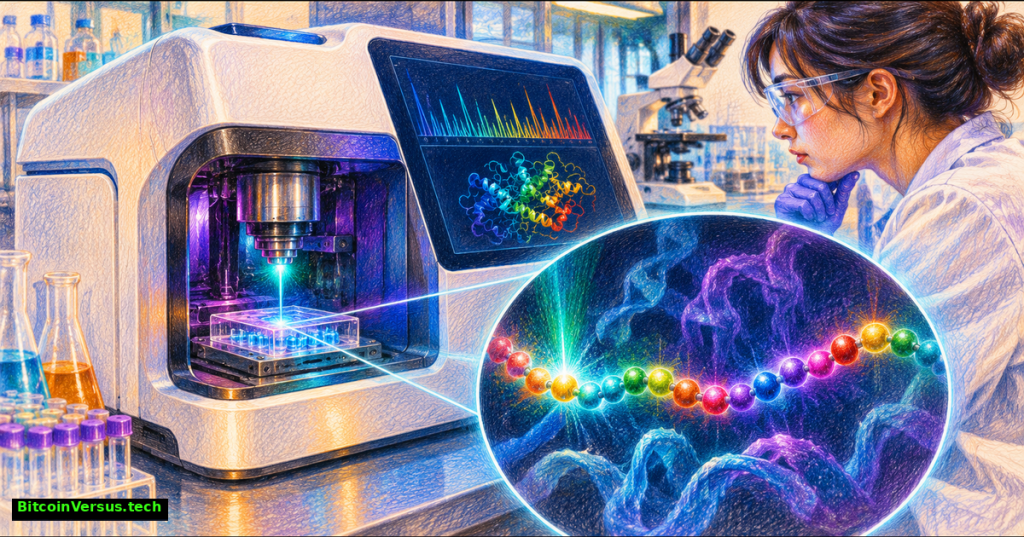
Quantum-Si announced November 18, 2026, that its Proteus development program has demonstrated single-molecule detection of all 20 standard amino acids, the chemical alphabet used to build most proteins. The company reached a goal previously targeted for year-end, following an October milestone involving 19 amino acids. Its official announcement and November 18 SEC filing document the claim. Crucially, detecting every amino-acid type in development is not equivalent to proving accurate, complete protein sequencing on a commercial Proteus instrument.
Why recognizing every amino acid matters
DNA sequencing reads four primary nucleotide bases. Proteins pose a harder recognition problem because their 20 standard amino acids have varied chemistry, while added modifications can further change biological behavior. Identifying amino acids along individual protein molecules could eventually help researchers distinguish closely related protein variants and study changes that DNA sequence alone does not reveal.
Quantum-Si’s approach builds on semiconductor chips, fluorescent molecular recognizers and optical signals. In earlier Platinum systems, recognizers interact with exposed amino acids and produce timing patterns that help identify residues as enzymes expose successive positions. Extending reliable recognition to all 20 types is a necessary piece of more comprehensive sequencing, but signal classification must still work across real samples, repeated runs and complex mixtures.
Quantum-Si official video, January 10, 2024: introduction to its earlier Platinum protein sequencing technology. Archival product explanation, not footage of the November 2026 Proteus result.
A development milestone, not a finished instrument
The company has described two separate stages: recognizing an amino acid in its development program and incorporating that capability into a kit operating on integrated Proteus instruments. In September, Quantum-Si reported an 18-amino-acid developmental kit running on integrated instruments; an October announcement raised recognizer development to 19. The November update says work is now underway to put all 20 into a developmental sequencing kit. Treating these stages as identical would overstate deployment maturity.
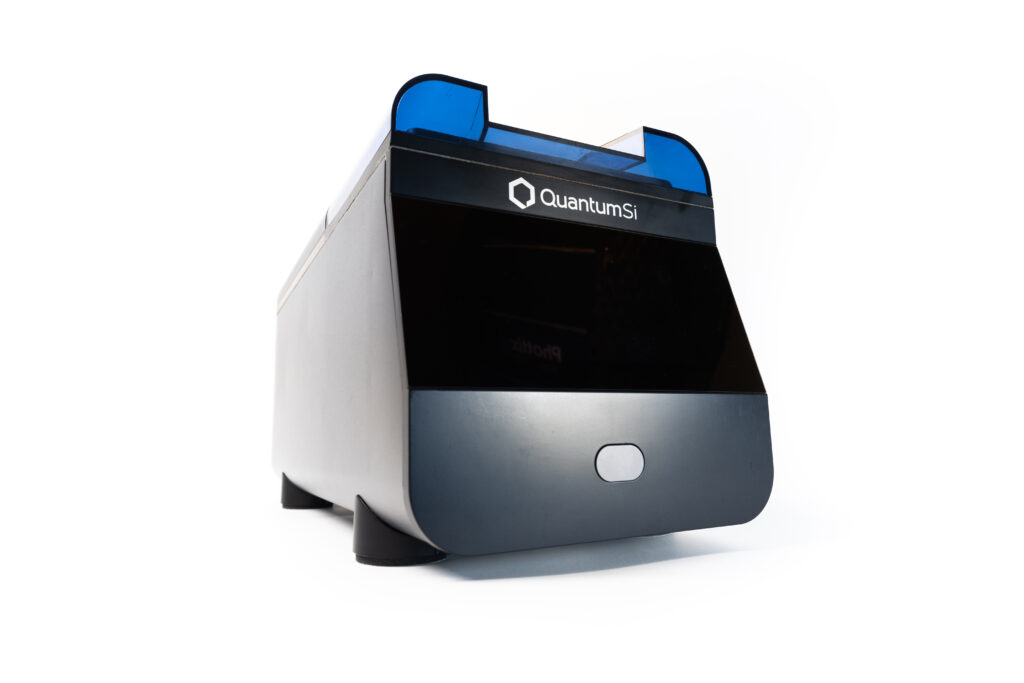
The company’s most recent quarterly update, November 5, reiterated an anticipated commercial launch in the second quarter of 2027, not 2026. Quantum-Si also disclosed third-quarter revenue of $212,000 and a net loss of $22.3 million. A successful laboratory demonstration therefore does not settle manufacturing readiness, reliability, customer adoption or future finances.
What scientists still need to see
The November announcement does not establish independently verified end-to-end sequence accuracy for all 20 residues, read length, throughput, sample preparation performance or false-call rates under representative conditions. Without those measurements, researchers cannot compare the new claim directly with established mass spectrometry workflows or judge whether reference-free identification works broadly. Proteins in cells also carry post-translational modifications, presenting additional interpretation challenges beyond the standard amino-acid alphabet.
Labroots technical webinar, November 14, 2024, presented by Quantum-Si scientist Ben Moree: how single-molecule amino-acid interrogation operates on Platinum. The archival session explains earlier technology, not the new 20-amino-acid demonstration.
Hardware progress is only one part of the biological research cycle. BitcoinVersus.Tech recently examined ElMerFold’s supercomputer-based protein structure predictions and Illumina’s genomic AI strategy. Prediction, DNA analysis and direct protein measurement address different questions and require different forms of validation.
Other examples reinforce the distinction between software interpretation and experimental evidence: Salk’s CRISPR off-target detection study and AI performance on laboratory tasks both depend on carefully defined benchmarks rather than headline capability counts.
Quantum-Si has cleared a meaningful internal research milestone. The next decisive evidence will come from an integrated 20-amino-acid kit, reproducible accuracy measurements, real-world sample comparisons and a commercial system researchers can independently assess. Until then, the headline achievement remains a company-reported demonstration with considerable potential and material uncertainty.
Primary sources: Quantum-Si, November 18, 2026; SEC Form 8-K, November 18; Quantum-Si Q3 report, November 5; World HUPO interim data, September 28.


Leave a Reply