Elementary Overview
OSHMS.004 examines Tubal-Cain, named in Genesis 4:22 as a metalworking figure, alongside archaeological evidence for copper, bronze and iron technologies. A name preserved in scripture is evidence of a textual tradition, not independent identification of the first historical smith.
The lesson follows OSHMS.003 on copper smelting, with foundations in OSHMS.002 on heat-treated lime, OSHMS.001 on early ceramics and OSHMS.000 on early materials. Learning goals are to identify the source claim, distinguish metal from alloy, calculate a simple composition and explain how museums verify ancient manufacturing.
London Museum, The Bronze Age: institutional educational demonstration of metal casting, not footage of an ancient workshop Original video.
What Genesis actually establishes
Translations differ over whether the Hebrew metal term refers to copper or bronze, while iron is also mentioned. The Encyclopedia of the Bible entry explains the traditional association between Tubal-Cain and smithing. Genesis supplies no excavated tool, independently confirmed workshop, or securely dated lifetime for Tubal-Cain. Assigning him an archaeological invention date would exceed the evidence.
Copper, bronze and iron are different materials
Copper is an element. Tin bronze is predominantly copper alloyed with tin; historical copper alloys can also contain arsenic, lead and other constituents. Iron requires a different extraction and working history. Development and prevalence varied among regions, so a single worldwide Bronze-to-Iron transition date would be misleading.
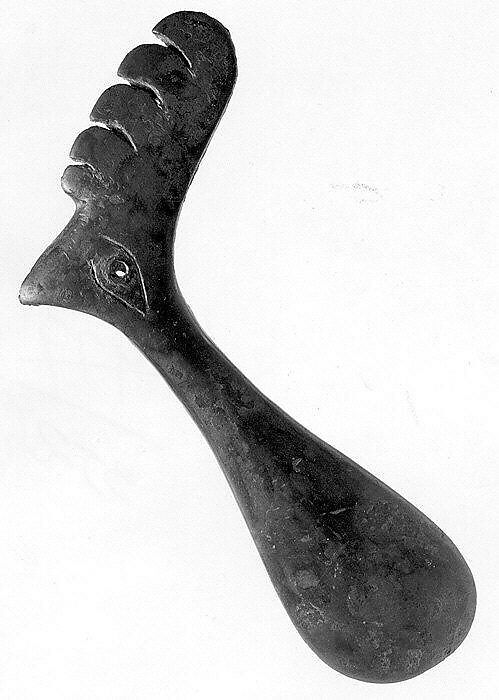
The Metropolitan Museum of Art’s 2025 conservation research describes sophisticated Mesopotamian copper-alloy casting around 2500 BCE, including material containing some arsenic. A later bronze axe cannot establish the earliest alloy experiment, nor prove that every ancient copper-alloy object contains tin.
A copper–tin calculation
For a hypothetical 2.00 kg batch containing 90% copper and 10% tin by mass, copper mass is 2.00 × 0.90 = 1.80 kg and tin mass is 2.00 × 0.10 = 0.20 kg. The percentages describe an ideal starting mixture, not a recovered ancient recipe or guaranteed final casting composition. Real losses and contaminants require analysis.
Asian Art Museum, Casting Bronze Vessels: The Piece-mold Process, an institutional reconstruction of a Chinese bronze technique from a different period and region Original video.
What artifacts can prove
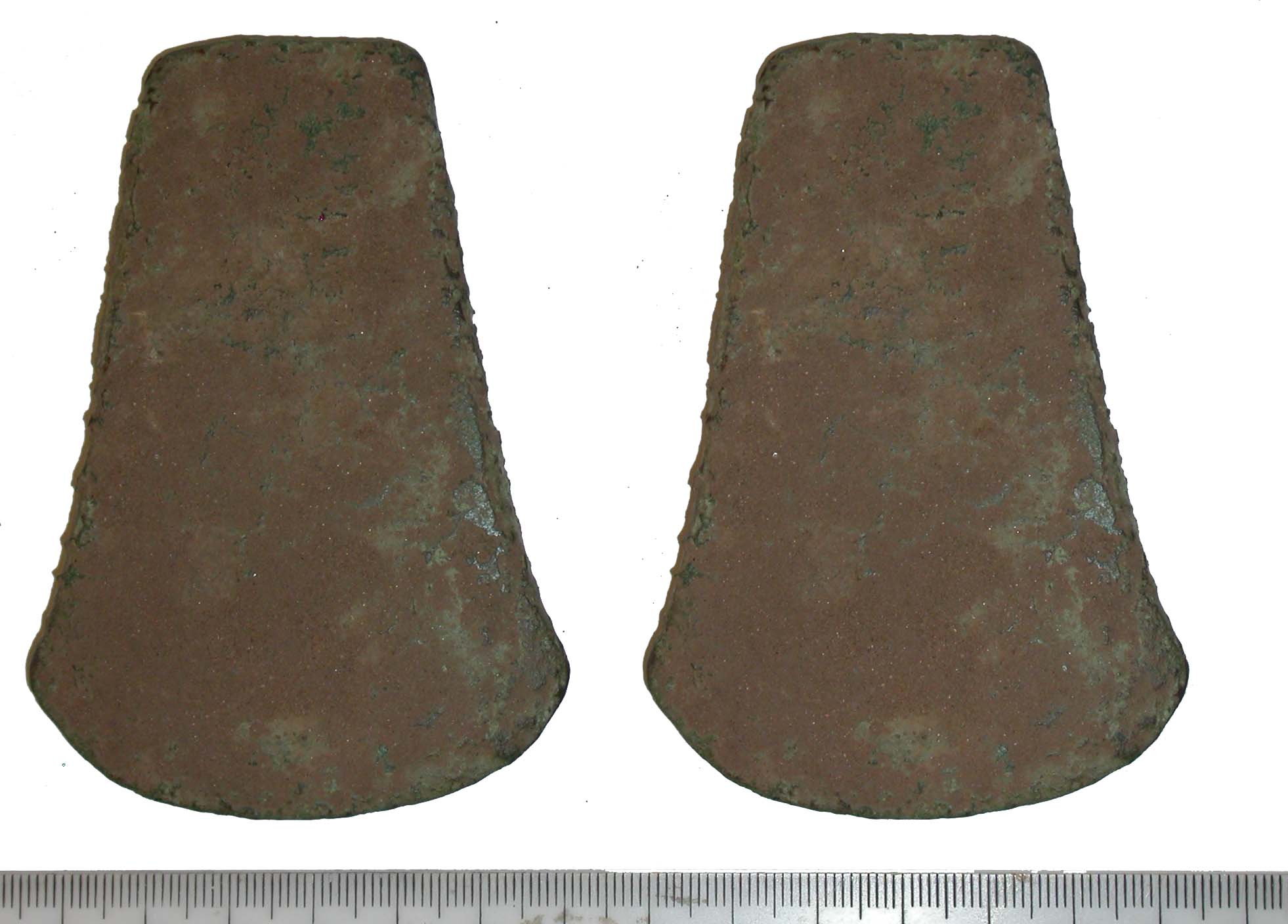
Archaeologists compare dated contexts, chemical composition, casting seams, tool marks, metallography and associated furnace debris. Such tests connect an object to a material and method; they generally cannot reveal the individual craftsperson’s name. The Met’s Cypriot bronze axe and the following British-recorded specimen illustrate how museum catalogues keep findspot, estimated date and object type separate.
Knowledge check and conclusion
Does Genesis identify a historically proven first smith? No. Is copper automatically bronze? No. Does a photographed axe reveal its exact tin percentage? No; composition requires suitable examination. Early metalworking emerged through many documented technologies and regions. Textual history and excavated materials can be studied together without conflating their kinds of evidence.
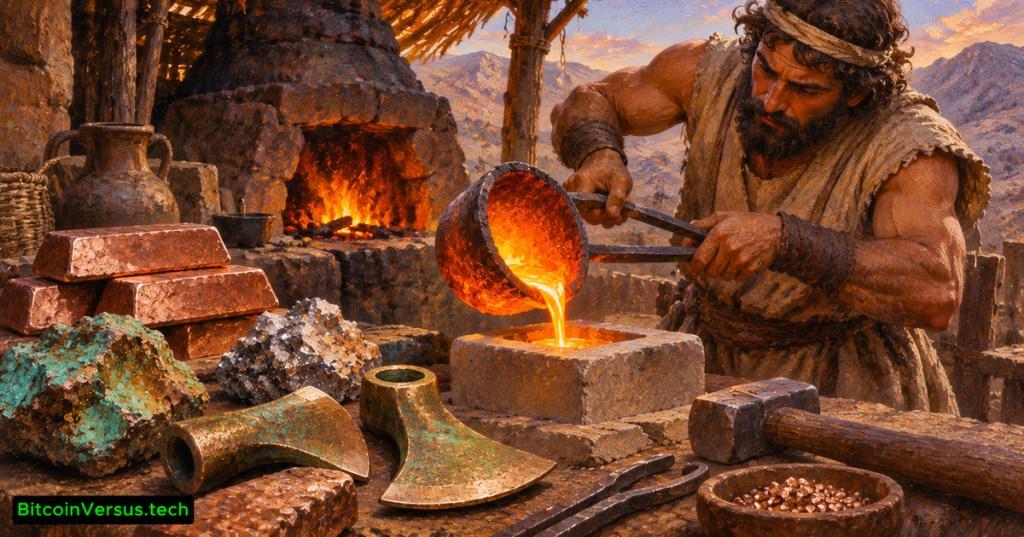
Editor’s Note: Primary text: Sefaria, Genesis 4:22. Archaeological references: The Met collections and research, London Museum and Asian Art Museum educational films, and the credited Portable Antiquities Scheme object. Illustrative alloy calculations are not laboratory measurements. The original oil-painting cover depicts an anonymous fictional smith, not a verified likeness of Tubal-Cain. Media playback and mobile visual checks remain separate from Gutenberg rendering.

BitcoinVersus.Tech is volunteer-run. Optional donations support independent research. Scan the original QR using another screen or a compatible saved-image scanner. Verify the receiving address 3C9o19EH5HSiwEPyCTmEKzxhNCbo2X6TTb and the 5,000-satoshi amount before sending an irreversible transaction.
We volunteer daily to ensure the information on BitcoinVersus.Tech is Verifiably True. Educational content is not permission for unqualified molten-metal handling or hazardous furnace experiments.


Leave a Reply