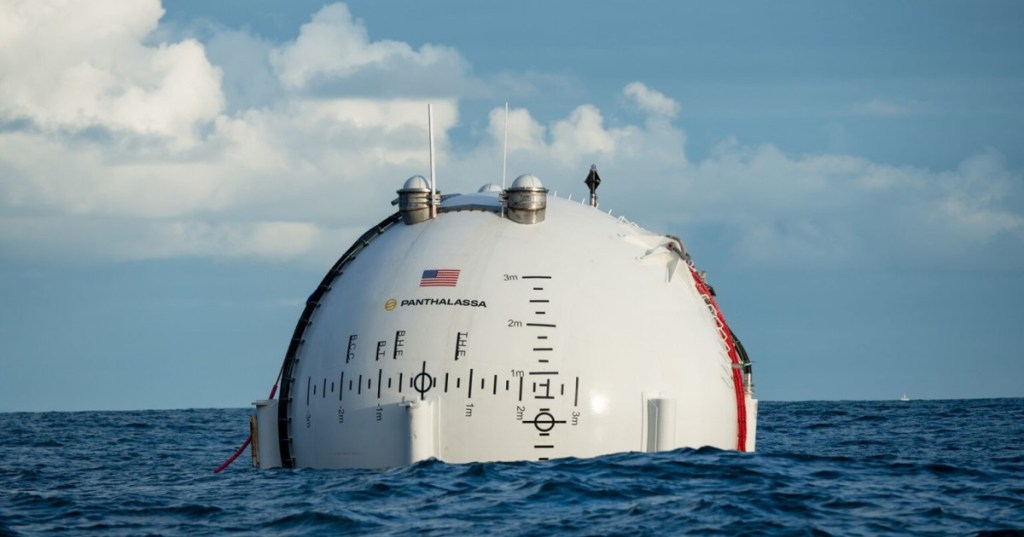
Panthalassa, a Portland-based ocean-energy startup, unveiled a manufacturing facility in Vancouver, Washington, on November 6, 2026, as it prepares to build floating systems intended to power AI computing from ocean waves. Oregon Public Broadcasting attended the opening at a former Kaiser Shipyard building near the Columbia River. The facility represents a shift from one-off prototypes toward assembly-line manufacturing—not evidence that commercial offshore AI data centers are already operating.
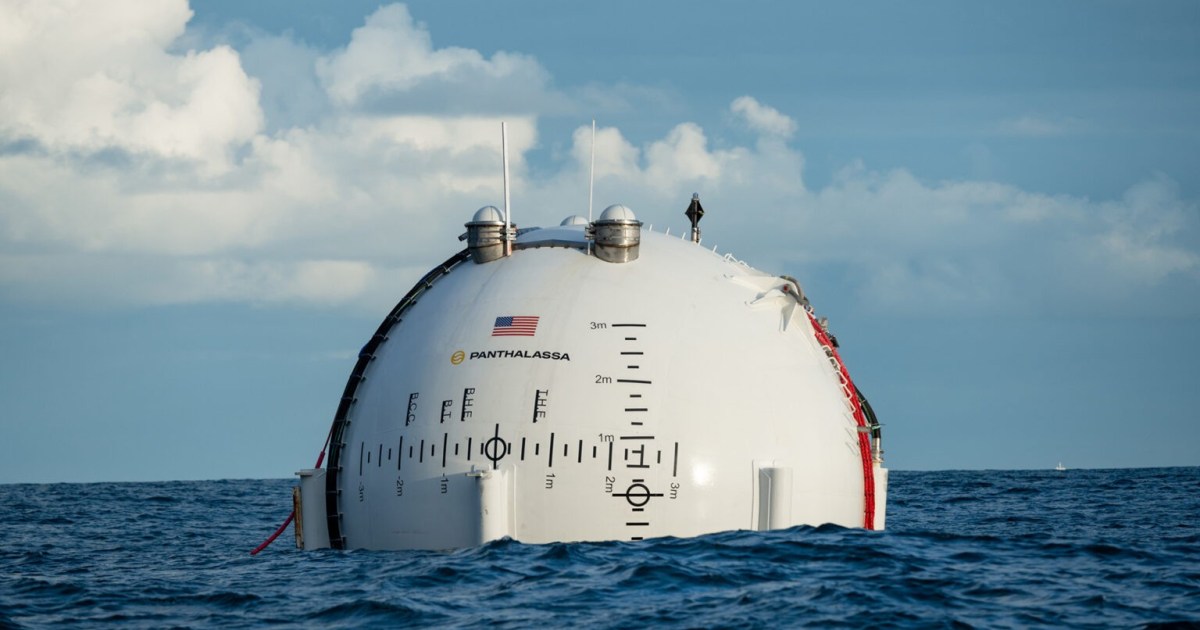
How wave motion would run an AI data center
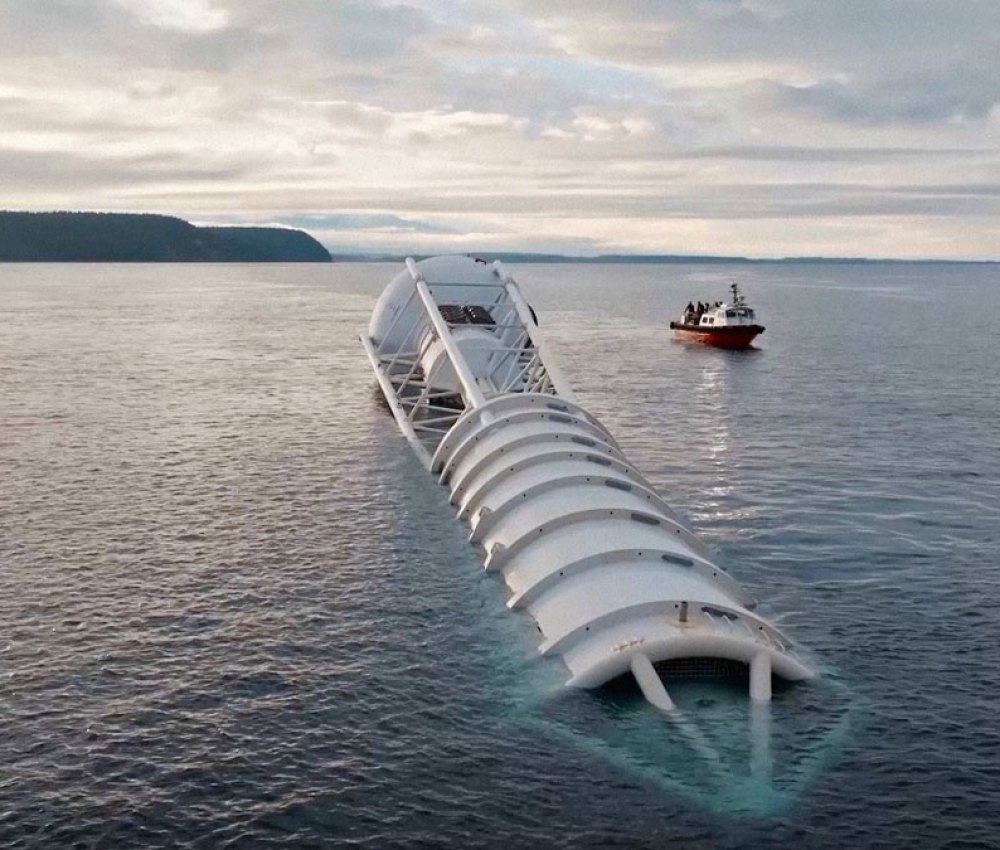
The proposed Ocean-3 node resembles a large steel buoy above a long submerged column. Ocean swells move the structure and force seawater through an internal turbine, converting hydraulic energy into electricity. Unlike conventional coastal wave-energy projects that feed an electrical grid, Panthalassa intends to consume generated power aboard the node, run AI inference workloads and transmit compact computation results to land over low-Earth-orbit satellite links. The units are designed to operate without permanent seabed anchors or a land-based electrical cable.
Wave energy and tidal energy are different resources: waves primarily arise from wind acting on the sea, while tides reflect gravitational effects. BitcoinVersus.Tech has a broader engineering guide to tidal and ocean power, including major conversion technologies and their constraints.
The Vancouver factory changes the manufacturing question
The Vancouver plant occupies a former shipbuilding site and is intended to fabricate steel nodes using processes including robotic welding. OPB reports a planned workforce of approximately 50 once fully staffed. Completed units could travel down the Columbia River before offshore deployment. Panthalassa began local prototype fabrication in 2022; the new building is meant to test whether construction can advance from individually engineered machines to repeatable industrial production.
In a May 4 company announcement, Panthalassa disclosed a $140 million Series B financing led by Peter Thiel to fund manufacturing and initial deployments. The company said it planned Ocean-3 pilots in the northern Pacific during 2026 and targeted commercial deployment in 2027. Those dates are corporate objectives, not confirmed commissioning results. Panthalassa has publicly demonstrated the earlier Ocean-2 ocean trial, but has not supplied independently verified commercial AI throughput, customer availability or fleet uptime figures.
Potential benefits face difficult offshore economics
An ocean platform could reduce dependence on land, freshwater cooling and grid interconnection queues. Panthalassa has discussed prospective generation costs near two cents per kilowatt-hour at scale, but a modeled future electricity price is not a demonstrated production cost. Cost per AI inference request additionally depends on equipment utilization, computing hardware, satellite connectivity, remote maintenance and financing. For comparison, earlier BitcoinVersus.Tech articles describe the challenges of operating data centers off-grid and Hawaiʻi’s measured wave-energy research.
The sea creates its own engineering burdens. Corrosion, rough-weather survivability, fatigue, shipping access, seawater heat exchange and marine environmental oversight all require validation. Satellite communication may suit compact inference outputs, but network latency and bandwidth can restrict workloads needing large data transfers. The proposed architecture is therefore not a drop-in substitute for every GPU training cluster.
Other approaches already exist. BitcoinVersus.Tech previously reported NetworkOcean’s floating-solar H100 experiment, which uses a different energy source and development model. For Panthalassa, the decisive next evidence will be a functioning Ocean-3 node, measured power output, on-board AI processing, and repeatable factory deliveries—not merely an expanded financing round or a compelling ocean prototype.
Editor’s Note: The November 6 factory opening, former shipyard location and proposed workforce were verified against OPB’s on-site reporting. Earlier financing, pilot plans and technical descriptions were checked against Panthalassa’s May 4 announcement, the official company website and Data Center Dynamics’ reporting. All deployed or commercial performance claims are distinguished from plans. The cover and in-story photographs depict Ocean-2, not a functioning commercial Ocean-3 fleet. The official prototype video and CEO interview are historical media; independent video playback was not verified during drafting.

To donate 5,000 sats, open the article on a separate display and scan the original QR code with a compatible Bitcoin wallet. On mobile, use another screen or your wallet’s supported image-scanning feature. Verify the destination 3C9o19EH5HSiwEPyCTmEKzxhNCbo2X6TTb before sending.
We volunteer daily to ensure the information on this platform is Verifiably True. If you would like to support the research, please scan QR code.
BitcoinVersus.tech is not a financial advisor. Technology and energy coverage is published for informational purposes.


Leave a Reply