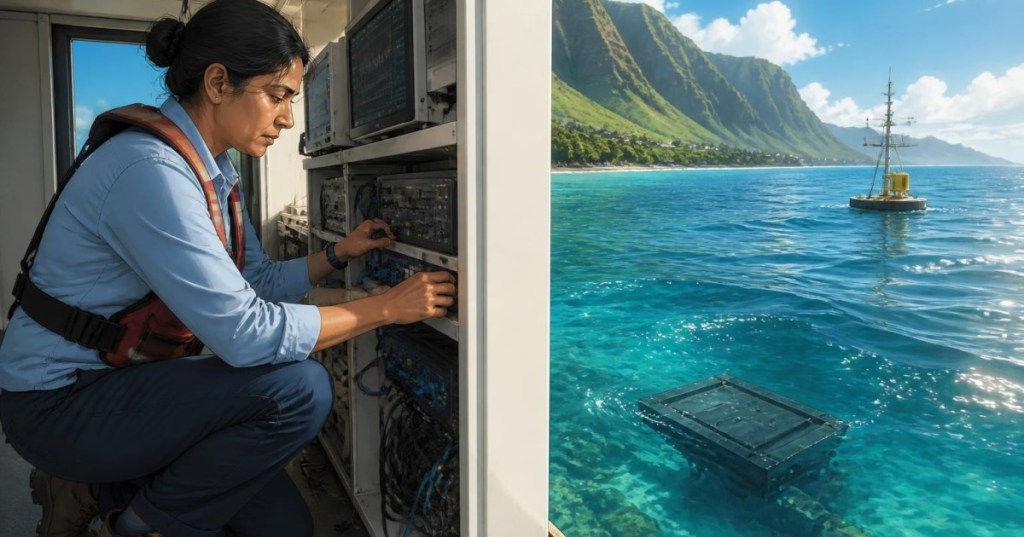
Off Oʻahu, Hawaiʻi, a one-meter wave-powered flap is generating electricity and collecting data that researchers intend to share with the public. The National Laboratory of the Rockies and University of Hawaiʻi at Mānoa reported the Small Underwater Research Flap Wave Energy Converter—SURF-WEC—deployment in September 2026; the university highlighted it again on October 30. The modest machine is a research experiment, not a commercial offshore power plant.
How the small underwater flap generates power
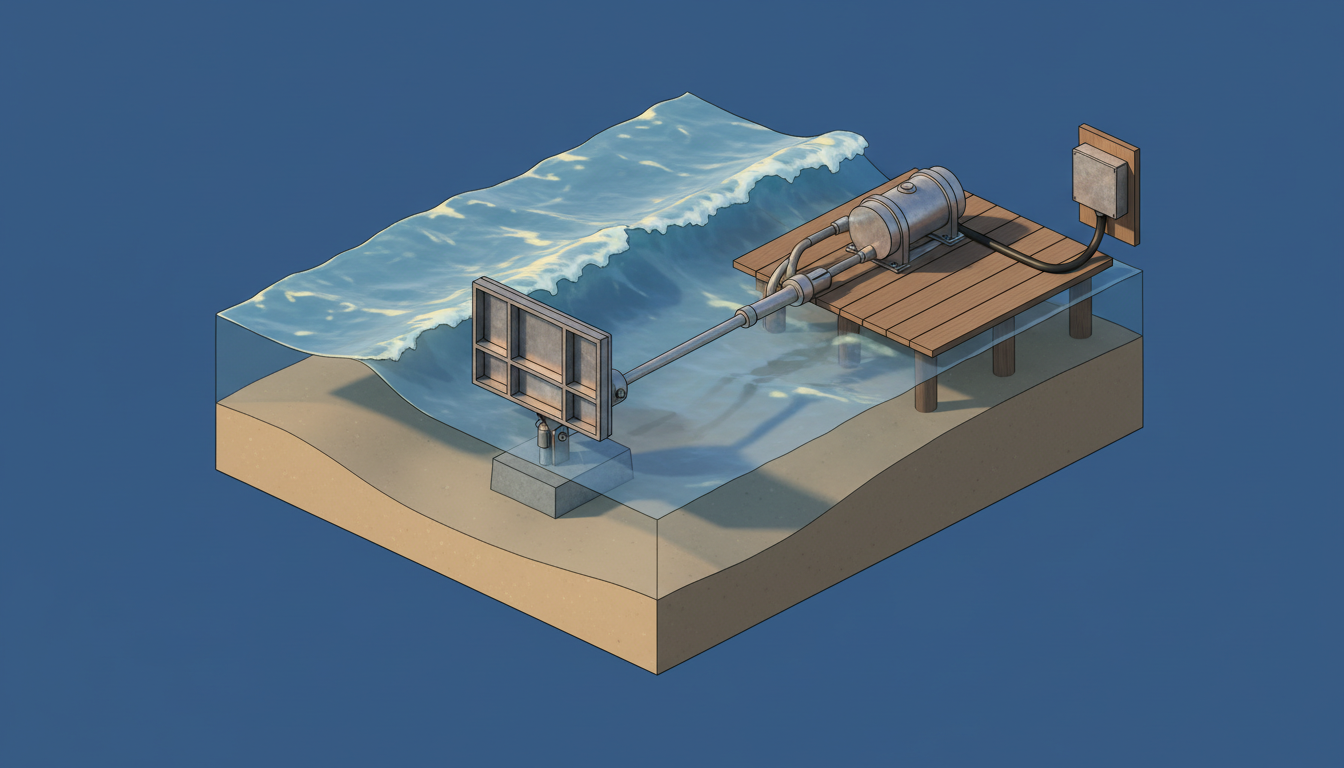
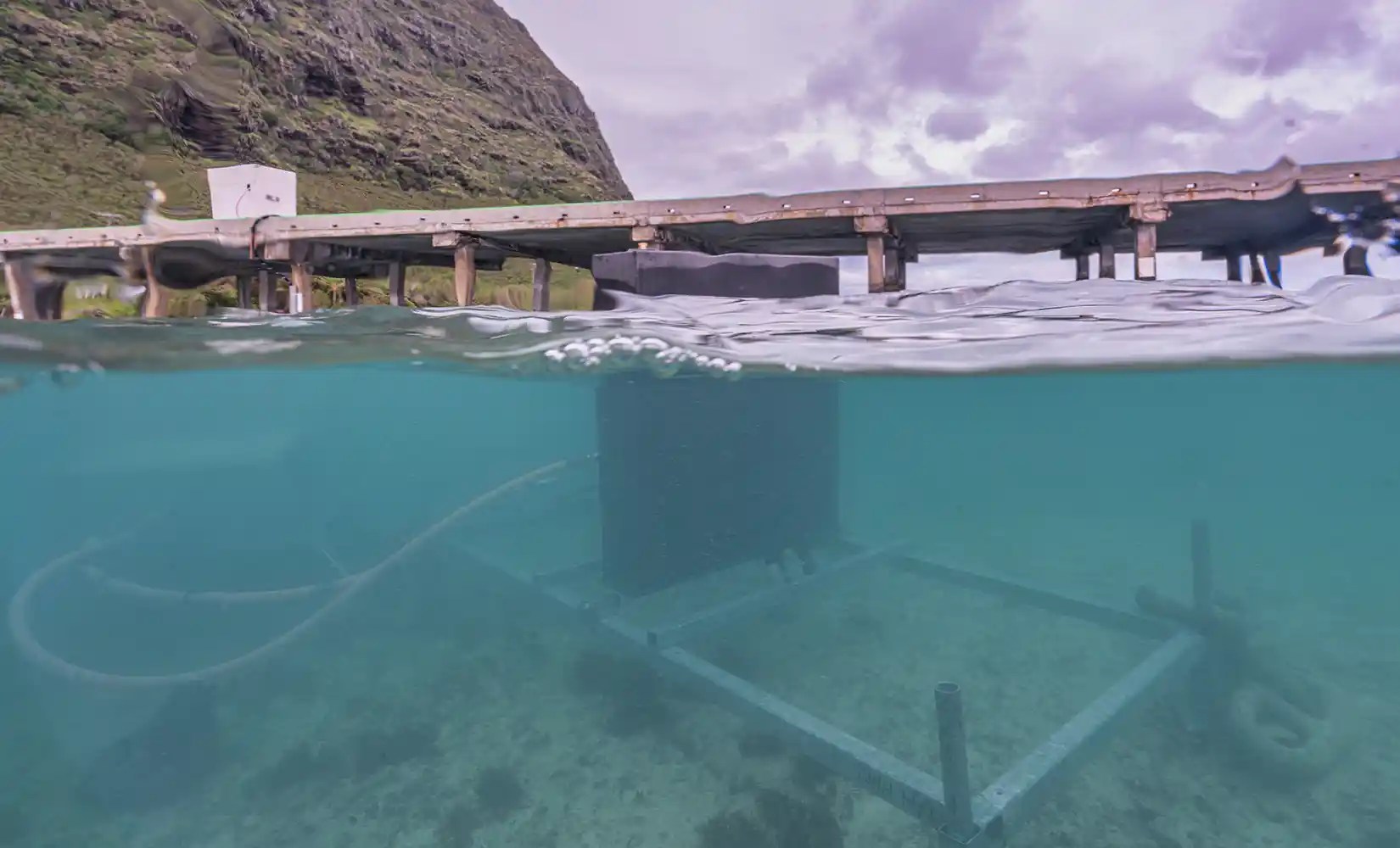
NLR explains that a buoyant flap rocks back and forth in passing waves at Makai Research Pier. That motion drives a hydraulic piston, building pressure in a sealed system. At a chosen pressure, a motor and generator produce pulses of electrical power. Researchers can remotely change the control strategy to test how different sea conditions affect output.
National Laboratory of the Rockies’ official Closing the Data Gap: How SURF-WEC Advances Marine Energy Technology, linked directly from its project report.
Passive control harvests waves without continuously adjusting the equipment. Active control adapts its response, potentially capturing more wave energy but spending electricity on sensing and actuation. The real question is net production after those parasitic losses. That is why simulations cannot replace ocean measurements or the fundamentals explained in our capacity-factor guide.
Research data, not grid-scale electricity
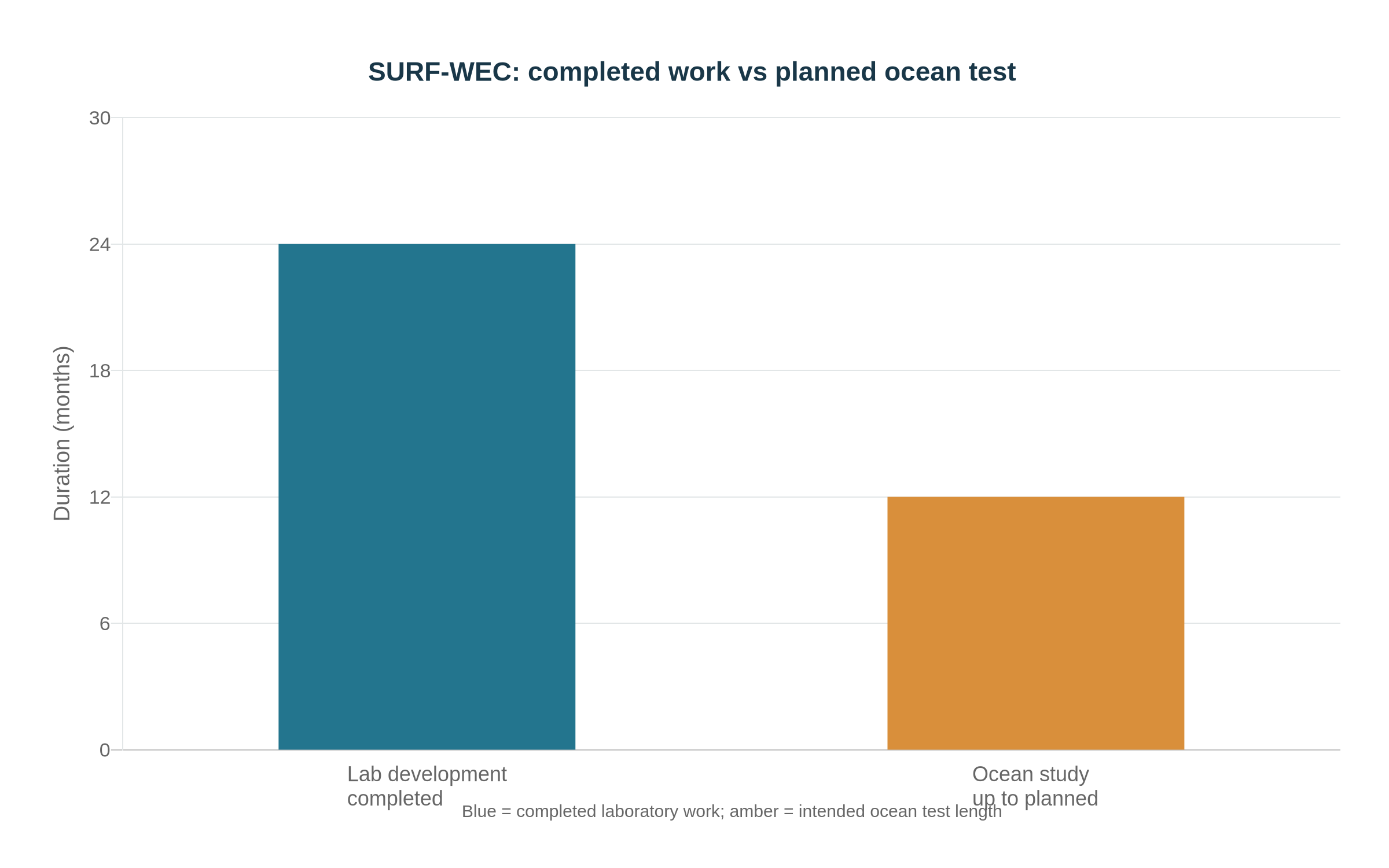
Before deployment, the team spent about two years designing and testing components in Colorado. The flap went into the water in March 2026, after a powerful Kona storm forced researchers to delay part of installation. A one-year ocean observation period was the team’s goal, not a completed achievement. The lab developed MODAQ 2.0 to log sensor signals and control the device remotely.
That open-science approach matters. The researchers describe wave-energy development as data-starved because many prototypes never publish comparable field measurements. SURF-WEC makes monitoring available through a public data portal, although a final validated performance report is still expected. No independently verified sustained average electrical output or commercial tariff was disclosed in the university announcement.
The installation also offers a useful contrast with Oregon’s underwater geothermal demonstration, which exploited hot vent water rather than surface waves. Another approach, Stony Brook’s ocean-power grid research, explores offshore integration. Reliable marine connectors and monitoring remain essential, as described in our undersea cable repair coverage.
NLR’s actual SURF-WEC Operating at Makai Research Pier footage showing divers installing and operating the prototype in Hawaiʻi.
What engineers still need to prove
Next, engineers must learn which controls deliver usable energy through changing waves, maintenance, storms and corrosion. Even if the planned year-long test ends earlier, the publicly available observations can help future wave-converter designs move beyond laboratory assumptions.
BitcoinVersus.Tech
BitcoinVersus.Tech Editor’s Note: We volunteer daily to ensure the credibility of the information on this platform is Verifiably True. If you would like to support our work and help further secure the integrity of our research initiatives, please scan the QR code below to donate 5,000 sats. For best results, scan the QR code from a laptop or larger screen.

Bitcoin address: 3C9o19EH5HSiwEPyCTmEKzxhNCbo2X6TTb. On a phone, open the QR image on another screen or copy and verify the address in your wallet before sending.
BitcoinVersus.tech is not a financial advisor. This media platform reports on financial subjects purely for informational purposes.


Leave a Reply