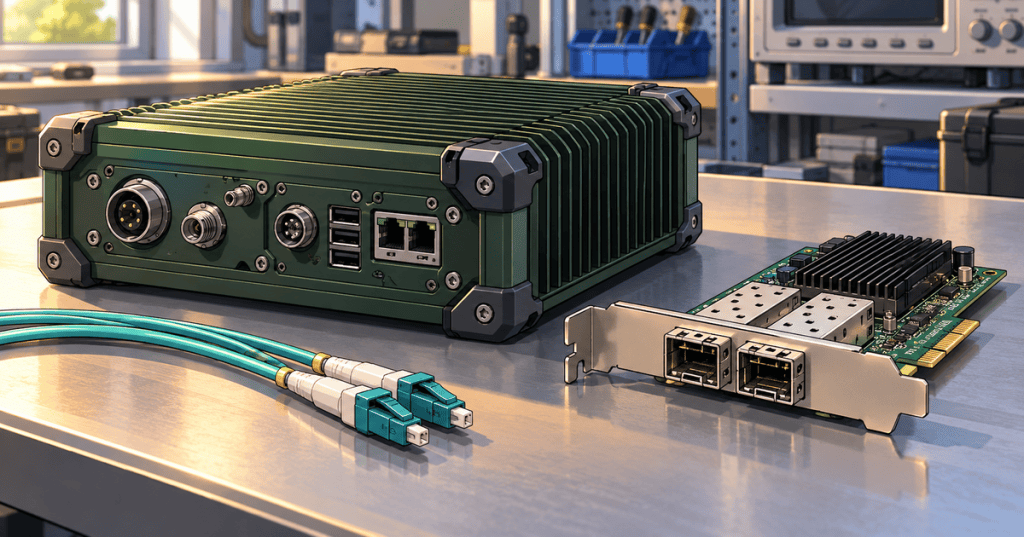
San Diego-based Core Systems announced on October 27 that it is integrating dual-port 25 Gigabit Ethernet into ATMOS2 rugged computers. Planned for early 2027, the configuration targets sensor, video and command-data workloads.
The selected AMD Solarflare X2522-25G-PLUS is an established server network interface card. The development concerns rugged-system integration rather than new Ethernet technology.
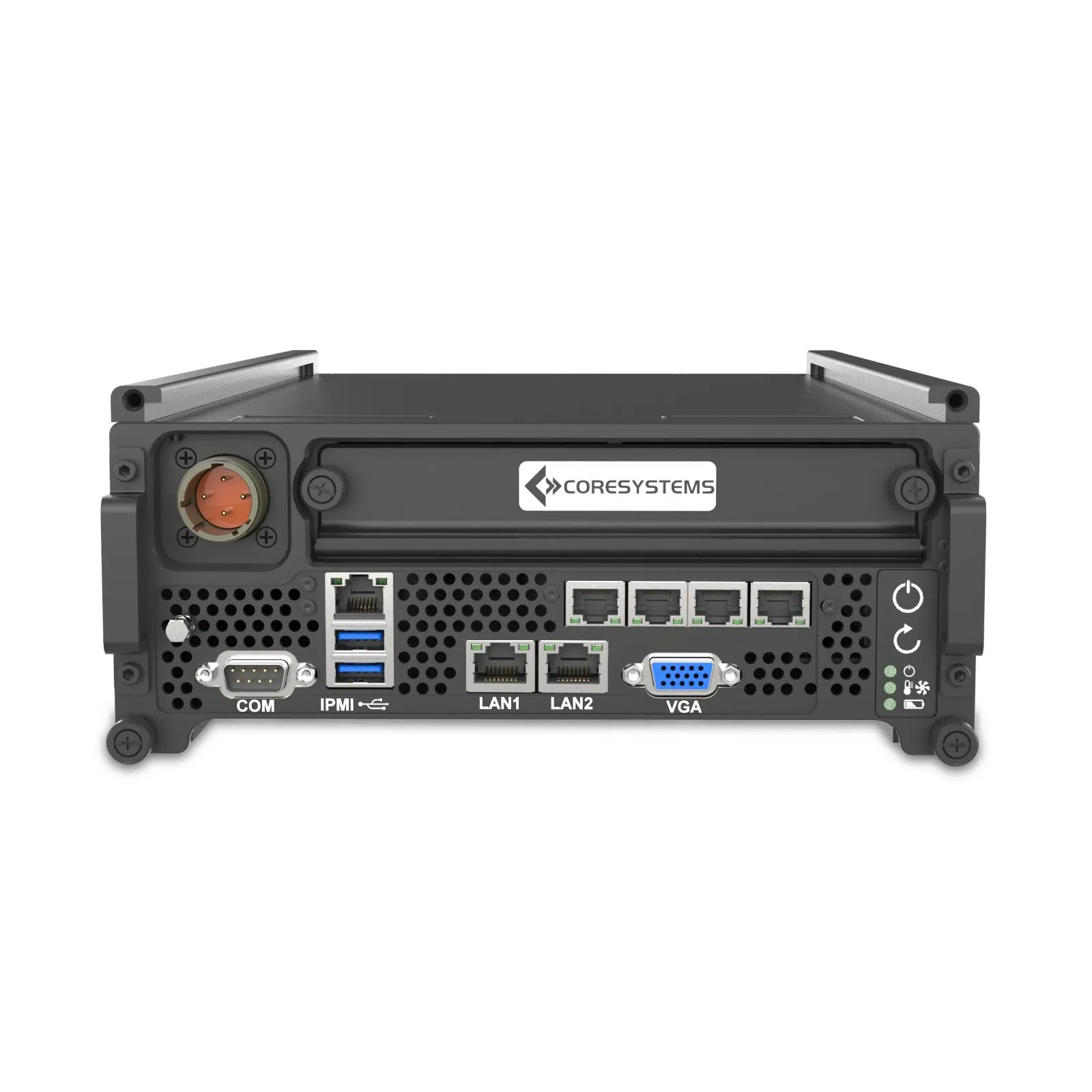
Core’s current ATMOS2 Node specification lists four 10 GbE ports. The proposed adapter instead supplies two ports supporting 10 or 25 GbE, so comparisons must account for different port counts.
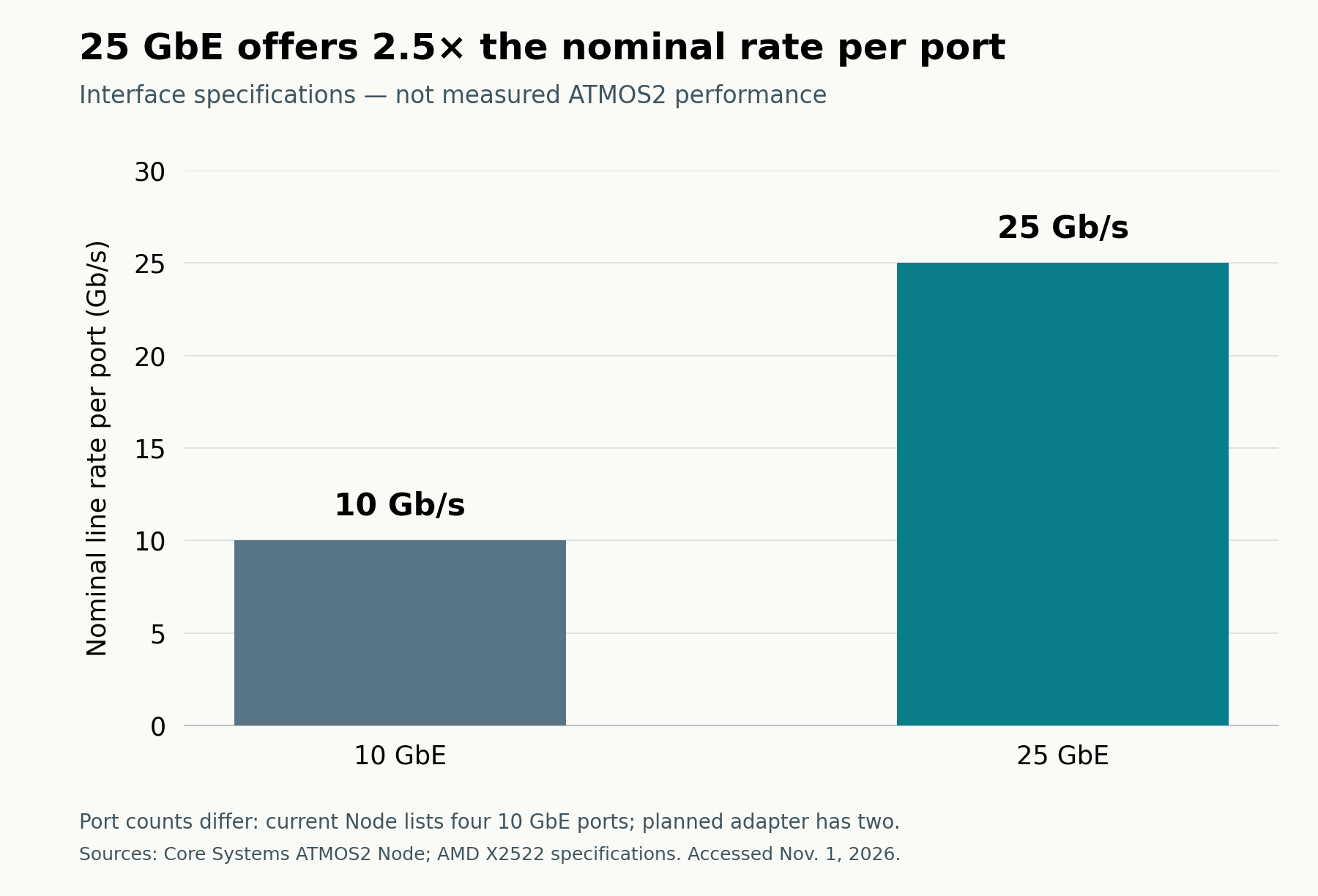
Each 25 Gb/s port has 2.5 times the nominal line rate of a 10 Gb/s port. This 150% per-port increase does not establish an equivalent application speedup.
Two separate ports can support segregated traffic or redundant network paths. They do not automatically combine into one faster connection, and protocol overhead reduces usable payload throughput.
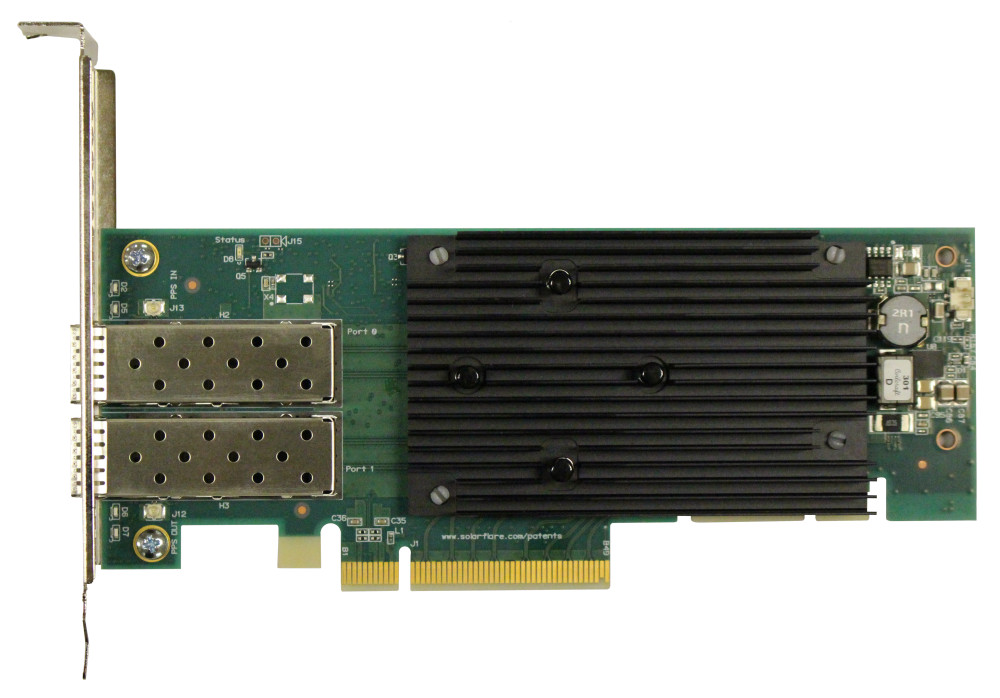
AMD specifies a PCIe 3.1 x8 host interface, hardware timestamping and SFP28 connectivity. Compatible optical transceivers or direct-attach cables and suitable switch ports are still required.
Correct link negotiation matters when connecting equipment with different speed settings. An adapter’s maximum supported rate does not guarantee every installed link operates at that speed.
The design also supports kernel-bypass acceleration, which shortens software processing between applications and the network. Hardware offloads aim to free processor capacity, but Core published no ATMOS2 application benchmark with the announcement.
Solarflare hardware already serves trading and enterprise workloads, as Lenovo documents for its X2522-Plus variant. Moving that approach into rugged systems extends an existing low-latency design to different operating conditions.
Faster links could relieve sensor-data bottlenecks without replacing an entire computing platform. The benefit still depends on storage, software and upstream network fabrics, rather than the adapter alone.
Core targets availability in the first quarter of 2027 and disclosed no configuration price in the announcement. Its claims of reduced overhead remain design objectives rather than independently demonstrated ATMOS2 results.
Integrators should seek sustained-throughput, packet-loss and latency-distribution tests under representative temperatures and loads. Ongoing network monitoring can then establish whether the upgrade delivers useful performance in service.
BitcoinVersus.Tech Editor’s Note: We volunteer daily to ensure the credibility of the information on this platform is Verifiably True. If you would like to support our work and help further secure the integrity of our research initiatives, please scan the QR code below to donate 5,000 sats. For best results, scan the QR code from a laptop or larger screen.

Bitcoin address: 3C9o19EH5HSiwEPyCTmEKzxhNCbo2X6TTb. On a phone, open the QR image on another screen or copy and verify the address in your wallet before sending.
BitcoinVersus.tech is not a financial advisor. This media platform reports on financial subjects purely for informational purposes.


Leave a Reply