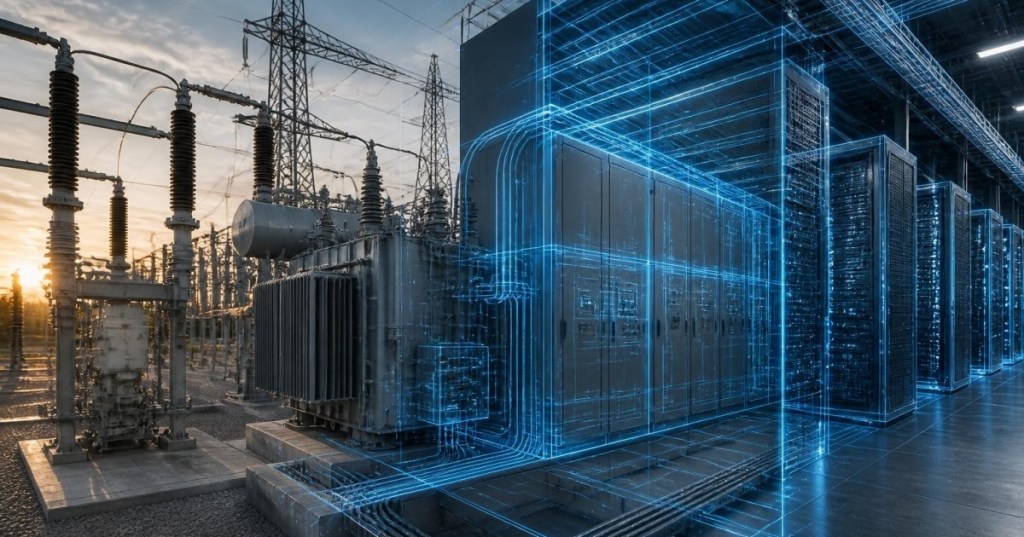
Hitachi Energy announced on October 21, 2026, in Zurich that it has developed power-system simulation software using NVIDIA Omniverse libraries. The engineering tool is intended to test AI data-center electrical designs before construction, initially examining emerging 800-volt direct-current distribution from the grid toward compute racks.
The company says engineers can combine power-system models with changing AI load scenarios to compare proposed designs, analyze electrical resilience and investigate how fast load swings affect the supply chain. That matters as high-density AI racks place greater demands on electrical distribution.
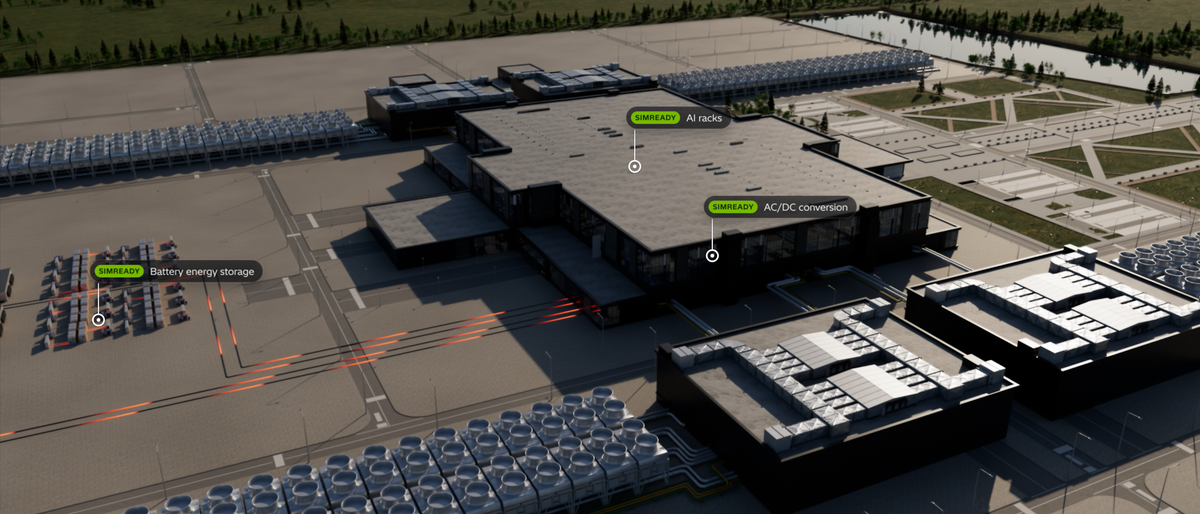
From Grid Modeling to the 800 VDC Rack
The simulation integrates Hitachi Energy electrical models with NVIDIA Omniverse using OpenUSD workflows. Its interface also includes an AI assistant for natural-language questions and scenario comparisons. Hitachi is positioning the capability within NVIDIA’s DSX Sim ecosystem rather than claiming it has built a physical power plant or deployed a commercial AI campus.
This follows Hitachi’s earlier grid-to-rack digital-twin work and a broader industry shift toward 800 VDC power architectures. Related experiments include Enphase’s laboratory transformer demonstration and Vantage’s manufacturing reservation for solid-state transformers. Neither establishes measured performance for Hitachi’s software.
Why Testing Electricity Before Construction Matters
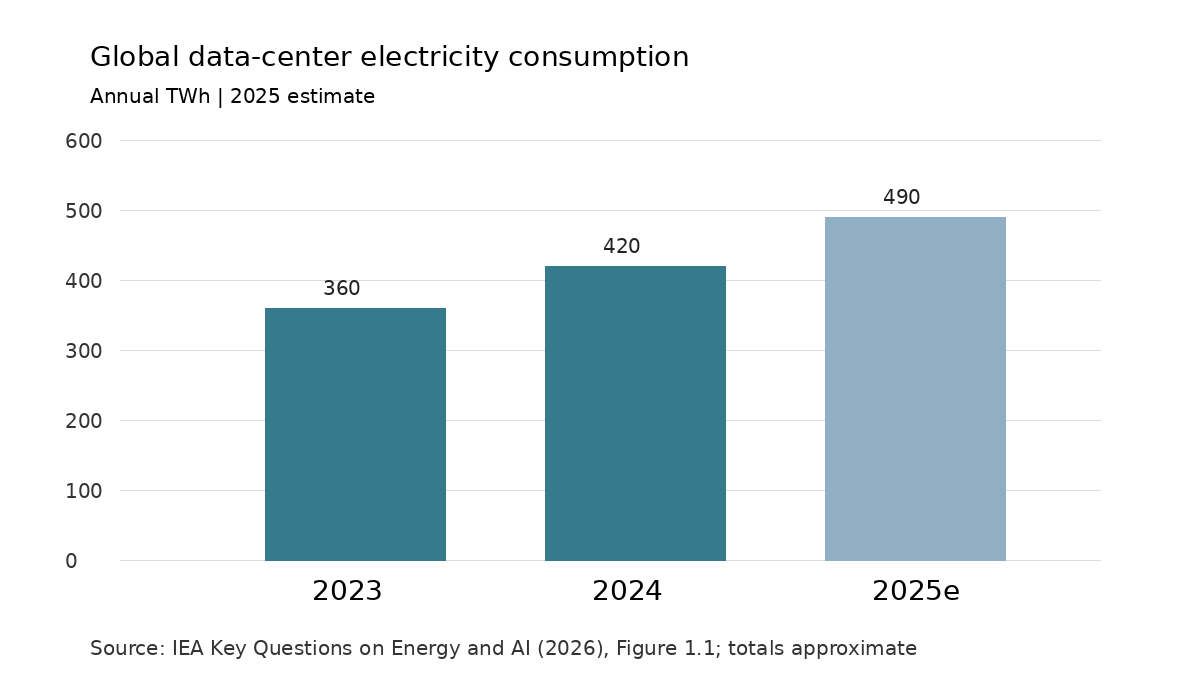
The International Energy Agency’s 2026 analysis estimates that global data-center electricity consumption reached approximately 490 terawatt-hours in 2025, following roughly 420 TWh in 2024. The implied increase is about 16.7%, consistent with the IEA’s rounded 17% growth assessment. The figures are energy consumed over a year, not instantaneous electrical capacity.
The IEA also warns that infrastructure bottlenecks—including transformers, grid connections and equipment supply—can slow data-center construction. Recent transformer manufacturing investments illustrate why avoiding a poor power-system design could have economic value even before construction starts.
What Remains Unproved
Hitachi has not published independent benchmarks showing how much this simulation reduces construction time, power losses or token-per-watt costs. A digital twin can test assumptions, but results still depend on valid component models, realistic workload profiles and later physical commissioning. Simulated resilience should not be described as measured grid reliability.
The next meaningful evidence will be customer deployments, disclosed simulation validation and side-by-side comparisons of real equipment against predicted performance. For now, this is a new engineering planning capability—not confirmation that AI data centers already consume less electricity because of it.
BitcoinVersus.Tech
BitcoinVersus.Tech Editor’s Note: We volunteer daily to ensure the credibility of the information on this platform is Verifiably True. If you would like to support our work and help further secure the integrity of our research initiatives, please scan the QR code below to donate 5,000 sats. For best results, scan the QR code from a laptop or larger screen.

Bitcoin address: 3C9o19EH5HSiwEPyCTmEKzxhNCbo2X6TTb. On a phone, open the QR image on another screen or copy and verify the address in your wallet before sending.
BitcoinVersus.tech is not a financial advisor. This media platform reports on financial subjects purely for informational purposes.


Leave a Reply