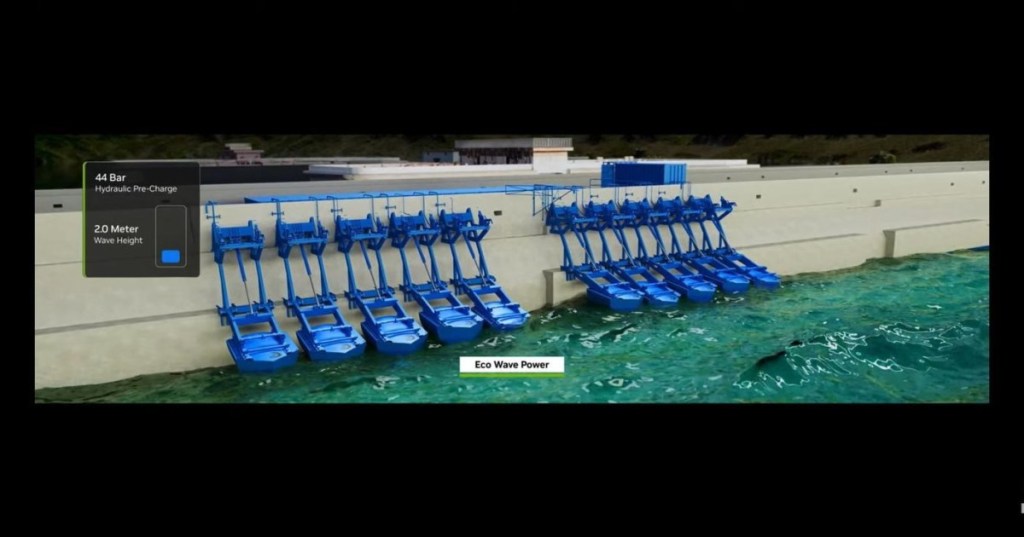
Eco Wave Power announced on November 2, 2026, that it completed the first phase of an AI-powered digital twin for ocean-wave electricity generation. Working with Germany’s AI engineering GmbH, the company developed a physics-based model of how waves interact with its shoreline-mounted floaters. This is a completed simulation milestone, not a new generating station or a working AI data-center power contract.
Simulating waves before building more equipment
The digital model estimates floater motion, wave loading, structural forces and possible electricity output across different sea conditions. Initial machine-learning functions examine load and production forecasts. The team is evaluating NVIDIA Omniverse and Warp for simulation and visualization. Similar digital-twin techniques have been applied to AI data-center power infrastructure.
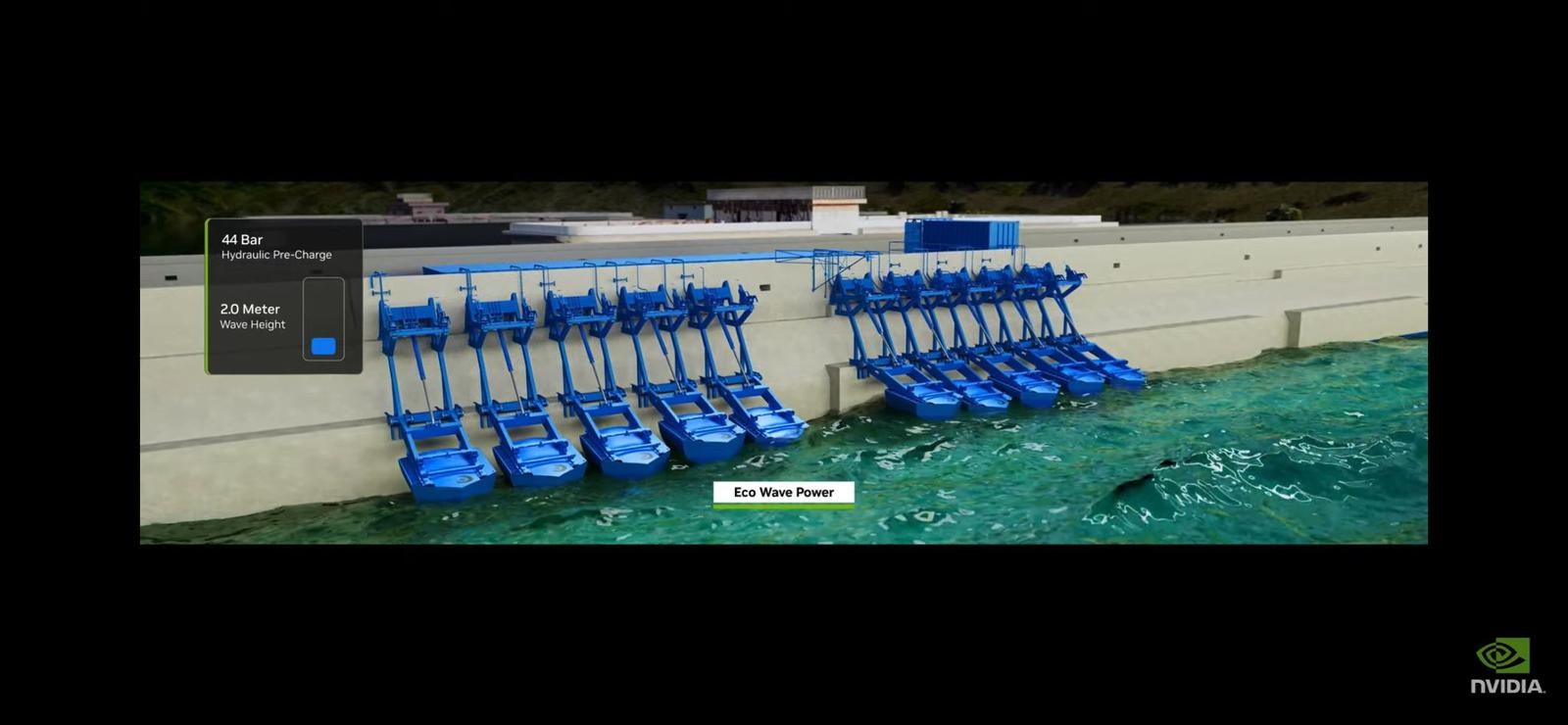
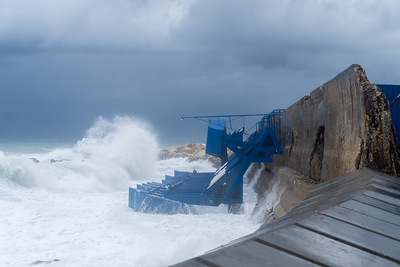
Eco Wave Power’s real system uses mechanical floaters attached to existing piers or breakwaters, with conversion equipment on land. Its 100-kW Jaffa Port station exports electricity to Israel’s grid. That operating project provides a physical reference for the engineering work, alongside distinct projects such as Hawaiʻi’s underwater wave-energy converter.
NVIDIA’s official short film shows Eco Wave Power’s wave-energy equipment and vision for AI-assisted ocean electricity generation.
What measured output can teach the model
An August SEC exhibit recorded selected Jaffa Port peak outputs of 54 kW in February, 26.2 kW in April and 39.1 kW in May 2026. Those measurements came from different wave conditions, so they should not be interpreted as a controlled efficiency test or continuous monthly trend.
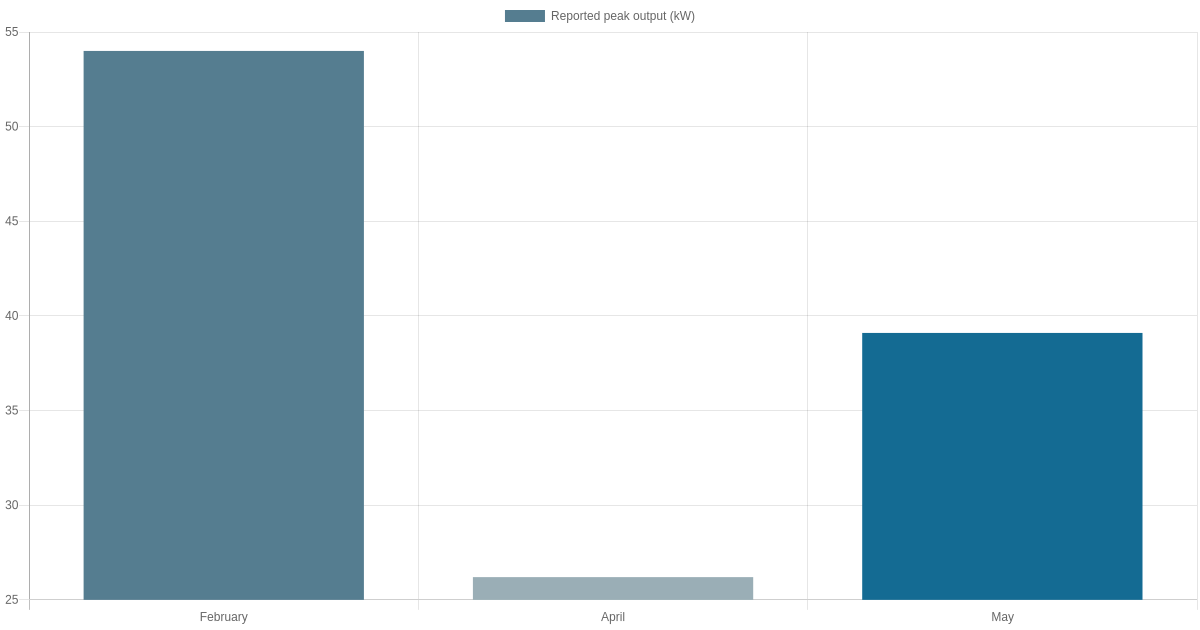
A physical station and its software model answer different questions. Operating measurements show actual electricity production; simulation helps engineers explore proposed designs. The distinction also matters in ocean-power research and capacity-factor calculations.
AI data centers remain a future market
Eco Wave Power says it is discussing coastal electricity supply with data-center developers. It has not announced a signed data-center power purchase agreement in this release. Next, Phase 2 would model hydraulic conversion equipment; Phase 3 would add live sensor and generation data; and Phase 4 would expand machine-learning optimization. As computing campuses seek flexible electricity, the measurable test will be whether later stages improve forecasting, reliability and delivered energy in real operating conditions.
BitcoinVersus.Tech
BitcoinVersus.Tech Editor’s Note: We volunteer daily to ensure the credibility of the information on this platform is Verifiably True. If you would like to support our work and help further secure the integrity of our research initiatives, please scan the QR code below to donate 5,000 sats. For best results, scan the QR code from a laptop or larger screen.

Bitcoin address: 3C9o19EH5HSiwEPyCTmEKzxhNCbo2X6TTb. On a phone, open the QR image on another screen or copy and verify the address in your wallet before sending.
BitcoinVersus.tech is not a financial advisor. This media platform reports on financial subjects purely for informational purposes.


Leave a Reply