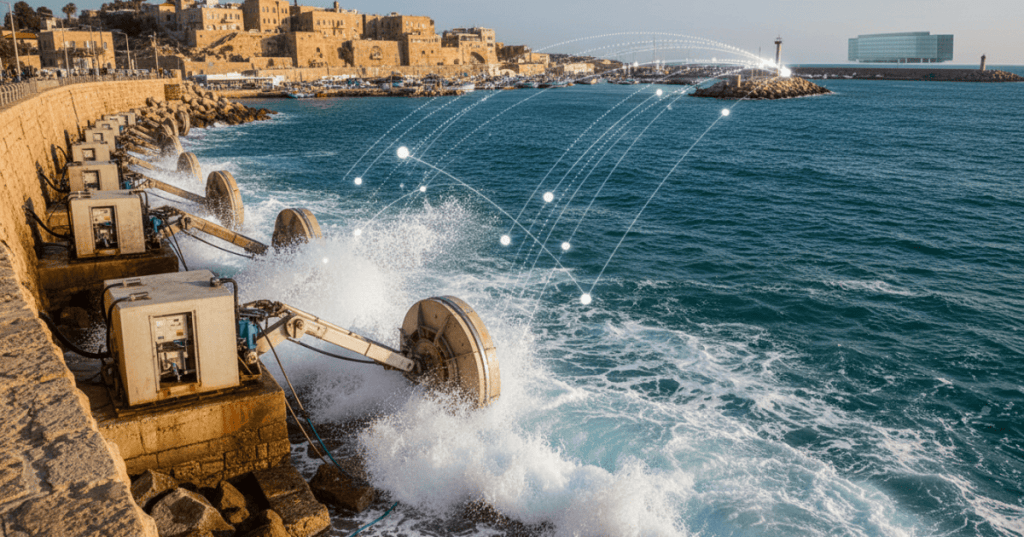
Eco Wave Power and three cybersecurity and digital-transaction companies announced a three-year agreement on November 5 to investigate automated commercial transactions linked to ocean-wave electricity. The partners say a proof of concept at Jaffa Port, Israel, authenticated wave-energy production information and used the resulting data to initiate an auditable digital transaction. No electricity supply agreement with an AI data center or completed financial settlement resulted from the demonstration.
The memorandum of understanding brings together Eco Wave Power U.S., WISeQey, SEALSQ and SEALCOIN. Eco Wave Power supplies the physical wave-energy installation; WISeQey contributes digital identity systems; SEALSQ supplies hardware-security expertise; and SEALCOIN develops machine communications and transaction infrastructure. The new announcement follows Eco Wave Power’s earlier AI digital-twin project, but adds a distinct transaction-security experiment.
Proof-of-concept video identified by Eco Wave Power and WISeQey in their November 5 announcement. Credit: the participating companies. The demonstration does not establish a completed energy sale or financial settlement.
From Wave Motion to Authenticated Records
Onshore wave-energy systems capture mechanical motion from waves striking coastal structures. Floating mechanisms and hydraulic or electrical conversion equipment turn movement into usable electricity. The underlying technology is distinct from the digital layer being tested: a generator produces electrical energy, while an authenticated data system reports measurements and identifies authorized participants.
The partners describe a trusted digital twin that links physical production information to a digital representation. Authenticated records can then initiate a transaction under predetermined commercial rules. The system’s stated purpose is to help prospective buyers establish that reported energy data came from an authorized source, reducing some opportunities for altered or misattributed measurements.
Security Is Not the Same as Power Delivery
A cryptographically signed measurement can help establish who reported a value and whether the record changed afterward. It cannot, by itself, prove that the original sensor was calibrated correctly or that an electricity buyer received a particular quantity of power. Independent metering, grid rules, contracts and financial reconciliation remain necessary.
The parties intend to explore SEALSQ’s QS7001 post-quantum secure element, but the release describes future integration rather than an installed component in the demonstration. Earlier coverage of SEALSQ’s security chips explains the hardware context. Hardware-rooted identity can strengthen authentication, although software compromise, faulty instruments and operational errors remain separate risks.
The wave-energy installation does not establish the electricity output required to serve a commercial AI data center. The announcement supplies no measured demonstration output in megawatts, delivered energy in megawatt-hours, transaction value or operating cost. Readers can compare the underlying generation methods in BitcoinVersus.Tech’s ocean-energy engineering explainer.
Commercial Buyers Remain Prospective
The companies plan to evaluate potential uses with AI data centers, utilities, industrial facilities and energy aggregators. Eco Wave Power says it has initiated discussions with data center developers, but no buyer contract or electricity delivery was announced. Its U.S. business is participating in the NVIDIA Inception program, which does not imply NVIDIA is purchasing electricity from the project.
The partners plan another demonstration at Quantum Days in Cannes on November 19. Commercial deployment would require validation of metering integrity, cybersecurity, settlement mechanisms, regulatory compliance and economics. Previous coverage of emerging energy sources provides context for the gap between laboratory demonstrations and utility-scale deployment.
The immediate advance is an experiment connecting authenticated renewable-energy data to automated commercial logic. Its value to data centers will depend on whether the architecture survives independent verification and produces dependable, economically competitive transactions at operational scale.
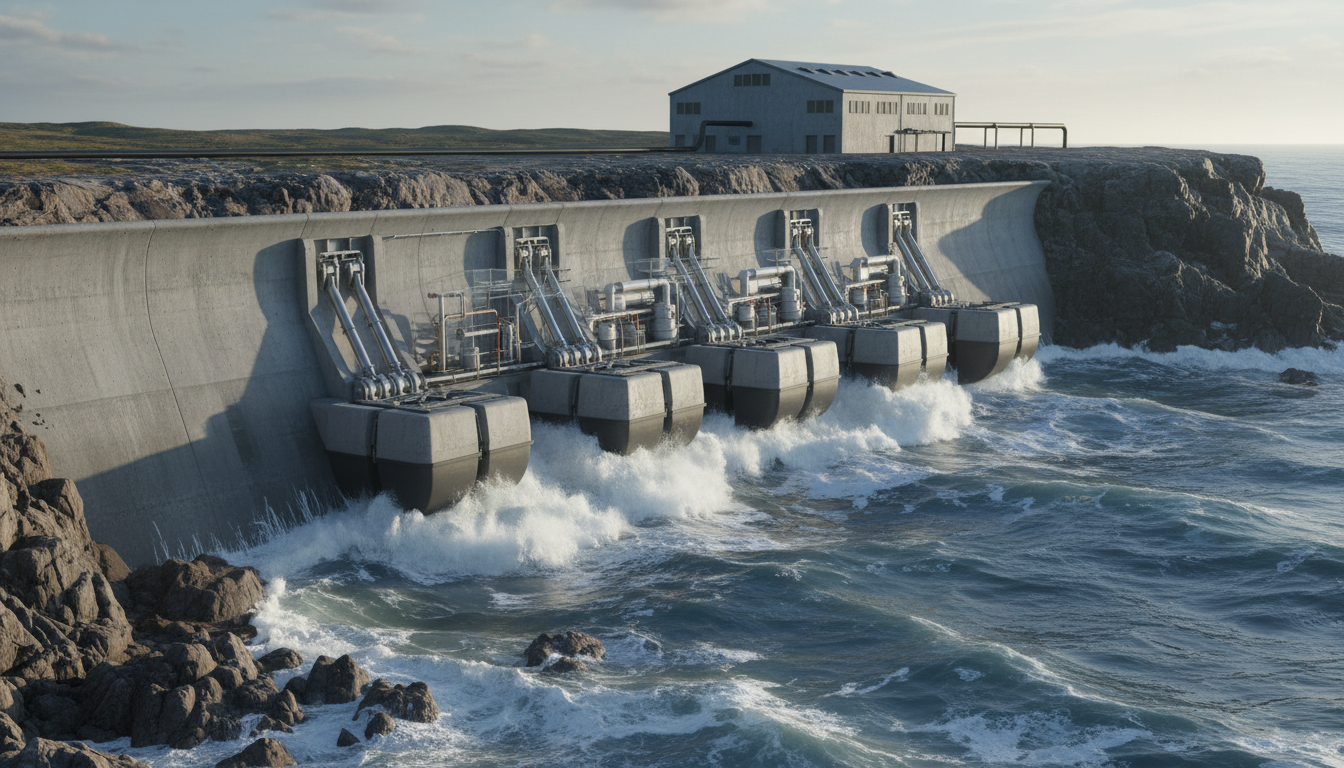
Editor’s Note. The November 5 announcement and Eco Wave Power’s Form 6-K describe a proof of concept and nonbinding development framework, not a completed electricity sale. The video is linked in the companies’ official announcement; actual playback remains a separate validation step. The in-body illustration is conceptual.

Scan the original QR code to support independent research.
We volunteer daily to ensure the information on this platform is Verifiably True. If you would like to support the research, please scan QR code.


Leave a Reply