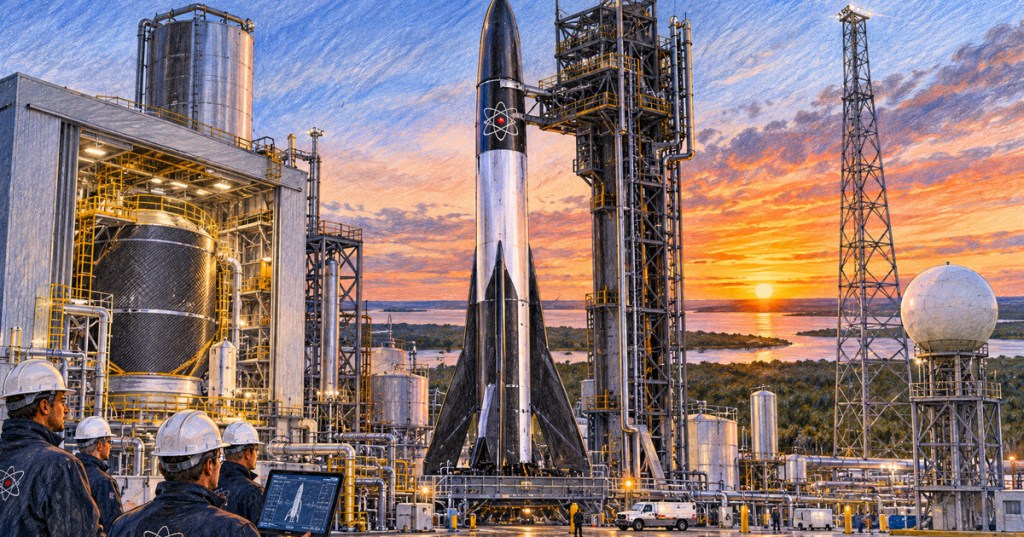
Rocket Lab has pushed the first launch of its Neutron medium-lift rocket into 2027, moving one of the space industry’s most closely watched new launch vehicles beyond its previous 2026 target.
In an October 14 development update, Rocket Lab said the inaugural Neutron mission is now expected next year while the company continues manufacturing, testing and process improvements. The shift is important because Neutron is intended to move Rocket Lab beyond its established Electron small-launch business and into the larger reusable-launch market.
The delay is a manufacturing problem, not a redesign announcement
Rocket Lab has not announced that Neutron’s basic mission or architecture is being abandoned. Instead, management said production-process errors were identified and required corrective work before the first vehicle could continue through the remaining build and test sequence. CEO Peter Beck’s message was that the company would rather protect long-term reliability and launch cadence than force the first flight onto an earlier calendar.
That distinction matters in launch engineering. A rocket program can have a functioning engine, completed structures and an operating launch complex while still being held back by manufacturing repeatability, qualification results or integration work. The same principle is why launch vehicles are divided into carefully validated subsystems and stages, as explained in our guide to why rockets use stages.
Why Neutron matters
Neutron is the vehicle Rocket Lab is using to move into missions that require far more payload capacity than Electron can provide. It is designed as a reusable medium-lift rocket for commercial constellations, national-security missions and deep-space work. Rocket Lab has already signed Neutron launch contracts, so the first flight is not simply a technology demonstration; it is the opening step toward a larger operating business.
The company’s existing launch record gives that transition context. BitcoinVersus.Tech recently covered Rocket Lab’s 97th Electron mission, while our longer-term space-industry analysis placed Rocket Lab among three companies that could challenge SpaceX over the next 50 years. Neutron is the program most likely to determine whether Rocket Lab can make that jump from small launch to a broader launch-and-space-systems competitor.
The market punished the schedule slip
Investors reacted quickly. Investopedia reported that Rocket Lab shares fell about 11% on October 15 after the company disclosed the delay. The market reaction reflects how much future growth has been attached to Neutron rather than a change to Electron’s current launch operations.
The next meaningful checkpoints are manufacturing and test milestones rather than another speculative launch date. Rocket Lab has said it expects to complete additional work through early 2027 before giving a firmer schedule. Until then, the clearest reading is simple: Neutron is still moving forward, but the company has decided the first launch should follow the hardware and production process rather than the calendar.
BitcoinVersus.Tech Editor’s Note:
We volunteer daily to ensure the credibility of the information on this platform is Verifiably True. If you would like to support to help further secure the integrity of our research initiatives, please donate using the QR code provided

For best QR-code scanning results, please scan this donation code from a desktop or larger screen. Mobile screens may prevent camera recognition.


Leave a Reply