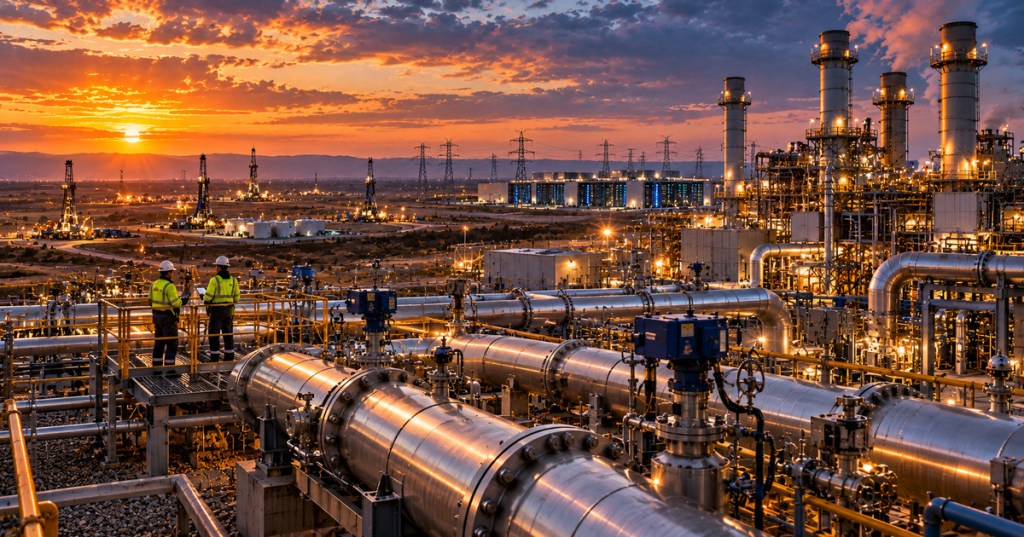
U.S. natural-gas production is forecast to set new annual records in 2026 and 2027, as liquefied natural gas (LNG) exports expand and power demand rises. The Energy Information Administration’s October 6 outlook, highlighted in October 27 reporting, forecasts dry-gas output of 112.20 billion cubic feet per day (Bcf/d) in 2026 and 116.13 Bcf/d in 2027, up from 107.64 Bcf/d in 2025. These are projections, not completed production totals.
Key Takeaways
- Projected dry-gas output grows about 4.2% in 2026 and 3.5% in 2027.
- EIA forecasts U.S. LNG exports of 17.6 Bcf/d in 2026 and 18.6 Bcf/d in 2027.
- Natural gas remains a major source of American electricity, but gas production volume is not electrical capacity.
Gas drilling and LNG demand
Growth is concentrated in the Permian Basin and Haynesville, where new production and infrastructure support supply. International demand matters: the EIA forecasts higher LNG shipments as export plants move gas overseas. The export volumes are forecasts, not proof of shipments already delivered. BitcoinVersus.Tech has previously reported on U.S.–China LNG trade disruptions.
What it means for electricity and data centers
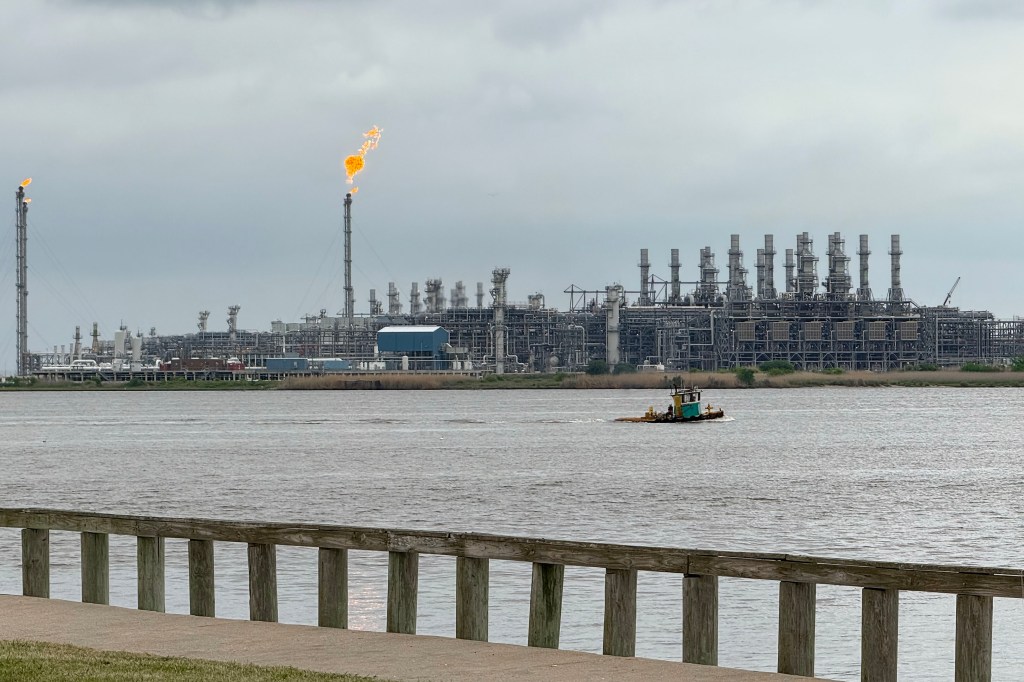
Gas supplies fuel to turbines and on-site data-center generators. EIA projects its share of U.S. electricity generation at about 40% in 2026 and 39% in 2027. Separately, electricity demand is growing as AI facilities and manufacturers expand. Rising gas production therefore supports energy supply, but cannot directly establish the megawatts available to any specific campus.
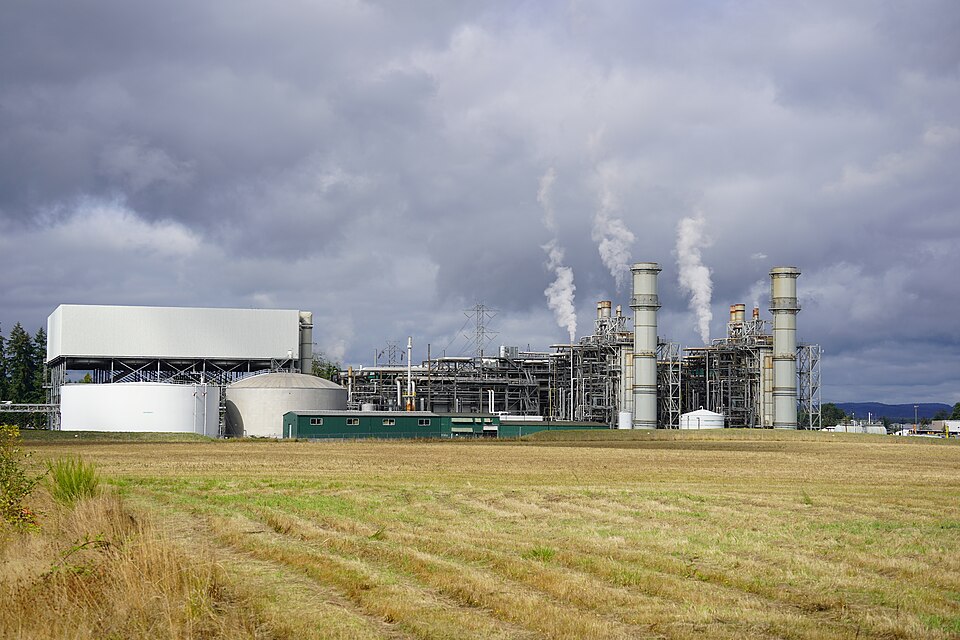
The physical distinction also matters for power-plant capacity factors: fuel production is measured in volume per day, while an electrical plant is rated in watts and produces energy in watt-hours. Costs, pipeline access, generator efficiency and grid interconnection still determine how much usable electricity reaches consumers. EIA’s forecast does not guarantee lower household power bills.
BitcoinVersus.Tech Editor’s Note: We volunteer daily to help ensure our reporting is Verifiably True. To support independent research, scan the donation QR below to donate 5,000 sats (0.00005 BTC).

For best scanning results, display the QR code on a larger screen and scan it with another device.


Leave a Reply