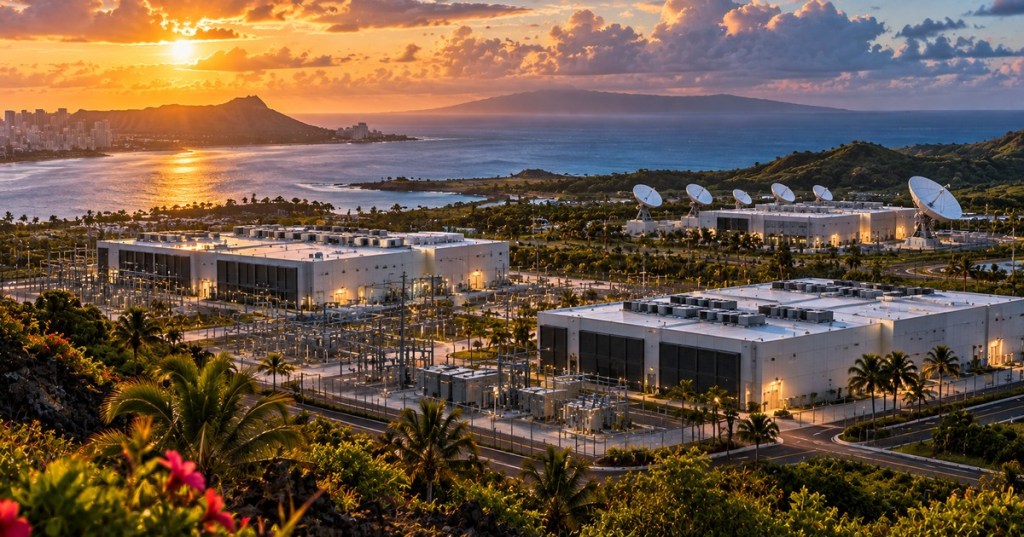
Hawaii’s data-center market looks different from the gigawatt-scale campus race on the mainland. Its largest documented commercial facilities support Pacific communications, cloud services, colocation and disaster recovery. Following our Georgia ranking, we examine three of Hawaii’s largest attributable data-center projects as of October 28, 2026.
Methodology: We order these projects by their largest publicly attributed facility power figure. These are not equivalent measurements: the first is backup generation, the second planned total facility capacity and the third available power published in an earlier brochure. They are not comparable live IT loads or a complete statewide census. Projects without equivalent public power records cannot be assigned guessed values.
3. Servpac MTP Data Center — 1 MW Documented Available Power
The Servpac MTP data center at 200 Kahelu Avenue in Mililani Technology Park occupies a 30,000-square-foot building designed for high-availability services. Its operator brochure reports 1 MW of available power, dual power distribution, backup generators, UPS equipment and redundant cooling. The facility earned Uptime Institute Tier IV Certification of Constructed Facility, reflecting its engineering focus on fault tolerance.
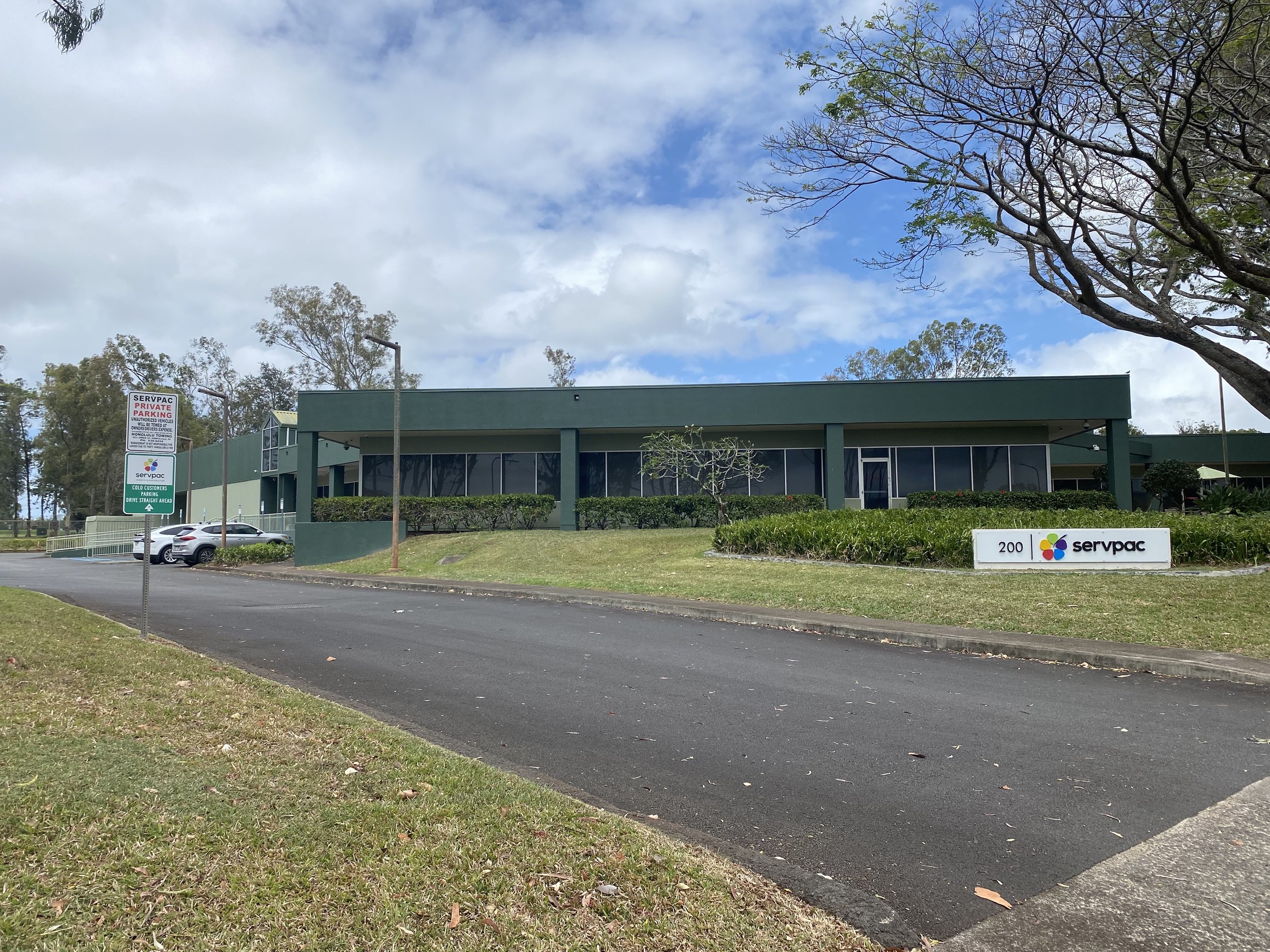
A major new phase began in 2026. Servpac announced groundbreaking on January 22 for Building 2, a $13 million expansion adding more than 15,500 square feet on five additional acres. The company said the project would more than double the center’s capacity and initially targeted completion during the second quarter. No updated full-campus MW rating or verified completion announcement was established in the records reviewed. The 1 MW figure above is therefore the original reported available power, not a newly commissioned campus total.
2. AlohaNAP, Kapolei — 2.7 MW Planned After Phase-One Expansion
At 91-340 Farrington Highway in Kapolei, AlohaNAP provides a connection point for submarine-fiber routes, satellite traffic, regional carriers and cloud platforms. In October 2024, owners Harrison Street and 1547 Critical Systems Realty announced a 10,300-square-foot, 1.5 MW addition. Upon completion of the first phase, the complex was expected to have 22,800 square feet and 2.7 MW of total capacity. This is an announced development specification rather than confirmed energized computing capacity.
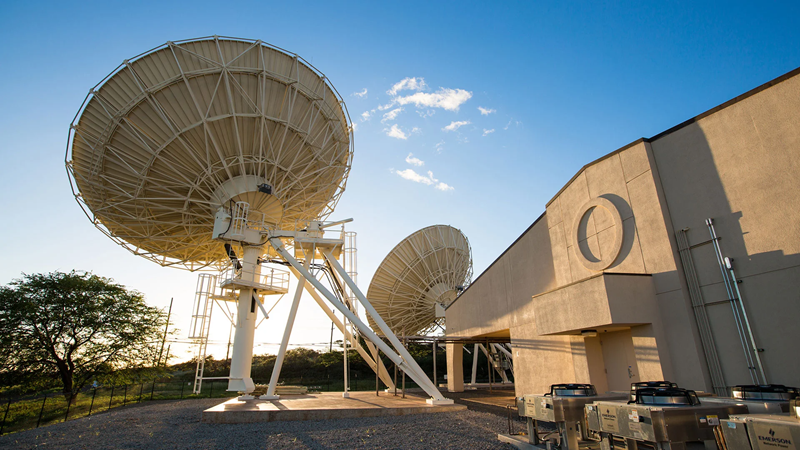
AlohaNAP’s technical importance comes from connectivity as much as electricity. The owners describe access to five submarine-cable networks and more than 40 communication satellites, a valuable configuration for trans-Pacific communications. The site also supports AWS Direct Connect. Its older specification sheet identifies 1.5 MW of utility power for the original facility. A March 2026 operator tour still referred to a 1.5 MW expansion underway. The 2.7 MW project target should not be confused with the pre-expansion electrical service or a measured present-day IT load. Longer-term plans envision a multi-building campus, but the available records do not establish a firm utility-delivery timeline for that larger vision.
1. DRFortress, Honolulu — 4.2 MW of Backup Power
DRFortress, at 3375 Koapaka Street in Honolulu, is described by its operator as Hawaii’s largest carrier-neutral commercial data center. The 65,000-square-foot facility supports approximately 800 colocation cabinets as well as cloud services, private suites, interconnection and disaster recovery. Its current owner, 1547 Critical Systems Realty, publishes a 4.2 MW backup power specification with N+1 redundancy. Backup generator capacity is not an IT-load rating or a measure of current utility consumption, a key distinction when comparing DRFortress with other facilities.
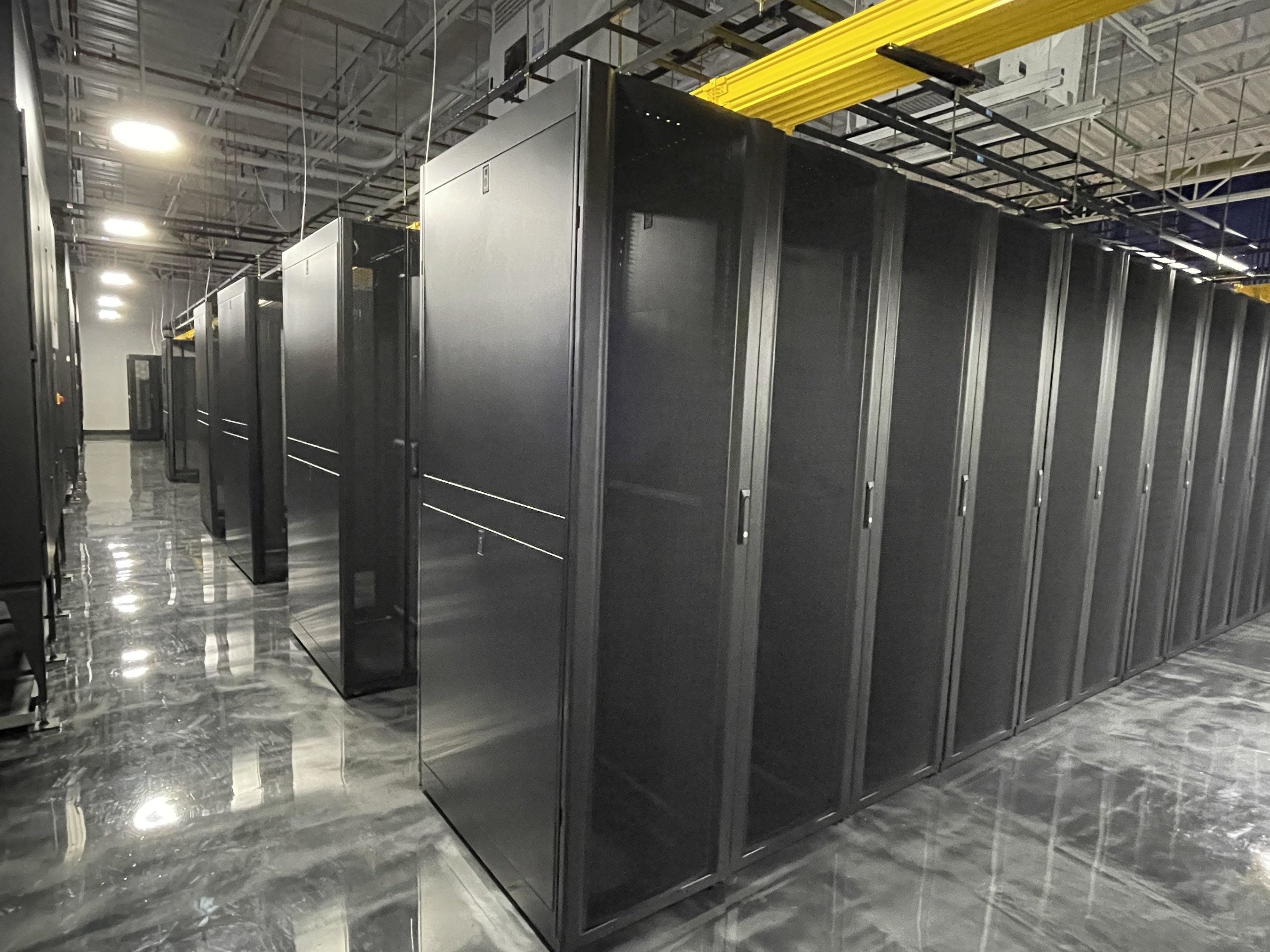
The Honolulu campus has developed through multiple expansion phases. In May 2023, DRFortress announced completion of its fourth data center expansion, including 220 additional cabinets and a plan for two successive 500 kW additions in power density availability. Then in April 2025, 1547 and Harrison Street announced they had acquired the business from GI Partners. Strong carrier connections, protective engineering and continuity services make the site a critical regional digital infrastructure hub.
Hawaii’s Data Center Market Is Different
Island geography affects infrastructure decisions. Electricity supply, coastal weather, land constraints and the reliability of submarine communications favor resilient colocation and edge facilities, rather than necessarily attracting large AI training campuses. Our Florida ranking examines much larger planned megawatt commitments; the Delaware report shows why speculative developments must be separated from facilities actually in service.
Hawaii has additional facilities, including Servpac Puʻuhale, Hawaiian Telcom data centers and University of Hawaiʻi computing infrastructure. Their publicly accessible operator descriptions did not provide consistent power specifications suitable for this list. Independent databases sometimes estimate capacity for specialized research computing, but those numbers should not be treated as confirmed utility ratings without original documentation.
The defining finding is not that DRFortress currently draws 4.2 MW while AlohaNAP uses 2.7 MW and Servpac uses 1 MW. Those would be unsupported comparisons. Instead, each operation demonstrates a different aspect of capacity: backup resilience, planned expansion and available power. The difference matters as the national megaproject pipeline grows and data-center electricity figures become more prominent in public debate.
Editor’s Note: This article uses original operator materials, distinguishes development targets from operating capacity, and includes three credited facility photographs. Original diagrams are excluded. Support independent reporting at BitcoinVersus.Tech by donating 5,000 sats using the QR code below.

Scan the QR code with a Bitcoin wallet while viewing the story on a separate screen.


Leave a Reply