Kentucky’s largest proposed data center campuses could each require more than a gigawatt of electricity, but none of the three leading projects has established full operating demand at that scale. The newest entry in BitcoinVersus.Tech’s state power rankings examines Meta’s Mason County campus, Rubix Data Centers’ Russell brownfield project, and the Brookfield–NextEra development at the U.S. Department of Energy’s Paducah Site. The comparison is based on public information available as of October 28, 2026.
Ranking method: Entries are ordered by the largest published planned total campus electrical demand or utility service capacity: 2,200 MW, 2,000 MW, and 1,800 MW, respectively. These are not current utility-meter readings, and the three proposals have different levels of permitting, commercial commitments, and engineering maturity. The investment totals and generation facilities discussed later do not determine rank. A power projection is not interchangeable with the critical IT load delivered to computing equipment.
3. DOE Paducah AI Campus — 1,800 MW Planned Utility Service
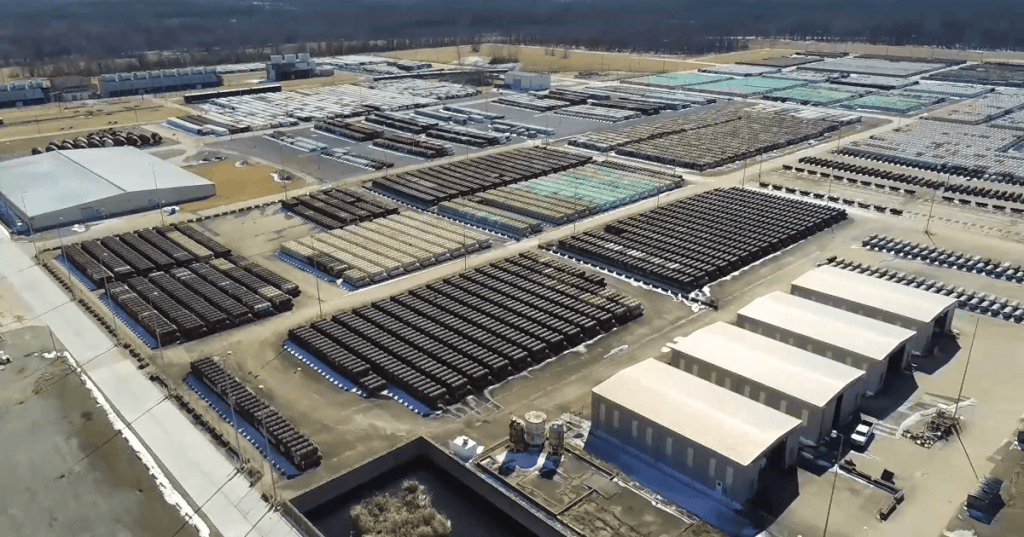
The U.S. Department of Energy announced on July 29, 2026 that Brookfield, NextEra Energy, and three regional power organizations would pursue an AI and high-performance computing campus on land at the former Paducah Gaseous Diffusion Plant. The estimated private-sector program exceeds $100 billion, although that figure describes the proposed long-term infrastructure investment, not money already spent. The federal site retains transmission, water, roads, and other infrastructure from its uranium-enrichment history, while environmental cleanup continues.
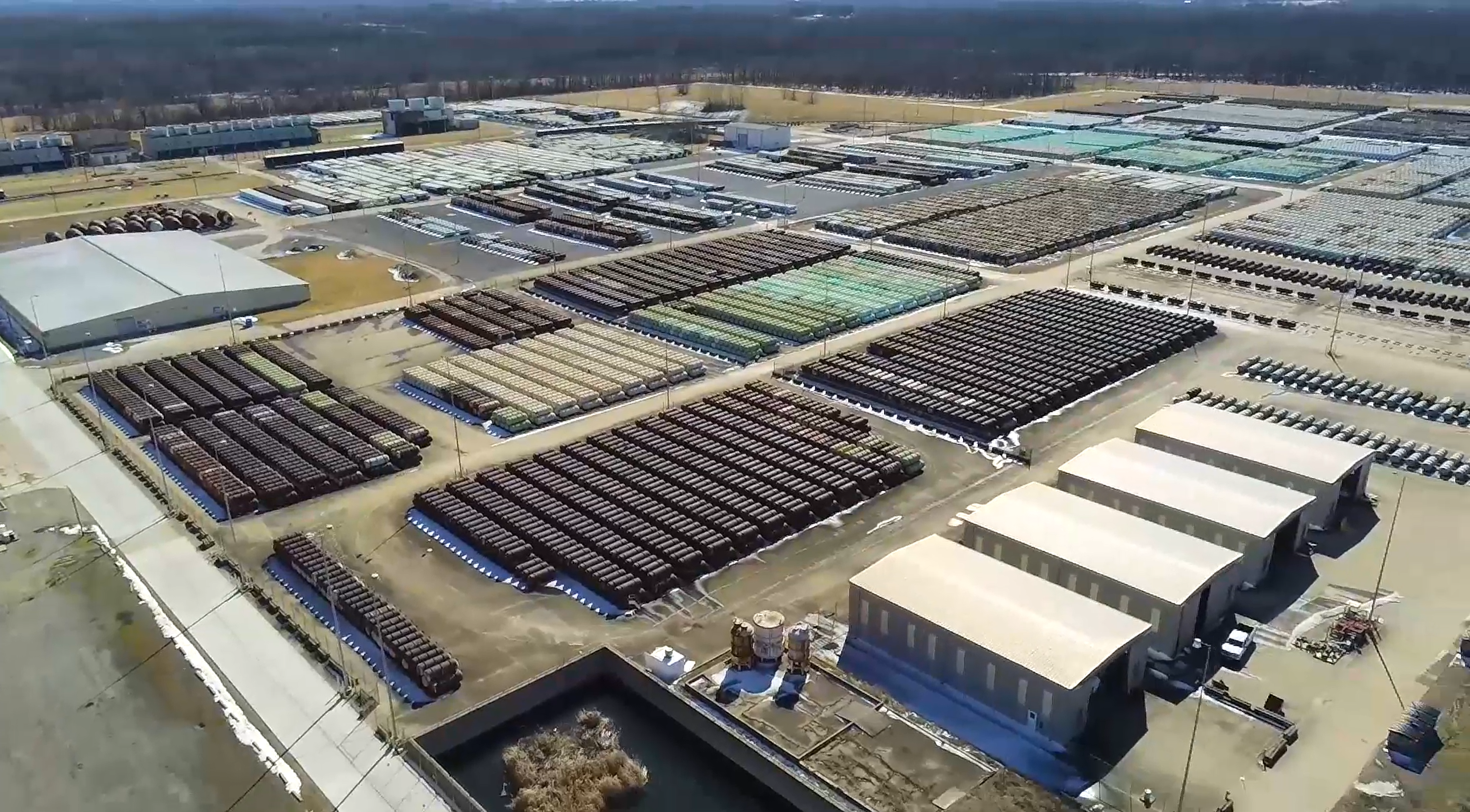
NextEra’s original coalition announcement specifies up to 1.8 GW of utility capacity and more than 1.2 GW of compute capacity at full development, targeted for 2032. The distinction is important: 1.8 GW measures overall planned electric service, whereas compute capacity is the proposed allocation to IT equipment. The project remains subject to definitive negotiations, utility regulatory oversight, construction approvals, and delivery of new infrastructure.
NextEra plans to develop up to 2 GW of natural-gas generation plus up to 2.6 GW of battery storage discharge capacity to support the campus and potentially supply surplus electricity to the grid. The companies describe these together as up to 4.6 GW of dedicated resources; however, battery power is not continuous generation, and its energy duration must be known before it can be translated into GWh of available storage. Those supply-side figures are not additional data center load and should not be summed into the 1,800 MW ranking number.
The announcement projects approximately 8,000 construction jobs and 600 long-term operating jobs. These estimates depend on the project reaching its planned phases. The physical reuse plan will also need to coordinate with ongoing federal decontamination and decommissioning work.
2. Rubix Data Centers, Russell — 2,000 MW Proposed Full Buildout
At the former AK Steel works in Russell, Greenup County, Rubix Data Centers, a subsidiary of Spain-based Submer Group, proposes a phased AI campus on an industrial brownfield. The strongest primary evidence is the developer’s municipal due-diligence questionnaire submitted to the City of Russell. It describes approximately 500 acres, eight two-story buildings, and about 2 million square feet of total floor space. The company gives an initial phase near 155 MW, rising toward 2,000 MW of total campus power.

Rubix estimates that full campus power could support roughly 1,400 MW of IT load; it proposes $8 billion to $12 billion in construction investment before the additional cost of GPUs and other computing hardware. These remain developer assumptions. The Kentucky Lantern’s July 22 reporting connects the proposal to the city’s published questionnaire and the local debate over an earlier data center moratorium.
The utility distinction is particularly consequential at Russell. Rubix explicitly says its expansion to 2 GW is subject to Kentucky Power/AEP studies and commitments. Its documents do not establish signed and energized electric service at that level. The company estimated annual water use around 55 million gallons in its early discussions, but water demand and cooling configuration may change as design advances. Land reuse and equipment procurement should not be reported as completed while zoning, grid interconnection, customers, and financing remain unsettled.
1. Meta Mason County Campus — 2,200 MW Reported Long-Term Scale
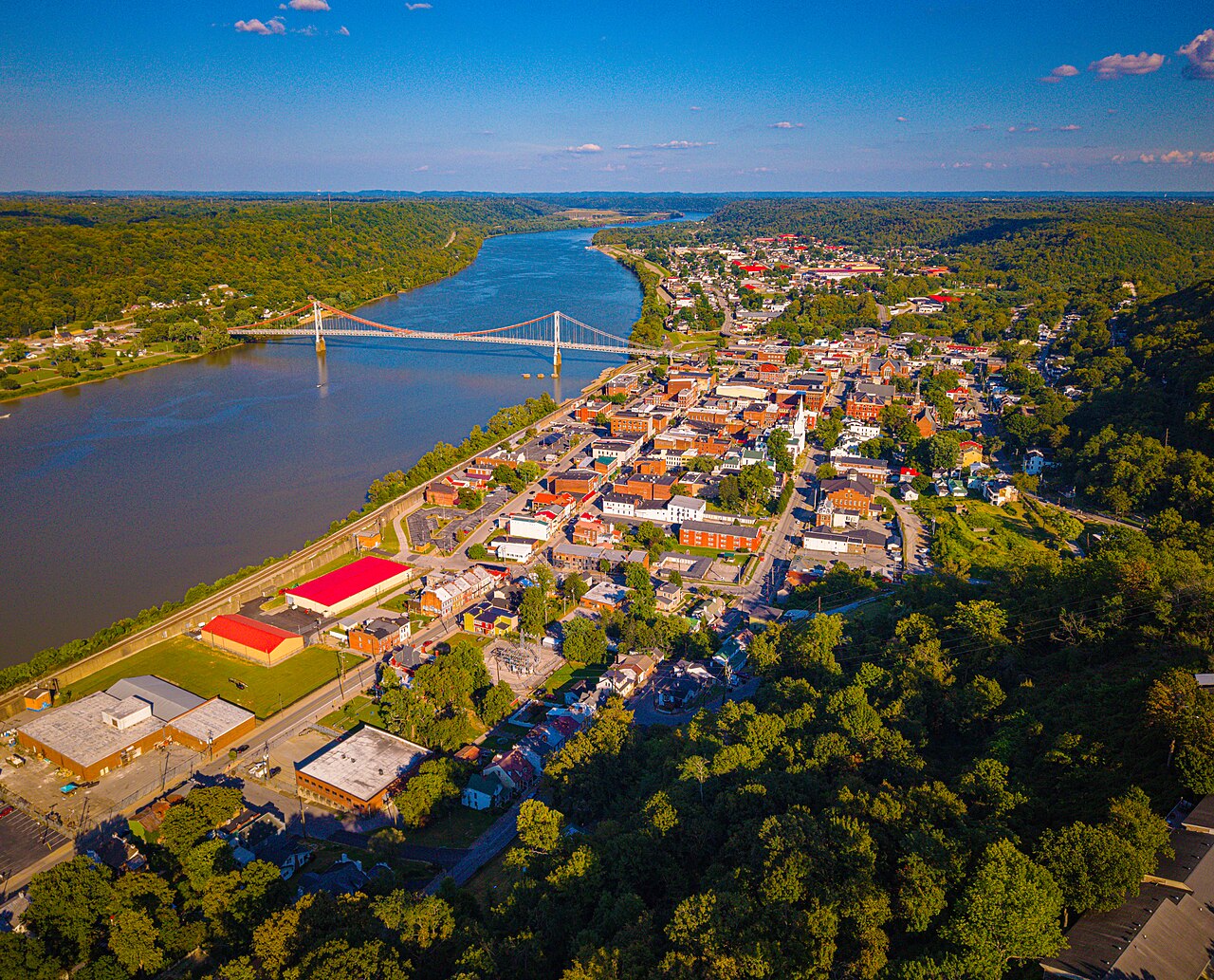
Meta emerged publicly on October 13, 2026 as the company behind an enormous hyperscale data center proposal near Maysville in Mason County. The county’s Fiscal Court unanimously approved major project agreements involving Meta’s development affiliate, Crisham LLC, after officials had spent months negotiating under confidentiality arrangements. WVXU’s October 15 local reporting identifies a reported 2.2 GW long-term campus and roughly 2,900 acres of land. The 2.2 GW figure is reported development scale, not an independently demonstrated utility interconnection.
The original October 6 county presentation summary is more precise about the starting point: the developer’s first planned data center is 396 MW, while the broader proposal envisions as many as six buildings built in stages. That first-phase figure must not be confused with the proposed full-campus rating. County officials discussed an initial investment measured in tens of billions of dollars, construction employment, and more than 400 potential full-time jobs at buildout. These are forecasts and contractual goals rather than existing operations.
The agreements approved by Mason County include an industrial revenue bond, a development agreement, and road-related obligations. They establish an important political and land-use milestone, but do not constitute completed construction, commissioned servers, or 2.2 GW of power flowing to the site. The project has also prompted concerns over water resources, tax arrangements, farmland conversion, and transparency. Its actual capacity will depend on final electrical facilities, permits, parcel acquisition, and phased construction.
Other Large Kentucky Projects Worth Following
Several substantial projects fall below the top three on their latest documented power figures. Kentucky Industrial Alliance’s Cave Point Commerce Center near Cave City has a reported 1,200 MW proposal but faces a local permitting moratorium and litigation. TeraWulf’s Muskie Data Campus in the EastPark industrial area has 1,000 MW of contracted service planned in two 500 MW phases. That is a stronger commercial power commitment than several higher-ranked concepts, though it is smaller numerically. Our earlier Muskie report and October financing update examine its transition from Bitcoin mining infrastructure toward AI hosting.
Also in Kentucky, PowerHouse Data Centers and Poe Companies have proposed an 800 MW development in Carrollton. Separate plans and nuclear power-generation proposals should not be ranked as individual data center demand simply because they quote larger gigawatt figures. Generator nameplate capacity and campus electricity requirements answer different questions.
Power Capacity Is Not Energy Consumption
A megawatt is a rate of power use; a megawatt-hour is an amount of energy. For example, a hypothetical campus drawing 2,200 MW constantly over 24 hours would require 52,800 MWh, or 52.8 GWh of energy. This is a unit-conversion illustration, not a measured daily consumption claim for Meta. Similarly, the utility power demanded by cooling and electrical support systems cannot be treated as identical to the IT power consumed by servers. For additional context, compare our Iowa state ranking and Illinois ranking.
Kentucky’s ranking may change as additional corporate plans become official and utility filings supersede early developer estimates. The next meaningful evidence will be final service agreements, interconnection studies, county permits, substations, occupied data halls, and documented energization. These milestones will determine how much of the state’s proposed hyperscale pipeline actually enters service.
BitcoinVersus.Tech
BitcoinVersus.Tech Editor’s Note: We volunteer daily to ensure the credibility of the information on this platform is Verifiably True.
If you would like to support to help further secure the integrity of our research initiatives, please scan the QR code to donate (For the best results, scan the QR code on a Laptop or larger screen).
Suggested donation: 5,000 sats. Bitcoin address: 3C9o19EH5HSiwEPyCTmEKzxhNCbo2X6TTb. Confirm that the destination matches your Bitcoin wallet before sending.

BitcoinVersus.tech is not a financial advisor. This media platform reports on financial subjects purely for informational purposes.


Leave a Reply