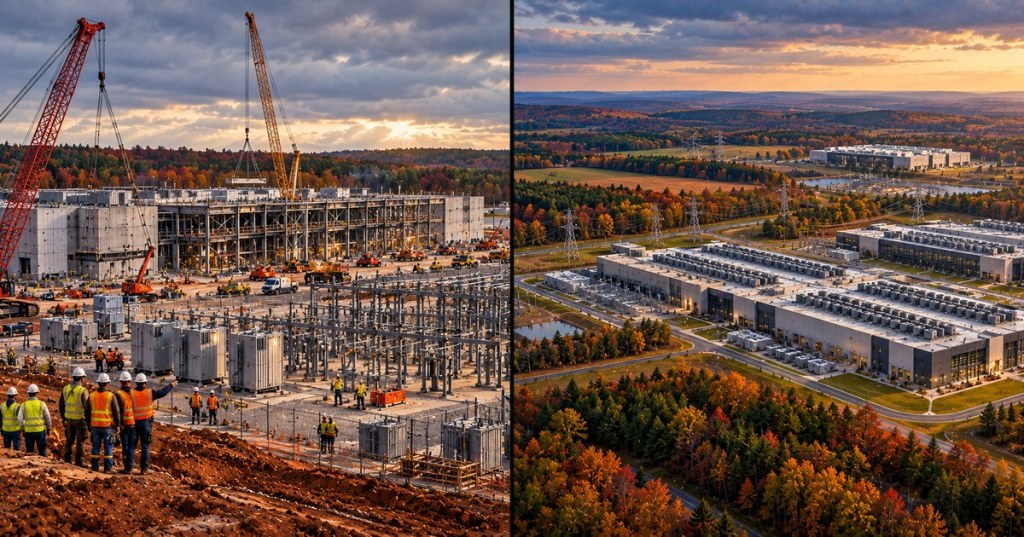
North Carolina’s biggest data center developments in 2026 span an Amazon campus already under construction near Hamlet, a 900-megawatt proposal outside Henderson and a 750-megawatt project near Moncure that won a court fight against a county moratorium. The three plans highlight the state’s appeal to cloud and artificial-intelligence companies, while also testing how local governments manage electricity demand, environmental safeguards and the prospect of new investment.
The ranking uses the largest site-specific electrical-demand figures documented in public reporting or development filings for identifiable, still-advancing projects. Amazon’s approximately 1,000 MW requirement is a reported estimate, not an official statement of installed IT power. Natelli Holdings’ 900 MW and ECO TIP West’s 750 MW are proposed campus loads. None of these numbers represents megawatts of computers currently energized. Operating sites such as Google’s Lenoir campus, Apple’s Maiden campus and Meta’s Forest City campus remain central to North Carolina’s existing infrastructure, but their disclosed figures do not establish larger comparable new projects for this ranking.
3. Triangle Innovation Point West, Chatham County — 750 MW Proposed
ECO TIP West LLC is pursuing a 750 MW data center at Triangle Innovation Point West, a more than 400-acre heavy-industrial property near Moncure in southeastern Chatham County. The developer says it had spent more than $11 million pursuing the campus before county commissioners imposed a temporary data-center moratorium in February 2026. Its stated figure is a future electrical requirement, not a utility meter reading or proof of a fully approved 750 MW electrical connection.
The project acquired a clearer legal path on September 17, 2026, when Superior Court Judge John Morris granted summary judgment in favor of ECO TIP West. The Chatham Journal’s examination of the ruling says the judgment establishes liability and attorney-fee entitlement in the developer’s challenge to the moratorium; damages remained for later proceedings. The decision allows the developer’s project to advance despite the pause, but does not itself supply construction permits, financing, an electric-service agreement or a final tenant. Chatham County was reviewing its options.
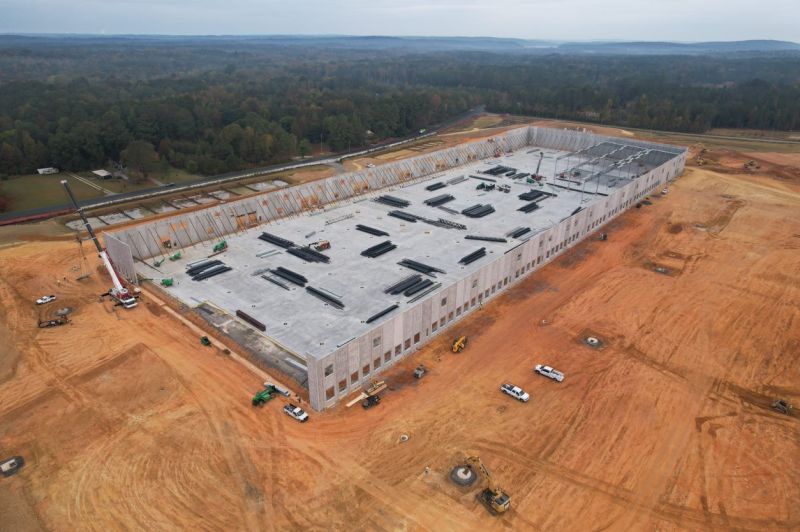
The dispute dates to Chatham County’s February 11 moratorium, which sought time to assess noise, cooling-water requirements, electricity infrastructure and other effects of large data centers. County officials argue that clearer development standards protect surrounding communities. ECO TIP West maintains that the site had already been designated for intensive industrial development and that its earlier investment and land-use rights deserved protection.
Both positions turn on tangible obligations. Reusing a prepared industrial site can encourage new capital spending and specialized jobs without converting untouched countryside. But a proposed 750 MW load would also demand substantial utility engineering, transmission access and a credible cooling design. A court decision about zoning rights is only one step toward demonstrating that the electrical and environmental systems are ready.
2. Natelli Holdings, Vance County — 900 MW Proposed
Natelli Holdings submitted a multi-phase plan for a 900 MW data center campus on approximately 529 acres near U.S. Highway 158 and Poplar Creek Road outside Henderson. The September 9 filing, compiled from county documents, describes up to 12 data center buildings totaling approximately 4 million square feet over four phases. Developer Tom Natelli has said his team completed substantial planning and has discussed grid service with Duke Energy. This is still a proposed project, not 900 MW of operating servers.
The developer’s application arrived as county officials considered new requirements for buffering, cooling, noise, generators and utility service. On September 14, the Vance County Board of Commissioners adopted a 60-day moratorium by a 5–2 vote, according to WIZS News. The pause is scheduled to terminate November 13 or earlier if the county adopts replacement standards. Whether Natelli’s filed application qualifies for protection under pre-existing rules or the moratorium’s exemptions is a legal and administrative question; the filing should not be labeled final approval.
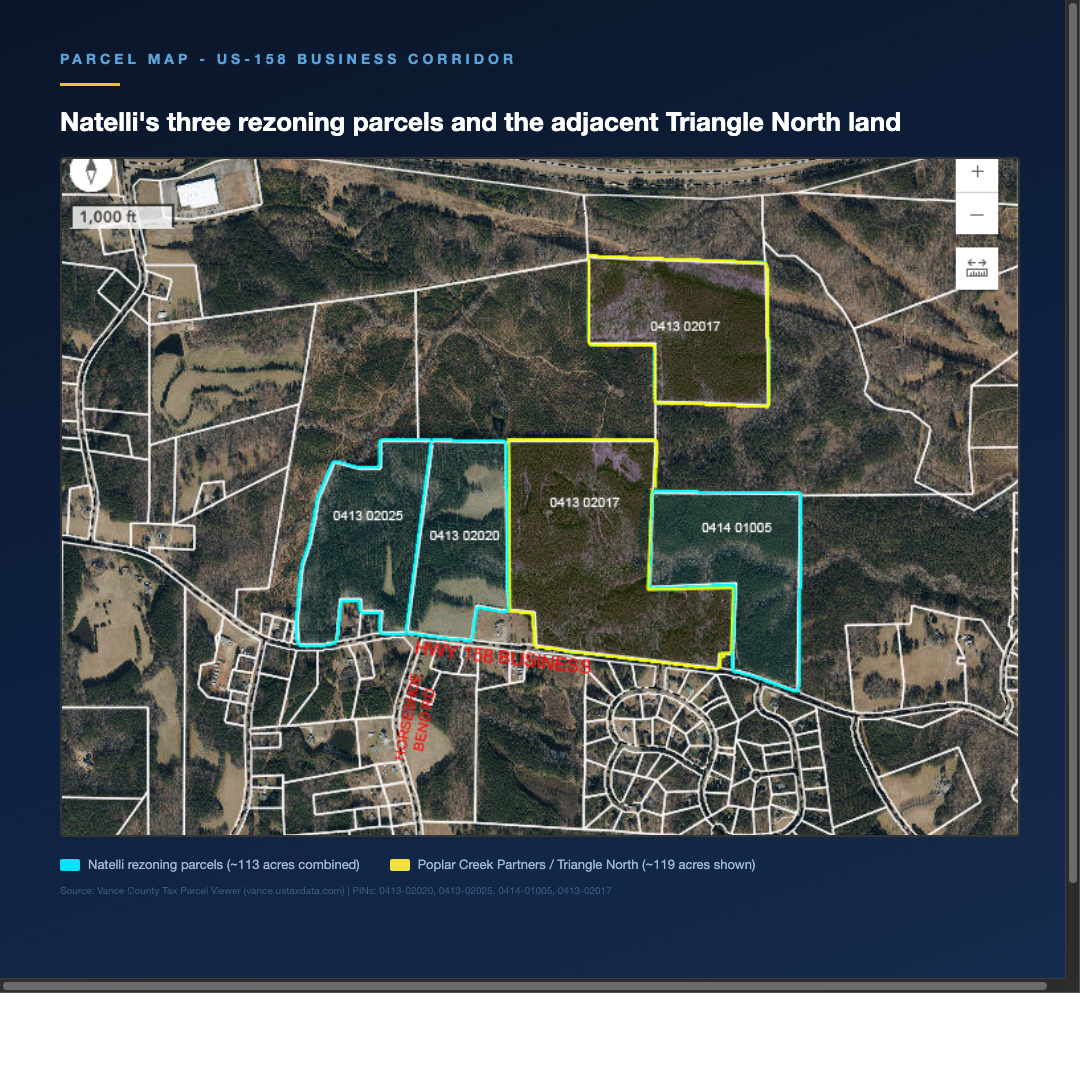
The project’s potential economic benefits include construction contracts, industrial tax revenue and long-term demand for skilled electrical and technical services. That case needs to be tested against the number of permanent positions ultimately committed, the cost of new power infrastructure and actual water and wastewater needs. The published filing does not settle those engineering costs, and no identified cloud tenant or verified 900 MW utility-service contract was established in the materials reviewed as of October 29.
Residents have also questioned whether the county’s rules adequately address cooling and water supply during a period of regional drought. Natelli has proposed adjustments to draft county standards, including language allowing different cooling approaches and rules governing how utility information is submitted. Those changes deserve analysis of their practical consequences, rather than an assumption that every large data center will use the same cooling technology or amount of water. Project-specific design and enforceable permits will determine the impact.
1. Amazon Web Services, Richmond County — Approximately 1,000 MW Reported Demand
Amazon Web Services is constructing a $10 billion cloud and AI campus at the Energy Way Industrial Park near Hamlet in Richmond County. North Carolina announced the project in June 2025, alongside a pledge of at least 500 permanent jobs. Amazon broke ground in October 2025, and public permit filings describe a large phased campus with approximately 20 to 21 buildings planned across several years. This is the most advanced new megascale data center development in the ranking.
The project’s roughly 1 GW power requirement comes from WUNC’s September 16 reporting rather than a detailed public Amazon IT-load specification. That number is best read as an estimate of eventual facility electricity demand, including non-IT systems, not as proof that 1,000 MW of computing racks have been installed or energized.
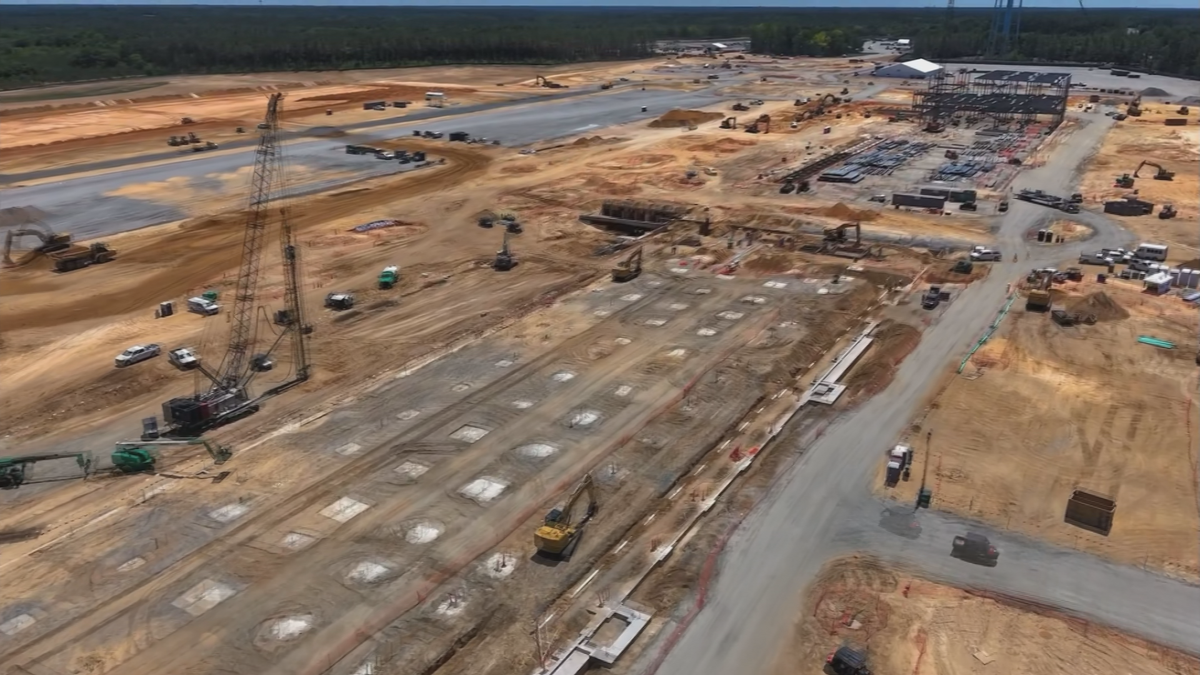
One of the most consequential issues is how the site will receive power before permanent connections are ready. On August 28, North Carolina environmental regulators issued two air permits: one for 588 emergency backup diesel engines on Amazon’s campus and another for 57 temporary Duke Energy engines supplying bridge power. Those 645 engines form two distinct systems, not additional measured data center IT capacity. Duke’s bridge equipment is subject to a retirement condition; the backup units are intended for emergencies and testing rather than ordinary continuous service.
The Division of Air Quality says permit limits, emissions controls, monitoring and tests are designed to keep regulated pollutants below applicable standards. Residents and environmental advocates have raised concerns about diesel exhaust, cumulative pollution, noise and oversight. Regulators’ approval is evidence that the permit applications satisfied the agency’s applicable air-quality review, not a guarantee that emissions will be zero or that the full campus’s power and water demands are resolved. Local monitoring and compliance reports will matter as construction progresses.
The economic opportunity is substantial. Amazon’s stated $10 billion program could create work for contractors, electricians, engineers, fiber specialists and operations staff, while supporting a new tax base in Richmond County. The accompanying challenge is to ensure the promised workforce investment and utility infrastructure become measurable results, with costs fairly allocated and permit conditions enforced.
Why Other Large North Carolina Proposals Are Not Ranked Here
Not every large headline reflects an advancing site. The Tract Mooresville Technology Park, associated with a possible $30 billion investment and an estimated 1,500 MW development scale in some project trackers, was withdrawn in August 2025. The Charlotte Observer reported that the town’s mayor said the request would not move forward. It therefore does not belong above active 2026 projects.
The proposed Kingsboro data center in Edgecombe County was also withdrawn after resistance to its planned development. A separate 460 MW Terra Nexus concept at 316 Old Cheraw Highway in Rockingham won a conditional rezoning vote in September but still faces construction and utility-service approvals. Richmond County Daily Journal reported the council vote and its limits. Terra Nexus remains significant, but its reported scale falls below the three projects ranked here.
Other investments, including PointOne/CyrusOne’s Lee County campus, WhiteFiber’s sites in Rockingham and Yadkin counties, and major cloud facilities operated by Apple, Meta, Google and Microsoft, are important parts of North Carolina’s computing infrastructure. Their stage, purpose and published capacities differ. This comparison does not imply those established sites have less computing output today than the unbuilt Vance or Chatham proposals.
The Next Test Is Delivered Infrastructure
North Carolina can attract cloud, AI and colocation investment while insisting that developers document electrical service, capacity milestones and the cost of grid upgrades. A project announced at 900 MW is not equivalent to an operating 900 MW server installation. Backup generator nameplate ratings cannot be added to the same project’s expected electrical demand. And a zoning approval, favorable court judgment or conditional air permit covers only a defined part of a much larger development process.
For comparable state-by-state analysis, see BitcoinVersus.Tech’s New York, New Mexico, New Jersey and Nevada rankings, along with its data center capacity-planning lesson. The evidence that will matter most in the next few years is contracted and energized electricity, completed buildings, jobs actually created and documented environmental performance.
BitcoinVersus.Tech
BitcoinVersus.Tech Editor’s Note: We volunteer daily to ensure the credibility of the information on this platform is Verifiably True. If you would like to support our work and help further secure the integrity of our research initiatives, please scan the QR code below to donate 5,000 sats. For best results, scan the QR code from a laptop or larger screen.
Bitcoin address: 3C9o19EH5HSiwEPyCTmEKzxhNCbo2X6TTb. Confirm the destination address before sending.

BitcoinVersus.tech is not a financial advisor. This media platform reports on financial subjects purely for informational purposes.


Leave a Reply