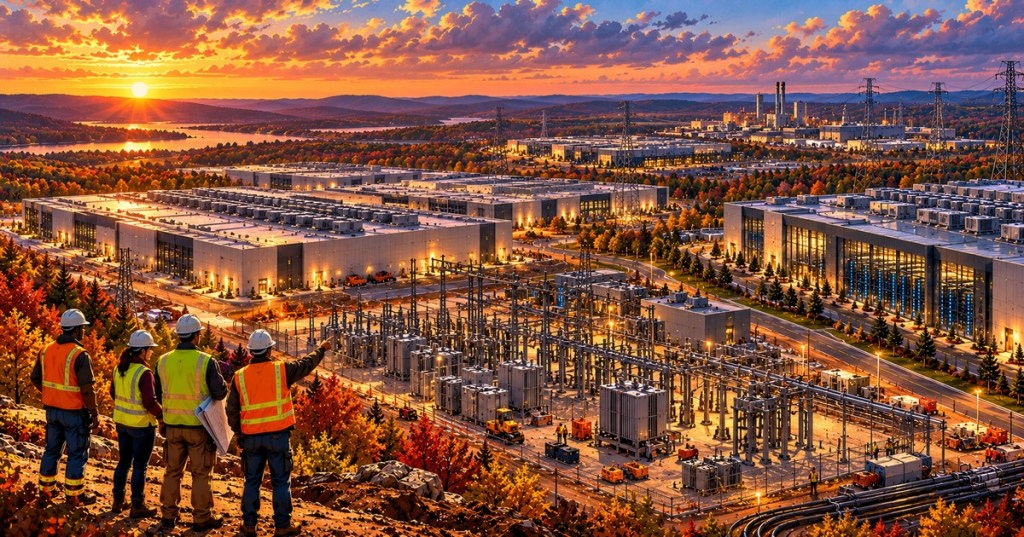
Ohio’s data center expansion now stretches from the former Portsmouth uranium-enrichment complex in Pike County to one of the country’s most advanced operating AI superclusters in New Albany. OpenAI and SB Energy have proposed a multi-gigawatt computing campus in southern Ohio, Meta says its Prometheus facility is already training advanced AI models, and Cologix is developing an 800-megawatt data center park in Johnstown. The size of these projects makes electricity supply, infrastructure costs and local environmental review central to the state’s technology economy.
This ranking identifies three separately documented, large Ohio data center campuses with company-published scale figures and tangible development or operating milestones. It uses planned computing capacity or publicly described full-campus scale, not today’s metered electricity use. That distinction matters: PORTS-Pike is an enormous phased plan with early civil work; Prometheus is operational but not yet at its intended full scale; and Cologix has acquired the Johnstown land and begun marketing facilities without documenting 800 MW online.
3. Cologix Johnstown Campus — 800 MW Planned Full Buildout
Cologix announced a new hyperscale and AI-ready campus in Johnstown, Licking County, after acquiring approximately 154 acres in November 2024. Its original company announcement describes a potential 800 MW across eight data center buildings and approximately 2 million square feet, with more than $7 billion in anticipated development spending. The 800 MW figure is a full-build opportunity, not evidence that eight buildings or all their substations are commissioned.
The project has since gained more concrete shape. A June 1, 2026 regional announcement describes Cologix’s initial investments in Johnstown and nearby Orange Township as more than $1.1 billion combined, with at least 90 expected direct jobs across those two developments. These are separate sites, and the Orange Township investment cannot be treated as another 800 MW added to the Johnstown master plan.
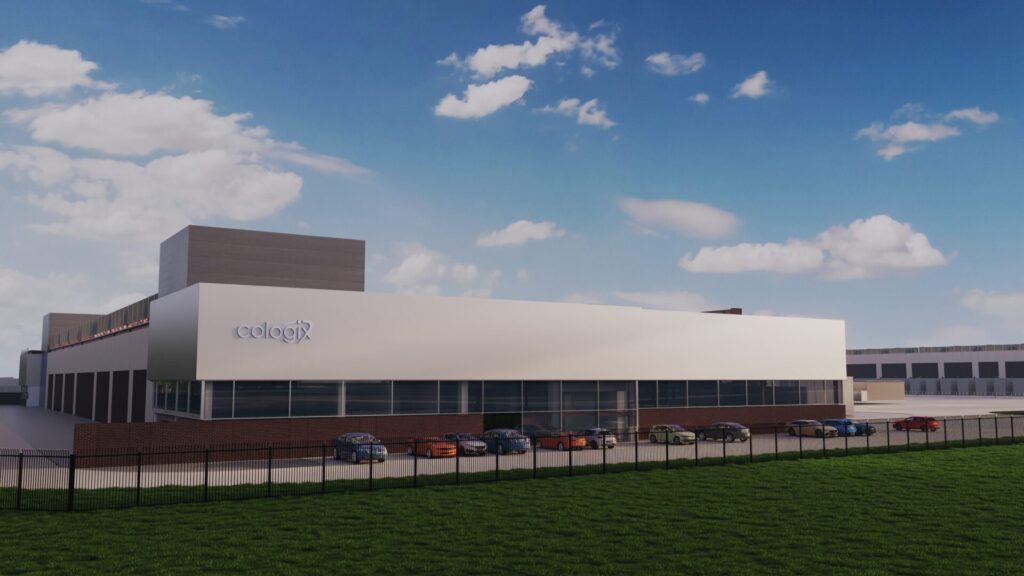
Cologix’s own COL8 facility page identifies the site at 11719 Duncan Plains Road and describes high-density, liquid-cooling-ready space with fiber access to its broader Columbus network. The company is marketing space for pre-leasing; a marketed data hall should not be confused with an energized customer installation. State construction records also identify work on the COL7 and COL8 property, but do not certify that the ultimate 800 MW campus has been completed.
The case for expansion is that Central Ohio has abundant fiber routes, established cloud and enterprise customers and a growing workforce familiar with critical-power construction. The corresponding risk is a heavy concentration of new electrical demand. Utilities and developers must demonstrate adequate generation, substation access, cooling designs and cost recovery before all eight planned buildings can work at their advertised scale.
2. Meta Prometheus, New Albany — Gigawatt-Scale AI Supercluster, First Phase Operating
Meta’s Prometheus facility in New Albany is substantially further along. In an October 19 engineering report, Meta said the first phase is complete and has already been used to train its Muse models. The company describes the installation as a gigawatt-scale AI supercluster, which is the basis for ranking its planned scale ahead of the 800 MW Johnstown development. It does not report a precisely metered 1,000 MW IT load currently operating.
Meta says the cluster includes hundreds of thousands of GPUs across conventional data halls and rapidly deployed computing structures connected through high-speed fiber networks. It expects the system to grow toward approximately one million GPUs at full scale. Its announced equipment includes NVIDIA GB200 and GB300 platforms, with newer systems planned. These are hardware deployment descriptions from the operator, not independent measurements of total computing power.
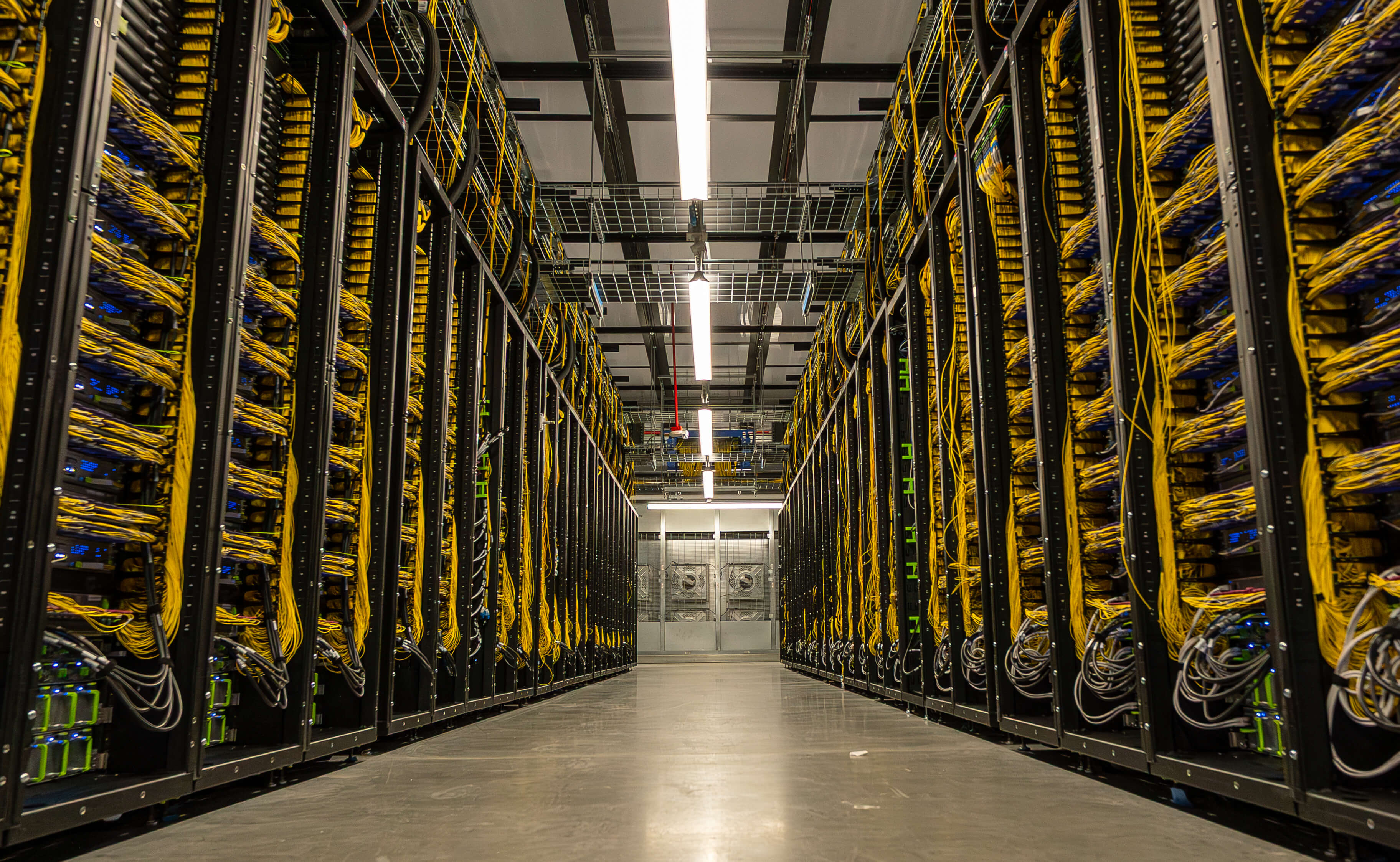
Independent data center researcher Epoch AI estimates that Prometheus had approximately 471 MW of IT power in operation in its October 2026 model, with a projection exceeding 1 GW later in the decade. The estimate comes from satellite images and equipment assumptions rather than a utility bill or an audited Meta capacity disclosure. It illustrates why the words “gigawatt-scale” should not be converted into a claim that exactly 1 GW of servers is energized today.
The company’s latest engineering discussion also describes cooling and software changes designed to stabilize large AI training jobs. Meta reports using closed-loop liquid cooling and says its optimized training workloads achieved high shares of productive processing time. Actual electricity consumption, peak load and water withdrawal should be evaluated separately from performance percentages.
Meta’s official Prometheus supercluster video, linked from its October 19 engineering report.
New Albany has experienced years of construction and infrastructure investment around data centers. Meta’s community update describes more than $1.5 billion invested in Ohio, approximately 300 operational jobs and around 1,200 tradespeople at peak construction. Those figures are company-reported and do not establish how many employees a fully expanded gigawatt-scale cluster will require. The City of New Albany has also clarified that Meta’s nuclear power procurement arrangements do not mean a nuclear station is being built inside the city.
1. PORTS-Pike Technology Campus, Piketon — 8 GW Planned IT Capacity
The largest documented Ohio data center development is PORTS-Pike, the proposed AI campus at the former Portsmouth Gaseous Diffusion Plant near Piketon. In its August 17 announcement, OpenAI said it agreed to secure approximately 8 gigawatts of critical IT capacity from developer SB Energy. NVIDIA’s disclosed arrangement provides credit support for an initial 4.25 GW of land, power and building capacity, plus an option on the remaining 3.75 GW. SB Energy is to own and operate the development under a 20-year arrangement with OpenAI as the customer.
The project’s broader 10 GW number has also appeared in federal and county presentations. It describes the proposed whole-site power and infrastructure envelope, while OpenAI’s 8 GW IT figure refers to computing equipment power. Separately, the Department of Energy described plans for 10 GW of new generation, including 9.2 GW of natural gas, supported by new transmission. Neither a proposed gas plant nor a transmission-system rating should be added to the IT capacity and labeled extra server demand.
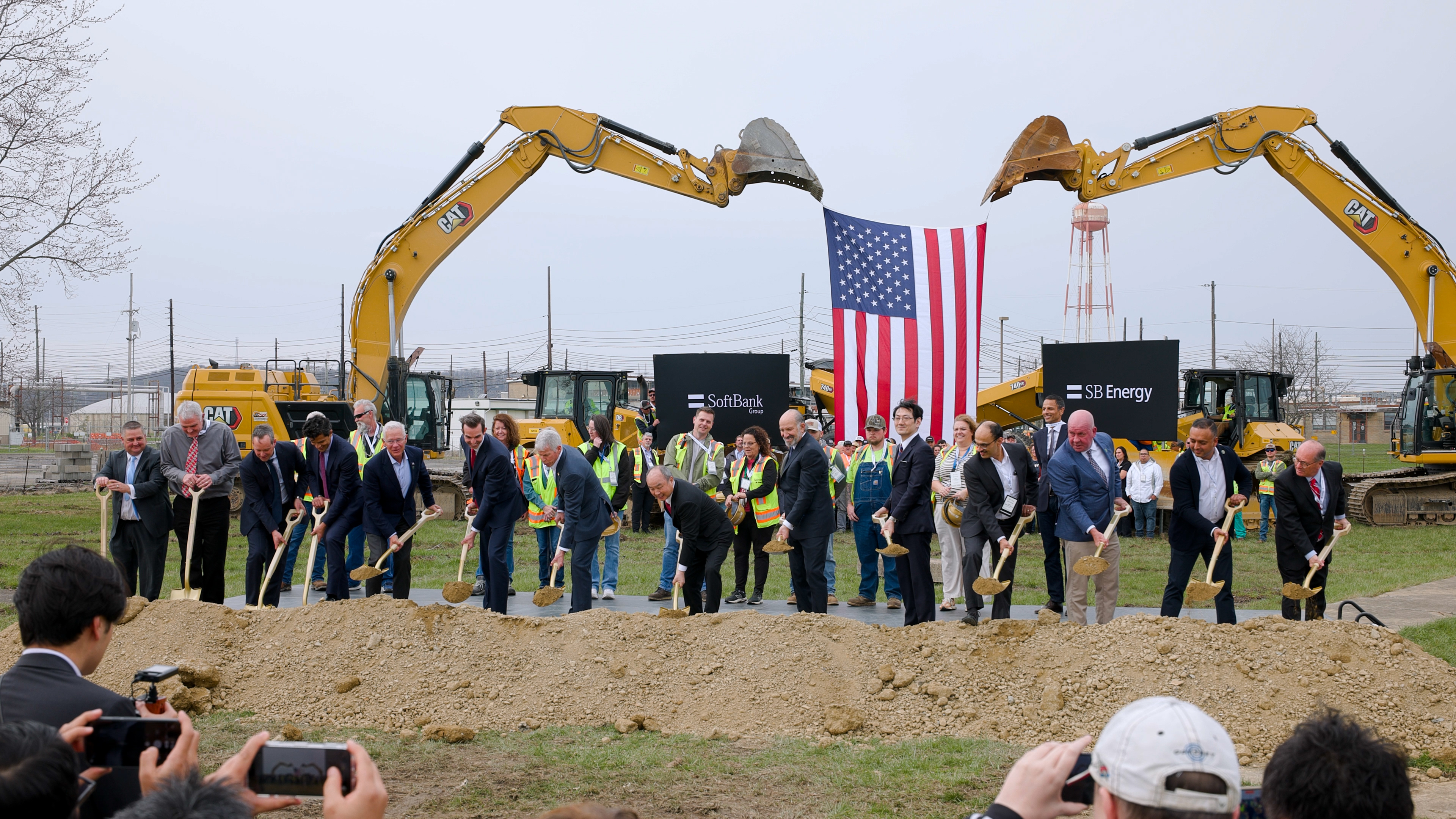
An SB Energy project FAQ describes a first stage of approximately 800 MW with an expected investment of $30 billion to $40 billion. Early civil work was already underway in 2026, with the first computing capacity targeted for phased delivery beginning in 2028. The Pike County commissioners explain that permits, construction responsibilities, community agreements and utility work remain subject to further steps. A ceremonial groundbreaking is meaningful, but it does not establish that 8 GW of buildings, GPUs or substations are operating.
The expected economic impact is substantial but remains a forecast. OpenAI describes up to 35,000 construction jobs over six years and 2,500 long-term roles for the full development, alongside a joint $80 million community-benefits commitment from OpenAI and SB Energy. Developer documents use differing construction-job estimates depending on the scope and period measured. None of these projected counts should be presented as the number of people already employed on the property.
The site also carries special environmental and historical responsibilities because it includes former federal uranium-enrichment land still associated with cleanup and redevelopment. Residents have raised concerns about generation emissions, utility rates, water demand, land use and whether promised economic benefits will flow to surrounding communities. The developer says it will use closed-loop cooling and fund project-specific grid upgrades, while the county acknowledges that it cannot itself guarantee future electricity prices.
A useful standard for progress will be completed power-plant and transmission permits, financed construction phases, contracted delivery dates, verified water use and the first successfully commissioned GPU halls. Until that evidence arrives, PORTS-Pike ranks first for planned IT capacity, not current production. BitcoinVersus.Tech has previously reported on OpenAI’s 8 GW arrangement and on the largest proposed AI data center projects nationwide.
Why Some Other Ohio Projects Are Not in the Top Three
Stargate Lordstown is a real SoftBank/OpenAI project under development at a former industrial facility. Yet the frequently cited 1.5 GW figure from OpenAI’s September 2025 announcement refers to Lordstown and Milam County, Texas, combined. It is not a verified Ohio-only capacity. Epoch AI’s project model assigns a far smaller estimated initial IT capacity to Lordstown. The combined two-state figure cannot be used to place Lordstown second in an Ohio-only ranking.
A preliminary 1,300 MW Buck Canyon electricity-service request in Adams County also deserves scrutiny. The project has appeared in energy-load filings and some project directories, but the reviewed materials do not establish a definitive cloud tenant, signed service contract and approved 1.3 GW data center campus. It should not displace an existing operating installation solely because the exploratory load is larger. By contrast, Cologix’s 800 MW Johnstown plan has an identified owner, owned land and a documented building program.
Other important developments include Bitdeer’s proposed 750 MW Shalersville campus, new QTS and Vantage projects around New Albany, and large Amazon and Google operations across Central Ohio. Those buildings and projects contribute heavily to the state’s existing digital infrastructure, but they are not interchangeable with the full-scale future commitments represented by the three numbered sites. A proposal’s position in this ranking does not establish how much computing it is performing today.
How Ohio Is Allocating Data Center Power Costs
Ohio is testing a more explicit approach to large-load utility bills. AEP Ohio’s data center tariff, effective July 2025, requires qualifying projects to secure load studies, agree to long-term service conditions and pay minimum demand charges tied to contracted capacity. State regulators say the provisions are intended to prevent transmission and distribution costs from being shifted unfairly to ordinary households and other businesses.
The tariff does not guarantee that every proposed gigawatt will be delivered on schedule or that future rates will fall. It changes the financial terms under which developers request service. Communities can support the jobs and technology associated with data centers while also demanding reliable information about air quality, water use, noise and construction impacts. What matters in the next several years will be completed facilities, measured IT load, actual ratepayer costs and independently documented economic gains.
For comparisons across the series, see BitcoinVersus.Tech’s North Dakota, North Carolina, New York and data center capacity-planning lesson.
BitcoinVersus.Tech
BitcoinVersus.Tech Editor’s Note: We volunteer daily to ensure the credibility of the information on this platform is Verifiably True. If you would like to support our work and help further secure the integrity of our research initiatives, please scan the QR code below to donate 5,000 sats. For best results, scan the QR code from a laptop or larger screen.
Bitcoin address: 3C9o19EH5HSiwEPyCTmEKzxhNCbo2X6TTb. Confirm the destination address before sending.

BitcoinVersus.tech is not a financial advisor. This media platform reports on financial subjects purely for informational purposes.


Leave a Reply