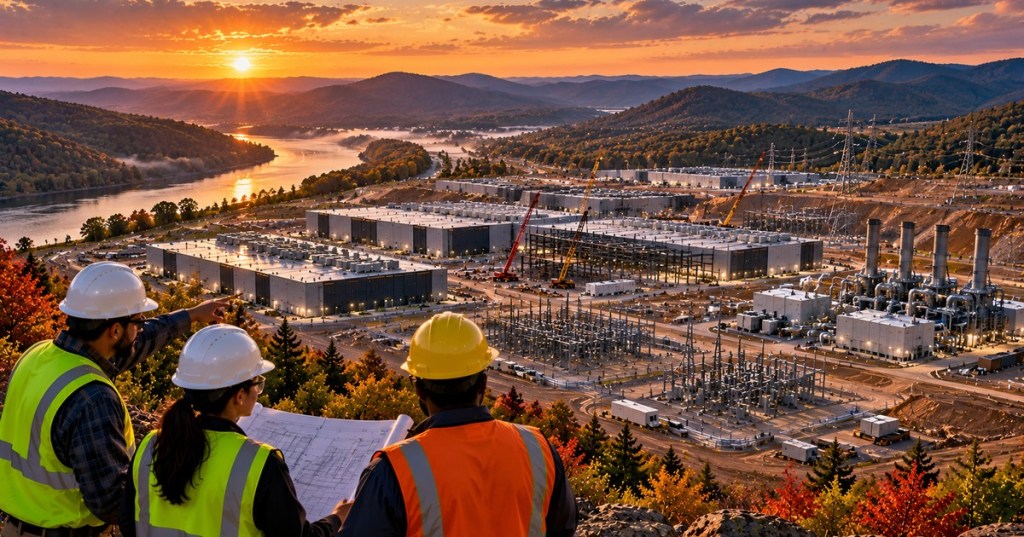
West Virginia’s largest publicly documented data center proposals include an 8-gigawatt long-term expansion vision for Nscale’s Monarch Compute Campus in Mason County, Starwood Digital Ventures’ 2.16 GW Project Tamarack nearby, and Fundamental Data’s approximately 1.6 GW reported Ridgeline concept in Tucker County. But those numbers are development ambitions—not measurements of operating AI servers. As of October 30, 2026, Monarch has begun site work, Tamarack has state certification but has not established an operating campus, and Ridgeline’s energy permit faces continued legal scrutiny.
This installment ranks three of the state’s largest identifiable data center proposals by public full-build power figures, not by actual electricity consumption, contracted critical IT load or total server capacity. The underlying evidence differs: Nscale promotes a potential 8 GW power envelope, the state lists 2.16 GW required for Tamarack, and Ridgeline’s roughly 1.6 GW figure has circulated in project reporting even though its current gas-plant air permit concerns approximately 785 MW. Those distinctions are essential to understanding which development is actually closest to delivering computing power.
3. Fundamental Data Ridgeline, Tucker County — About 1.6 GW Discussed; Roughly 785 MW Permitted Power
The Ridgeline proposal would bring a privately powered data center development to a former mining area near Davis and Thomas, with possible expansion into Grant County. Developer Fundamental Data describes it as a combination of generation infrastructure and future computing capacity, but has not identified an operating data hall or publicly confirmed an AI tenant. The wider 1.6 GW figure appeared in reporting on an early project vision; it is not equivalent to a currently permitted, energized server load.
The strongest enforceable electrical milestone is the West Virginia Department of Environmental Protection’s August 2025 air permit for a gas-fired generating plant associated with approximately 785 MW of capacity. That authorization was upheld by the West Virginia Air Quality Board in February 2026. On August 26, the Intermediate Court of Appeals dismissed two challenges on jurisdictional grounds, without resolving their underlying environmental arguments. The permit therefore remains in force while opponents seek further review.
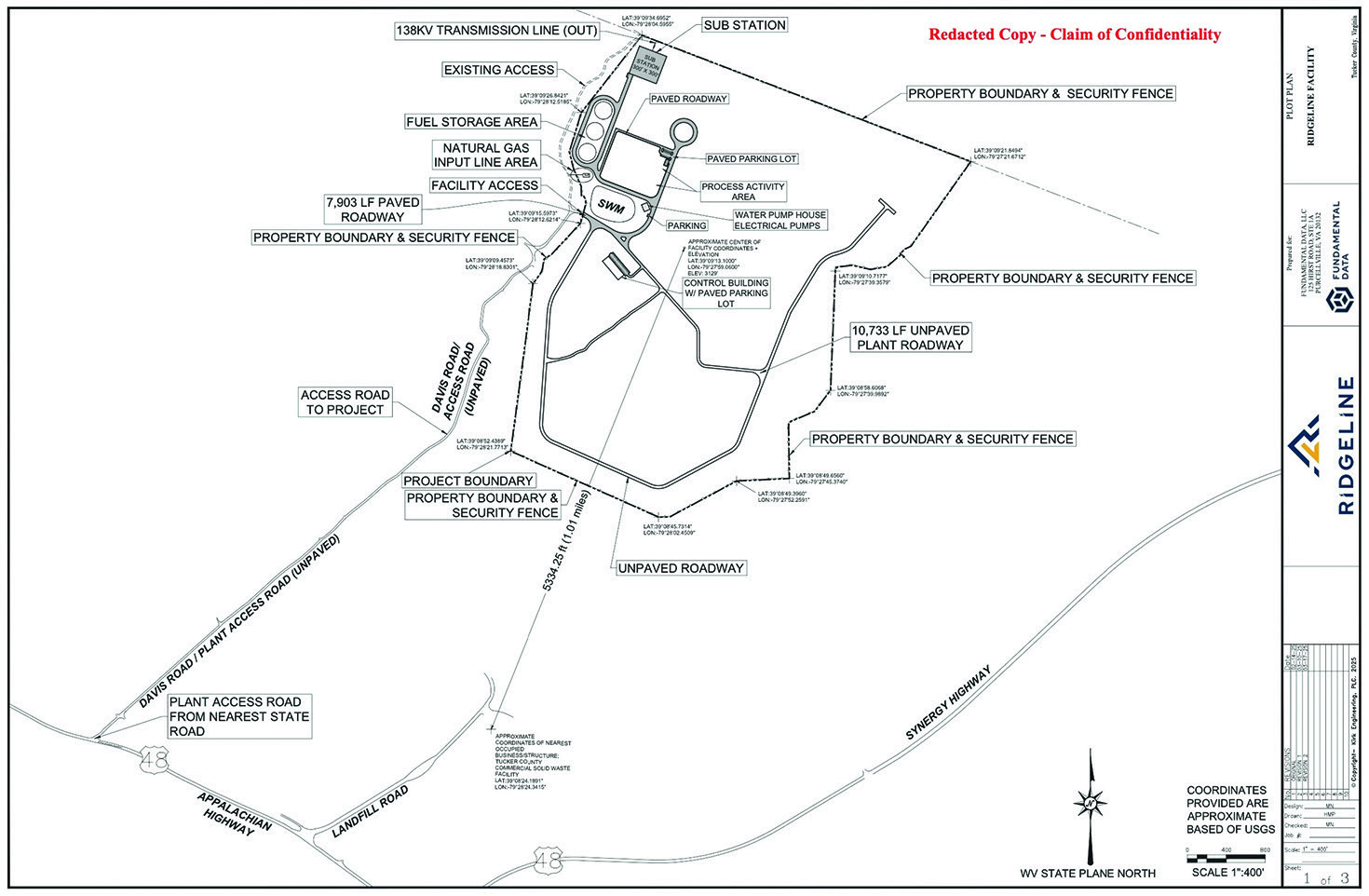
The developer told state officials in midyear that the data center component remained conceptual; the state subsequently rescinded a notice related to high-impact data center certification. A permit to build generating equipment therefore should not be described as a completed or fully certified cloud computing campus. Public disclosures do not establish whether the data center would ultimately need the whole proposed generation output or how the phased buildings would connect to it.
Ridgeline has drawn substantial local opposition. West Virginia Public Broadcasting reported on residents and conservation organizations questioning emissions, water use, potential effects on the surrounding landscape and confidentiality in permit filings. Fundamental Data maintains that it followed the state’s permitting system and plans to invest in energy and technology jobs. The next meaningful evidence will be final building designs, specific critical IT capacity, any additional permits and the outcome of the legal proceedings.
2. Starwood Project Tamarack, Mason County — 2.16 GW Proposed; State Certified
In West Columbia, about 20 miles north of Monarch, Starwood Digital Ventures is pursuing Project Tamarack, a separate large-scale campus. On September 3, 2026, West Virginia’s governor announced high-impact data center certification for the project, stating that the development would require approximately 2.16 GW of electricity and involve $12 billion in planned investment. Certification is an important state decision, but it is neither proof of an operating facility nor a disclosure of critical IT load.
Unlike Monarch’s proposed off-grid natural-gas complex, Project Tamarack has been described as drawing power from existing Appalachian Power grid infrastructure. State leaders say the developer will pay for its project-specific infrastructure rather than shift those costs to other ratepayers. Whether the arrangements work as claimed depends on the final utility agreements, facility buildout and regulatory oversight—not the statement alone.
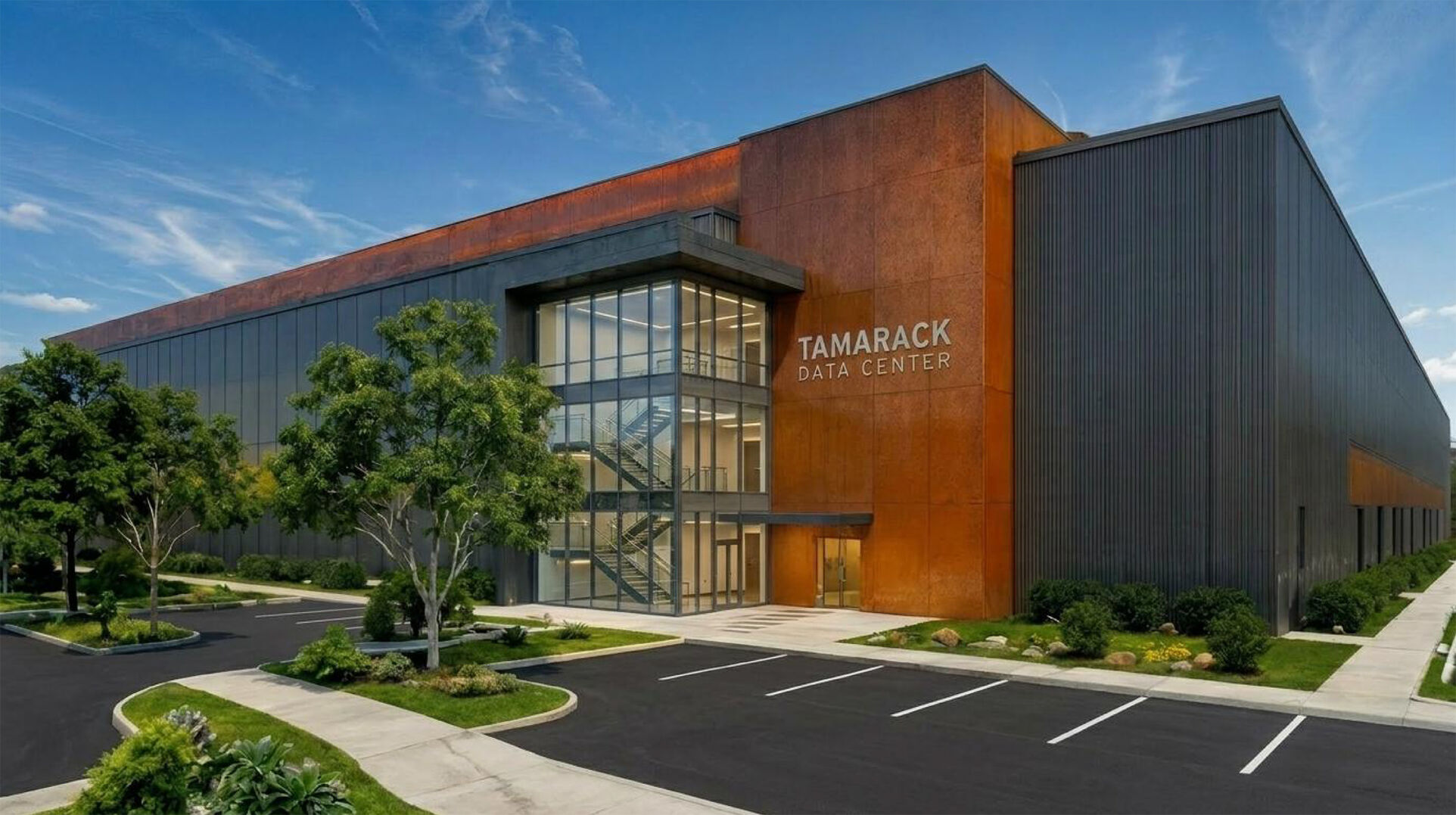
The developer has described closed-loop cooling intended to reduce water demand and has proposed a community advisory group. WSAZ’s September 4 reporting recorded residents expressing surprise at the announcement and concern over how the county would accommodate a second multigigawatt project. Some local officials see considerable potential tax revenue and jobs, while critics ask for clarity about substations, energy rates, water sourcing and enforceable community benefits.
An October 13 analysis from the West Virginia Treasurer forecast combined annual property-tax receipts above $231 million from Monarch and Tamarack at full development. Those are forward-looking estimates based on investment and tax assumptions, not revenue already collected. Tamarack still needs a public timeline for actual building delivery, tenant commitments, energization and operating power consumption.
1. Nscale Monarch Compute Campus, Mason County — 8 GW Expansion Ambition; 2 GW First-Phase Power
Nscale’s Monarch Compute Campus near Point Pleasant is West Virginia’s biggest disclosed AI infrastructure vision by long-term planned power scale. The company acquired the development in March 2026 and describes a site exceeding 2,250 acres, with an ultimate possible expansion to 8 GW or more. Phase One is much smaller: the state’s September 3 announcement refers to approximately 2 GW of power requirements, and the company identifies a 1.35 GW planned AI compute capacity target. Those numbers measure different aspects of a project that is not yet fully built.
The company began site preparation in 2026 and has emphasized on-site natural-gas generation and collaboration with NVIDIA and Caterpillar on the computing and power system. Early Nscale statements referenced a letter of intent with Microsoft; subsequent 2026 reporting described substantial Anthropic compute commitments at Monarch, including a 460 MW building-level arrangement. Neither headline customer announcement means the associated GPUs are already deployed or billing. Nscale’s own current project page targets first-phase delivery in early 2028, with later phases dependent on infrastructure and customer demand.
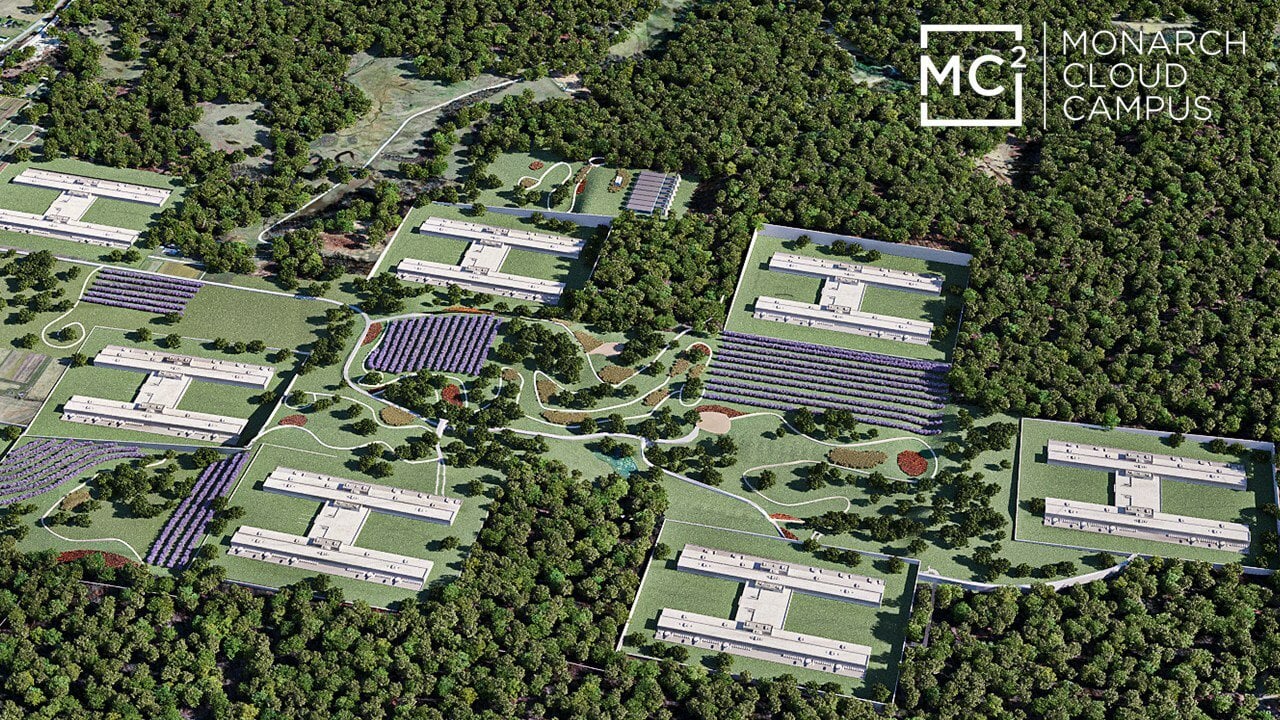
Its large gas generation component is also under review. The West Virginia DEP issued a public review notice for the proposed off-grid plant and associated water permits, including a public meeting on October 29 and an air-comment deadline set for October 30. These proceedings matter because high-impact project certification is not the same as final approval of every power, air or water permit. The company’s proposed generation system has not been established as an operating 2 GW power plant.
Construction activity has also affected neighbors. WSAZ reported September flooding complaints near the site, with Nscale acknowledging that water from its property reached a nearby yard during heavy rainfall. Questions remain about stormwater protections and emissions, while the developer says it will cover its own infrastructure costs and use closed-loop cooling rather than municipal drinking water. Those company claims need to be checked against permits, monitoring and actual operating conditions.
Monarch’s longer-term 8 GW aspiration makes it the numerical leader here, but the 2 GW first-phase proposal and the 1.35 GW compute target are far more relevant to the near-term development timetable. An 8 GW site plan should never be described as eight gigawatts of operational AI servers in 2026.
Other West Virginia Projects That Could Enter the Rankings
Penzance Bedington Campus, in Berkeley County, is certified under the state’s 2025 high-impact data center law. Public plans describe approximately 600 MW of power at full development and a roughly $4 billion investment; a disclosed customer or operating data hall has not been established. ObserverWV’s state project survey details the site and its environmental and infrastructure questions.
Another emerging proposal near Buffalo in Putnam County involves Google-owned land, but the company has not published a comparable site-level megawatt figure. A West Virginia project inventory also lists Hog Lick’s preliminary up-to-1-GW feasibility concept near White Hall, a proposed Warwood development below 90 MW under a local agreement, and other smaller projects. Feasibility-stage ideas are not equivalent to certificated or permitted operating server campuses; counting them as completed construction would distort the rankings.
What 2026’s Gigawatt Announcements Really Mean
West Virginia’s 2025 Power Generation and Consumption Act (HB 2014) created a state-level high-impact data center framework and limited aspects of local authority over qualifying developments. Supporters argue that its new rules can attract industrial investment and ensure developers pay for their own infrastructure; opponents argue that local communities have too little say over large new power plants, land use and environmental conditions. Community project trackers and the state’s published certification and permit records offer useful, though different, evidence of what has advanced.
The next update to this ranking should compare each site’s permitted generating capacity, utility delivery commitments, actual critical IT power, under-construction halls and live meter readings at a common date. Those are not interchangeable figures. The same questions shape BitcoinVersus.Tech’s Washington ranking, its Virginia Top 5 and the Texas Top 7. Our data center capacity planning lesson explains why infrastructure headroom and actual server utilization must be distinguished.
BitcoinVersus.Tech
BitcoinVersus.Tech Editor’s Note: We volunteer daily to ensure the credibility of the information on this platform is Verifiably True. If you would like to support our work and help further secure the integrity of our research initiatives, please scan the QR code below to donate 5,000 sats. For best results, scan the QR code from a laptop or larger screen.
Bitcoin address: 3C9o19EH5HSiwEPyCTmEKzxhNCbo2X6TTb. Confirm the destination address before sending.

BitcoinVersus.tech is not a financial advisor. This media platform reports on financial subjects purely for informational purposes.


Leave a Reply