
GitHub announced October 28, 2026, that GitHub Agentic Workflows is generally available, allowing developers to describe repository maintenance jobs in Markdown and execute them through GitHub Actions. The open-source GitHub Next project targets recurring work such as issue triage, CI failure analysis, documentation updates and test writing.
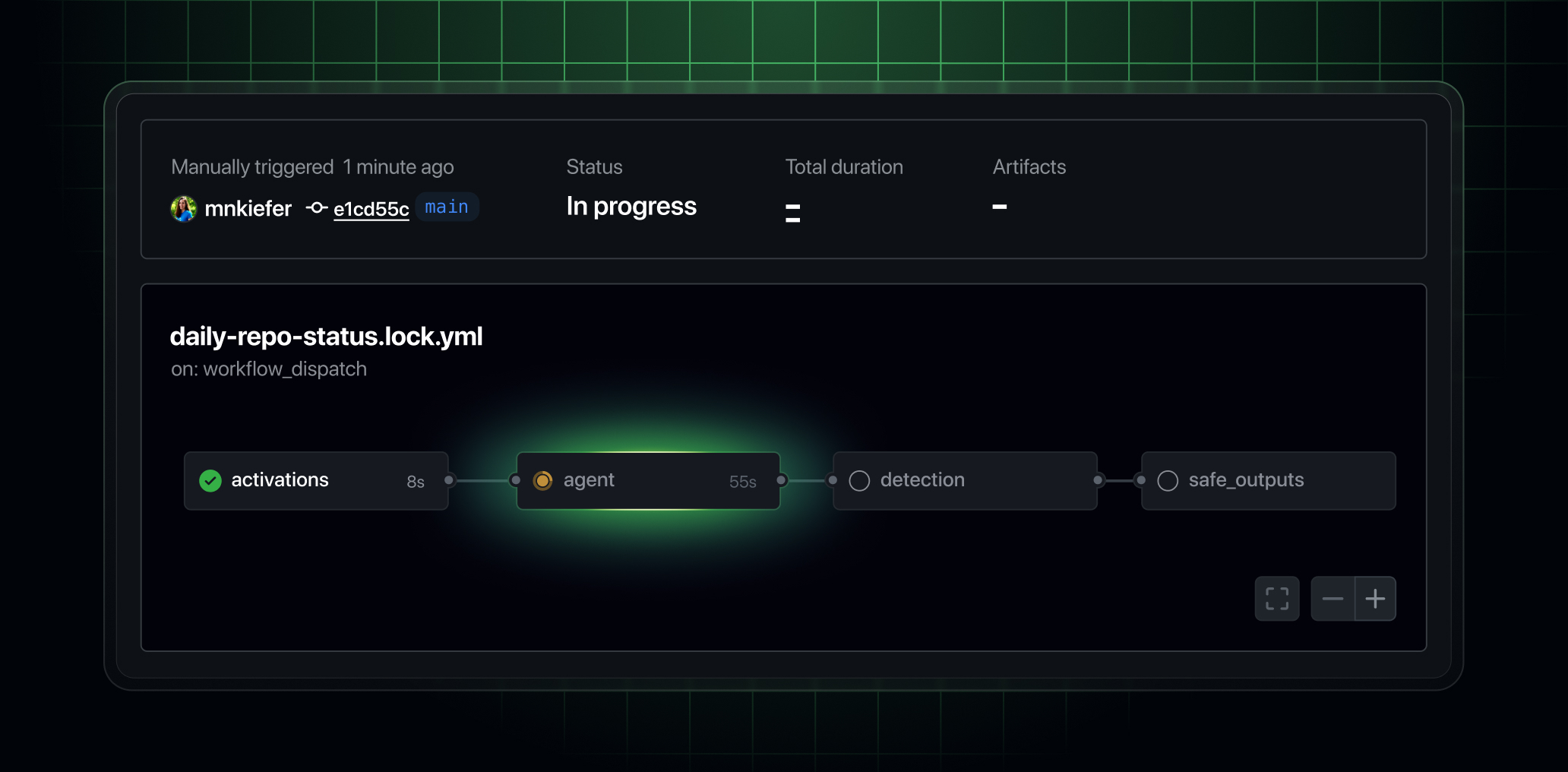
Instead of writing every automation step as a conventional YAML pipeline, a developer describes the intended reasoning task in a workflow file. The gh-aw command-line extension compiles that description into standard Actions configuration, retaining familiar runners, triggers and organizational policy controls.
Agentic automation with guardrails
GitHub says agents receive read-only permissions by default and run inside sandboxed environments protected by its Agent Workflow Firewall. Proposed modifications pass through controlled “safe outputs,” while a dedicated threat-detection job reviews changes before application. These protections narrow exposure, but developers still need appropriate review policies and secrets management.
General-availability additions include support for Actions Runner Controller and Docker-in-Docker deployments, model selection per workflow and model routing. The gh aw forecast command estimates monthly execution costs, including threat-detection credits, so teams can budget recurring runs rather than treating agent usage as free.
Official GitHub Agentic Workflows demonstration from its February 2026 technical-preview launch; it explains the underlying workflow rather than every October GA addition.
What teams can actually automate
A maintainer might schedule an agent to examine failed builds each morning, identify the likely cause and propose a narrowly scoped report. Another workflow could classify incoming issues, cross-reference repository documentation and suggest labels or troubleshooting steps. Those are defined tasks with auditable outputs, not unrestricted autonomous access to production systems.
The feature differs from Copilot Fusion model routing and Copilot Projects, which address different aspects of model selection and multi-repository coordination. It also complements the ReviewBench evaluation work needed to measure whether automated code review improves results.
GitHub says Agentic Workflows is offered on Free, Team and Enterprise accounts. Running the default Copilot CLI engine requires a Copilot license; developers may also configure another compatible coding agent. Availability therefore does not eliminate model costs or enterprise governance obligations.
The key question now is whether teams can demonstrate fewer recurring maintenance failures without introducing review noise. GitHub’s continuing infrastructure adjustments for agent-heavy development show why automation needs reliability metrics alongside raw code-generation speed.
BitcoinVersus.Tech
BitcoinVersus.Tech Editor’s Note: We volunteer daily to ensure the credibility of the information on this platform is Verifiably True. If you would like to support our work and help further secure the integrity of our research initiatives, please scan the QR code below to donate 5,000 sats. For best results, scan the QR code from a laptop or larger screen.

Bitcoin address: 3C9o19EH5HSiwEPyCTmEKzxhNCbo2X6TTb. On a phone, open the QR image on another screen or copy and verify the address in your wallet before sending.
BitcoinVersus.tech is not a financial advisor. This media platform reports on financial subjects purely for informational purposes.


Leave a Reply