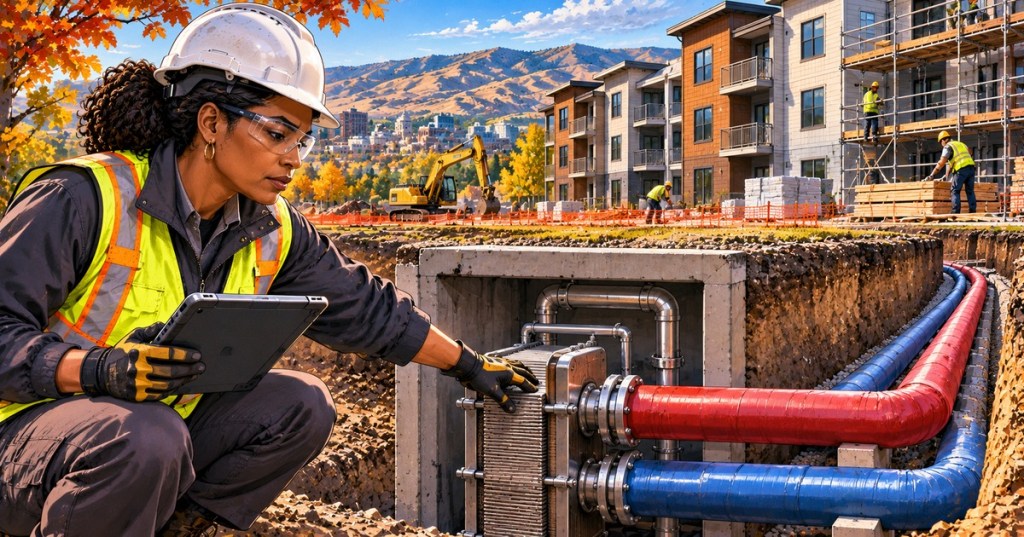
Micron Technology announced October 27, 2026, that it is committing $2.5 million to Boise’s Lusk District redevelopment, advancing plans to heat more than 300 affordable apartments using the city’s underground geothermal-water network. The financing supports a J. Fisher Companies housing project in partnership with Boise’s Housing Land Trust Program, with groundbreaking targeted for spring 2027.
The contribution is gap funding for the broader housing development, not a stated $2.5 million equipment-only budget for geothermal pipes. Boise previously received a separate $1 million Bloomberg Philanthropies Mayors Challenge award to pilot expansion of the heating system. Neither announcement establishes that construction is finished.
How Boise Heats Buildings Without Generating Electricity
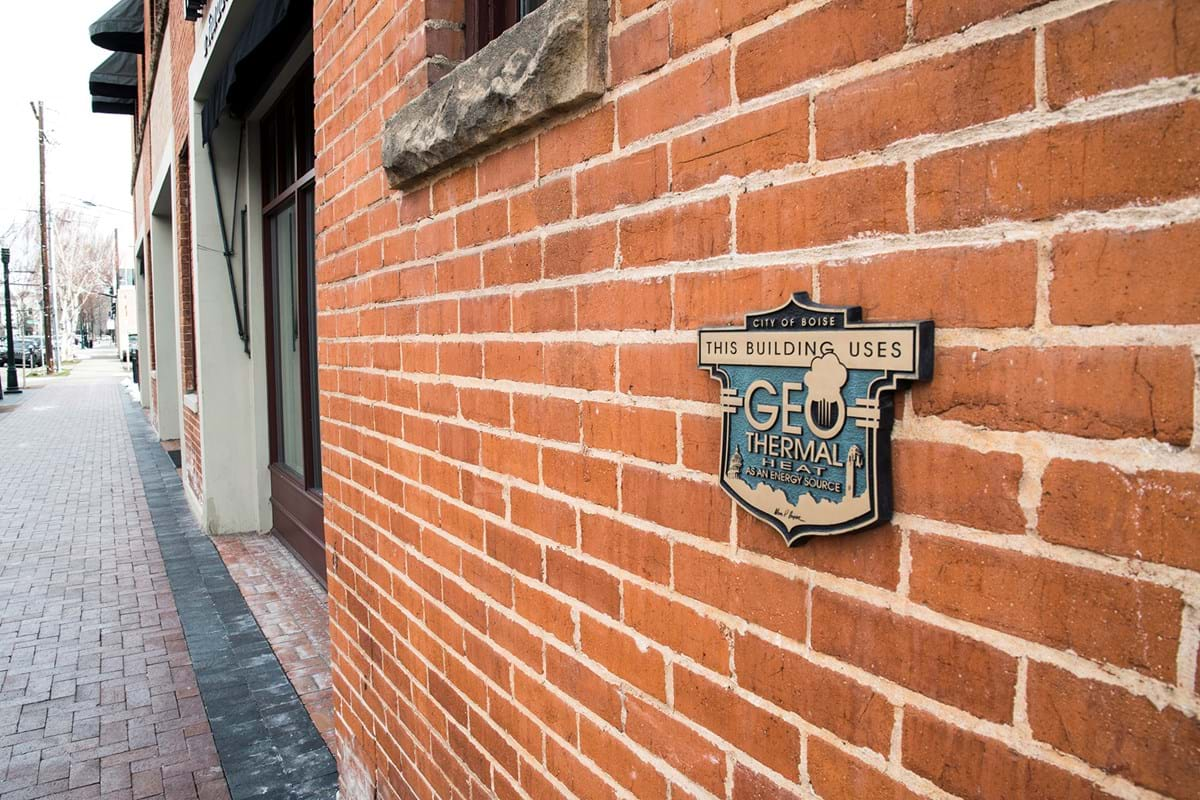
Unlike geothermal plants that spin turbines, Boise’s district system circulates naturally heated groundwater through heat exchangers to warm buildings. Cooled water is returned underground. The city’s geothermal use dates to the 1890s; its municipal utility began in 1983 and now serves more than 90 downtown buildings, according to Boise State.
City of Boise’s official geothermal-utility explainer, published in 2021. It documents the established heat network rather than construction of the Lusk project.
The planned Lusk connection illustrates why building-heating technology differs from electricity generation. Supplying useful heat directly can avoid burning natural gas in individual boilers, but actual household savings and emissions depend on final equipment and operating conditions.
Why the Housing Numbers Matter
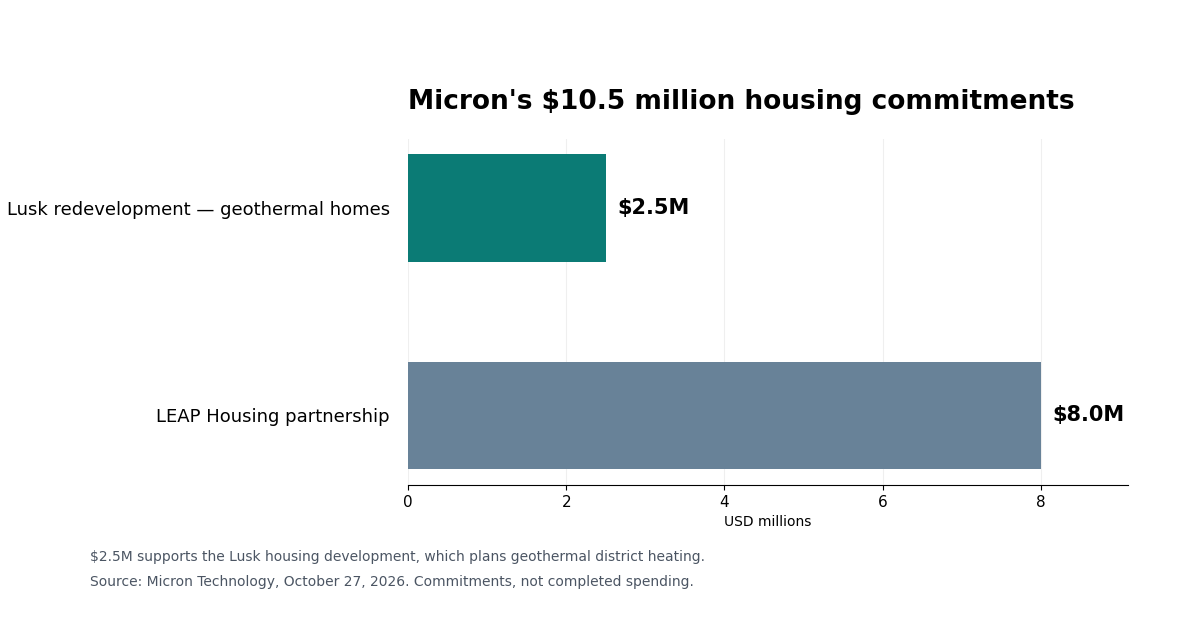
Micron’s total new Idaho community commitments exceed $67 million. Of its $10.5 million housing allocation, $2.5 million supports Lusk and $8 million supports separate LEAP Housing projects. The city’s development partner, Capital City Development Corporation, currently lists 337 income-restricted apartments at the Lusk site; the designs have changed over time.
The planned development also includes retail space, a public parking garage and accessible streets. The latest announcement places construction in spring 2027, superseding older redevelopment schedules that anticipated a 2026 start.
KTVB’s 2024 report explains Boise’s geothermal geology and existing municipal system; this predates Micron’s new housing commitment.
The next test is closing the remaining project financing, installing district-heating connections and delivering occupied homes. For perspective, Fervo’s geothermal electricity project generates a different energy product; our Bitcoin-mining heat-reuse report examines another route for delivering useful heat.
BitcoinVersus.Tech
BitcoinVersus.Tech Editor’s Note: We volunteer daily to ensure the credibility of the information on this platform is Verifiably True. If you would like to support our work and help further secure the integrity of our research initiatives, please scan the QR code below to donate 5,000 sats. For best results, scan the QR code from a laptop or larger screen.

Bitcoin address: 3C9o19EH5HSiwEPyCTmEKzxhNCbo2X6TTb. On a phone, open the QR image on another screen or copy and verify the address in your wallet before sending.
BitcoinVersus.tech is not a financial advisor. This media platform reports on financial subjects purely for informational purposes.


Leave a Reply