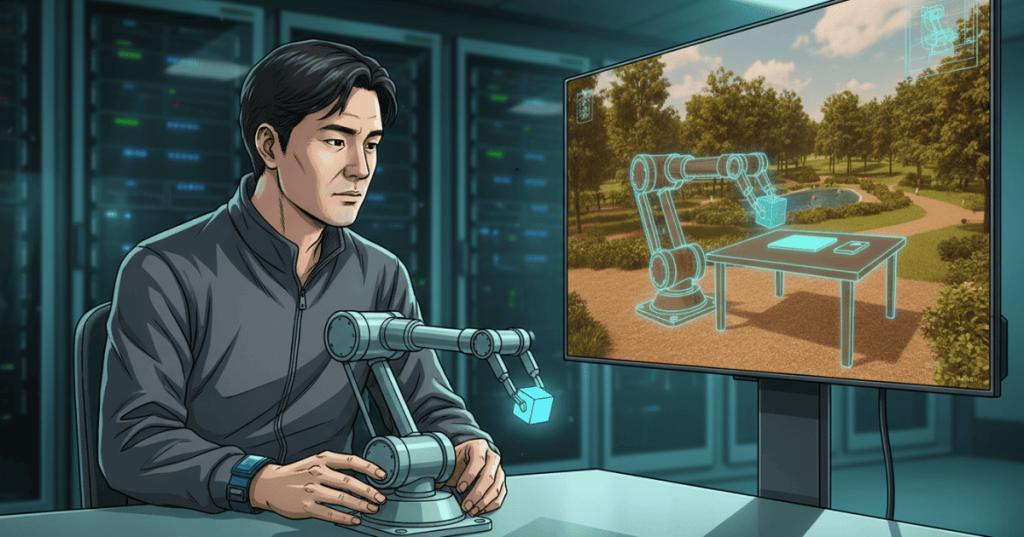
San Francisco AI infrastructure company Reactor is demonstrating interactive, AI-generated worlds intended for robotics and gaming. In an October 30, 2026 presentation published by Scale, co-founder Alberto Taiuti showed a character moving through a generated environment while explaining why responsive simulations require more than impressive video. The critical test is whether a virtual world reacts quickly and behaves consistently with real physics.
Scale’s October 30, 2026 presentation with Reactor CEO Alberto Taiuti includes a live interactive world-model demonstration. Claims about frame rate and physical realism are the company’s, not independent validation.
A world model must do more than draw convincing scenes
Unlike prerecorded generative video, a world model must remember the scene, accept an action and produce the next observation immediately. Taiuti’s demo features a dog exploring a synthetic park, reportedly streamed at about 60 frames per second. That is a demonstration of interactive visual output, not an independently measured robotics-control benchmark.
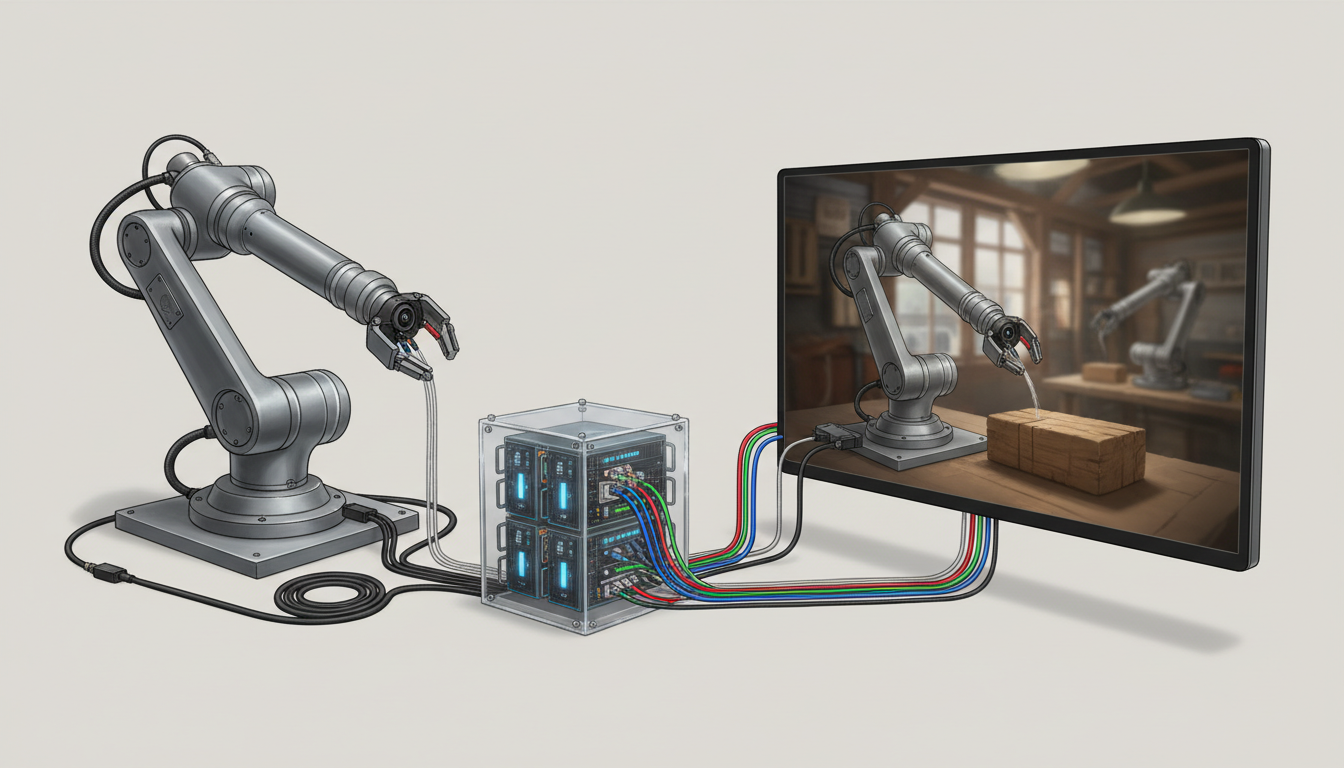
Reactor’s robotics infrastructure aims to serve policies remotely and let developers test actions inside simulated environments. It is not the same product as Google’s Genie 4, and a visually convincing scene does not automatically reproduce friction, contact force, or a real robot’s sensor readings.
Reactor’s earlier official introduction to its real-time generative-video platform, embedded on the company’s May 28, 2026 launch announcement; historical company material, not a new October demo.
Where the 2.2× decoder gain comes from
A measurable engineering improvement comes from Reactor’s October 12 technical report. Its Wan video decoder initially needed 133.8 milliseconds per chunk. Changing GPU memory layout reduced that to 85.9 ms; processing latent frames together brought it to 78.8 ms; further kernel changes reached 60.2 ms, approximately 2.2 times faster. These are company-reported timings for one decoder benchmark, not whole-system response times.
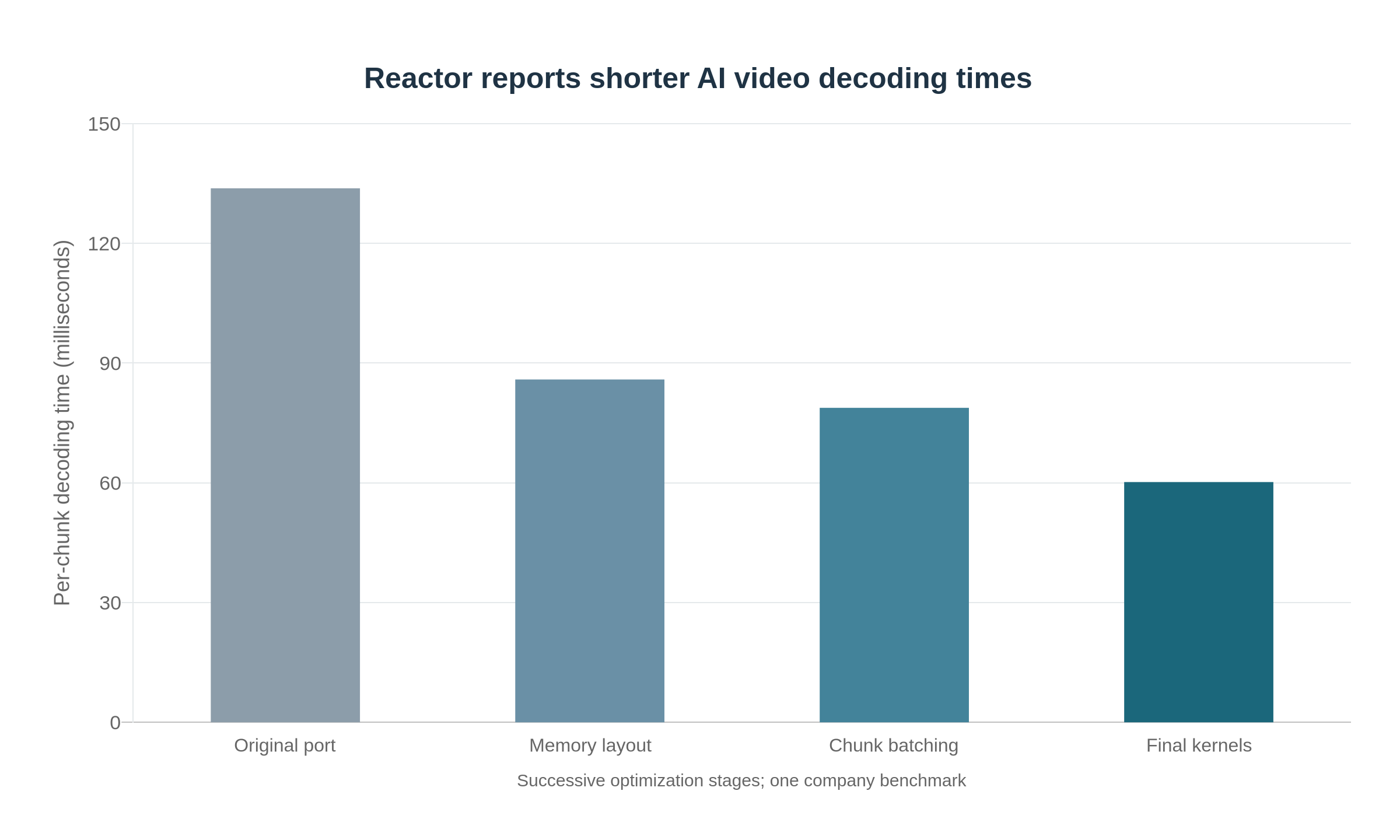
The optimization is important because an AI model produces compressed representations before a decoder creates visible frames. Less decoding delay frees time for simulation, transmission and robot decisions. The company’s reported boost relied on an NVIDIA B200 test environment; actual results depend on model, GPU, network and control-loop requirements.
Physical accuracy remains the test
That distinction applies to Krafton’s social-robot research and robot-state estimation: photorealistic pixels are useful, but robots must track position, uncertainty and physical contact. Recent AI video models face different goals when producing finished clips rather than continuous simulations.
Reactor says investors including NVIDIA joined its funding round in October and its infrastructure supports interactive developers. Independent tests of physical accuracy, end-to-end latency, cost and robot success rates will determine whether these world models deliver dependable training—not just convincing demonstrations.
BitcoinVersus.Tech
BitcoinVersus.Tech Editor’s Note: We volunteer daily to ensure the credibility of the information on this platform is Verifiably True. If you would like to support our work and help further secure the integrity of our research initiatives, please scan the QR code below to donate 5,000 sats. For best results, scan the QR code from a laptop or larger screen.

Bitcoin address: 3C9o19EH5HSiwEPyCTmEKzxhNCbo2X6TTb. On a phone, open the QR image on another screen or copy and verify the address in your wallet before sending.
BitcoinVersus.tech is not a financial advisor. This media platform reports on financial subjects purely for informational purposes.


Leave a Reply