
Cisco is expanding enterprise network automation with Model Foundry, embedded ThousandEyes monitoring and standardized interfaces for AI agents, according to its October 26, 2026 Partner Summit announcements. The company says its Cloud Control platform will connect AI-driven troubleshooting to live network data while retaining operator oversight. The developments address a practical problem: diagnosing failures across switches, wireless access points, applications and cloud services without granting unrestricted control to automated tools.
Network operations traditionally combine device telemetry, configuration backups, logs, synthetic probes and manual diagnosis. Artificial intelligence can correlate those signals, but a suggested fix is not the same as a validated repair. Cisco is advancing a workflow in which agents analyze topology and experience metrics, propose changes and record results under policy-defined controls.
Cisco’s official June 2, 2026 presentation introduces AgenticOps, its governed action loop and network experience validation. The video predates the October partner announcements. Credit: Cisco / YouTube.
What Cisco Added at Partner Summit
Model Foundry is a new Cloud Control service for discovering, evaluating, fine-tuning and operating Cisco-developed models against a customer’s own data. Cisco says controlled availability begins with partners. The announcement does not establish unrestricted public access, nor does it independently prove lower incident-resolution times.
Cisco is also integrating ThousandEyes intelligence natively into eligible Wi-Fi 6E and Wi-Fi 7 access points. According to the company, continuous background checks can test application and network performance even without active users. Inclusion depends on eligible Networking Essentials or Advantage licensing, so the benefit is not automatically universal across installed wireless hardware.
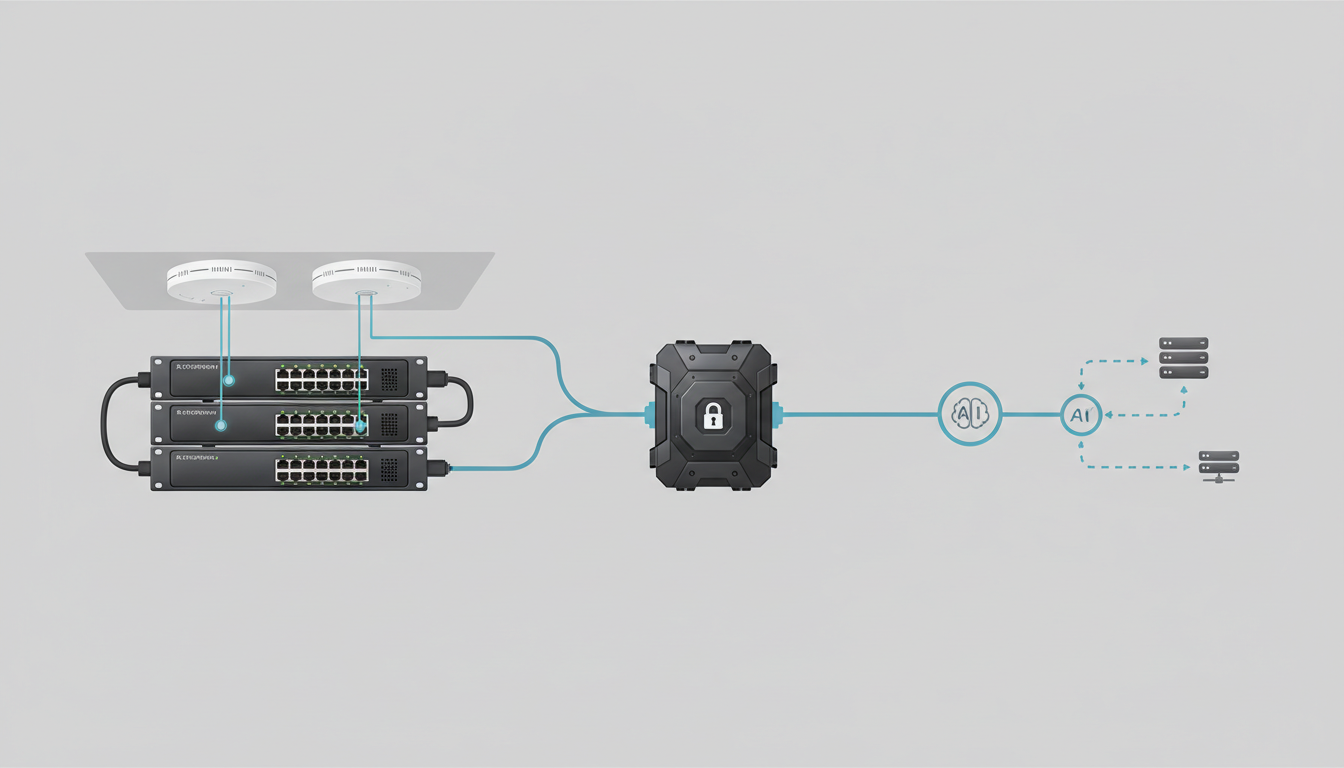
The third component is Model Context Protocol integration. Cisco says networking MCP servers provide a standardized bridge between AI tools and live network intelligence for reporting, troubleshooting and compliance workflows. Such interfaces can reduce bespoke connector code, but administrators still need authentication, authorization, audit trails and limits on which changes an agent may execute.
Autonomy Requires Measurable Guardrails
Cisco describes Agentic Actions as controlled availability, with operators able to inspect recommendations and progressively permit bounded actions. The critical distinction is between reading telemetry, suggesting configuration changes and committing those changes to production equipment. A reliable implementation should preserve approvals, maintenance windows, rollback plans and post-change performance checks.
Cisco’s official June 4, 2026 Cisco Live session discusses autonomous networking operations, anomaly detection and policy controls. It offers background rather than independent testing of the October announcements. Credit: Cisco / YouTube.
The company’s expansion follows a broader push toward faster network fabrics. BitcoinVersus.Tech previously examined Cisco’s Silicon One G302 switch chip, an open-switch standard backed by Meta and Microsoft, and Keysight’s 1.6T Ethernet recovery tests. Hardware bandwidth and AI-assisted operations address different bottlenecks: one moves traffic; the other attempts to keep services working.
Earlier reporting on packet loss and jitter explains why application experience can deteriorate despite a nominally fast connection. Synthetic testing and causal diagnosis may help uncover such faults, although access-point telemetry alone cannot prove end-to-end service health.
The Test Is Production Reliability
Cisco’s release identifies controlled availability and partner enablement, but gives no independently verified mean-time-to-repair comparison for the new combined features. Network teams will need to assess false diagnoses, permissions, change success rates, alert volume, recurring licensing costs and failures created by automated remediation. Success ultimately depends on demonstrated incident outcomes rather than the number of AI agents connected to a network.
Primary sources: Cisco Partner Summit release and Cisco’s networking technical briefing, both dated October 26, 2026. Independent context: Network World, October 27.
We volunteer daily to ensure the information on this platform is Verifiably True. If you would like to support the research, please scan QR code.

Scan the original QR code using another device to support independent research.
Editor’s Note. The October 26 announcements describe Cisco product capabilities and controlled availability. No independent deployment-wide performance gains are asserted. The diagram and featured cover are editorial visualizations, not Cisco product photographs. The two official Cisco videos predate the Partner Summit release and are included as relevant technical background.


Leave a Reply