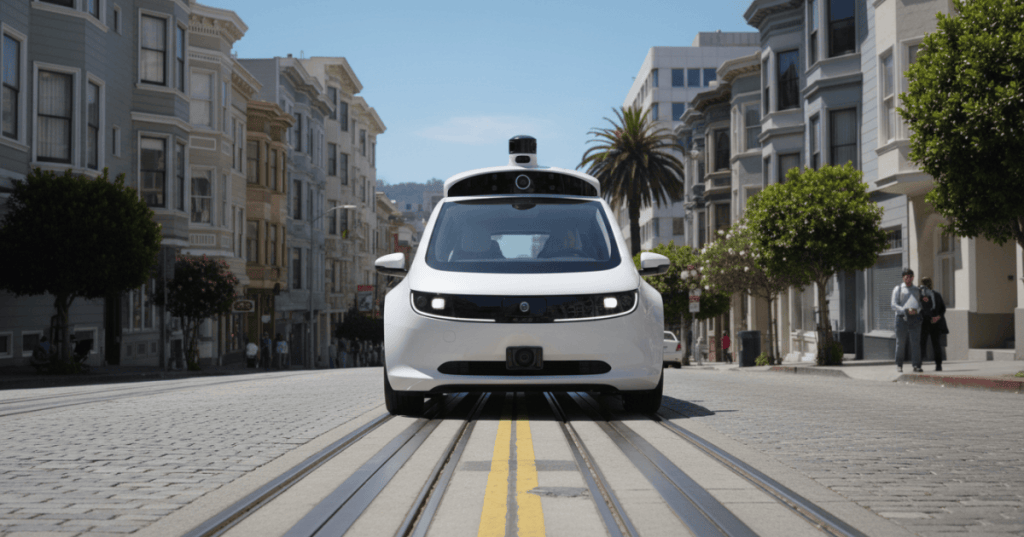
Waymo co-CEO Tekedra Mawakana is confronting a central problem for autonomous vehicles: how to win public trust when a driverless taxi can outperform human drivers in measured crash categories yet still make highly visible mistakes. In a Bloomberg Originals interview published November 4, 2026, Mawakana discussed the company’s safety research, complex road situations and the growing number of robotaxis on American streets.
The interview, titled Waymo’s Bet on a Driverless Future, follows the Alphabet-owned company as it expands paid service. Bloomberg’s reporting describes San Francisco streets filled with robotaxis and asks whether passengers are ready to accept the residual risks of automated driving.
Bloomberg Originals, “Waymo’s Bet on a Driverless Future,” published November 4, 2026. Interview with Waymo co-CEO Tekedra Mawakana. Credit: Bloomberg Originals.
Safety Statistics Meet Public Skepticism
Bloomberg cites an Insurance Institute for Highway Safety analysis finding Waymo vehicles involved in 68% fewer crashes than human-driven vehicles across four cities, with a 91% lower rate of rear-end collisions. Such comparisons depend on geography, exposure, crash definitions and matched driving conditions. A reduction in selected collision categories does not establish zero risk or equivalent performance on every road.
The documentary also cites a 2026 Pew Research poll reporting that 71% of adults feel uncomfortable riding in a driverless vehicle. The survey measures attitudes, not crash rates. Mawakana argues that direct experience can improve acceptance, although individual reactions differ and no technology can guarantee perfect outcomes.
Waymo’s paid ridership reached 500,000 weekly trips across ten U.S. cities by March 2026, according to company figures reported by TechCrunch. Expansion has continued alongside regulatory scrutiny. Previous BitcoinVersus.Tech analysis of robotaxi fleet economics examined the gap between deploying vehicles and running a sustainable transportation business.
How a Robotaxi Learns From Rare Events
Autonomous vehicles combine cameras, lidar, maps and onboard software to interpret their surroundings and plan movements. Mawakana describes simulation as an important tool: engineers can take a difficult real-world encounter and generate thousands of related scenarios for testing. Simulated coverage, however, cannot prove that every combination of weather, road design and human behavior has been encountered.
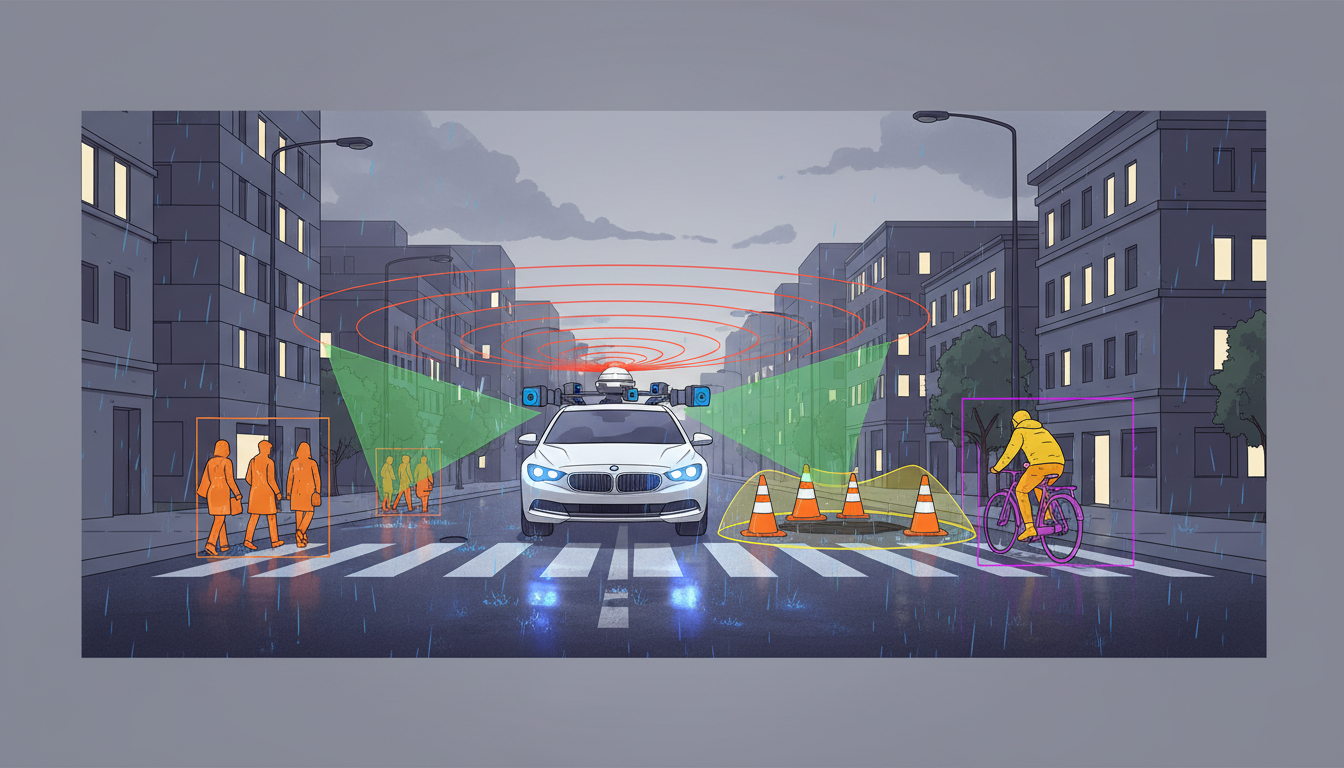
Waymo has faced incidents involving road obstructions and severe weather. In May, the company recalled approximately 3,800 robotaxis over software behavior that could allow entry into flooded roads. Regulators said operating restrictions and map updates were among the mitigations. The incident illustrates why fleet monitoring, software revisions and independent oversight remain essential after commercial deployment.
Manufacturing and Regulation Remain Critical
Waymo’s scale-up requires vehicles, charging, maintenance, remote support and public-road approvals. A separate Toyota partnership plans Japan-built bZ4X robotaxis for 2027, potentially diversifying vehicle supply, but planned testing is not equivalent to commercial approval.
The company’s financing also shows the capital demands of expansion. Earlier coverage of Waymo’s multibillion-dollar borrowing examined how investment supports global ambitions. Competing systems such as Volvo and NVIDIA’s automated-driving program face distinct safety, engineering and regulatory requirements.
The Bloomberg interview makes clear that public confidence is an operational challenge as much as a communications problem. Waymo must demonstrate reproducible safety improvements, transparent incident reporting and reliable responses when vehicles encounter conditions outside routine driving.
We volunteer daily to ensure the information on this platform is Verifiably True. If you would like to support the research, please scan QR code.

Scan the original QR code using another device to support independent reporting.
Editor’s Note. The Bloomberg Originals interview was published November 4, 2026. Crash comparisons are attributed to the reported IIHS study; survey results reflect attitudes rather than measured risk. The perception illustration is conceptual. Public iframe rendering and actual playback are distinct validation steps.


Leave a Reply