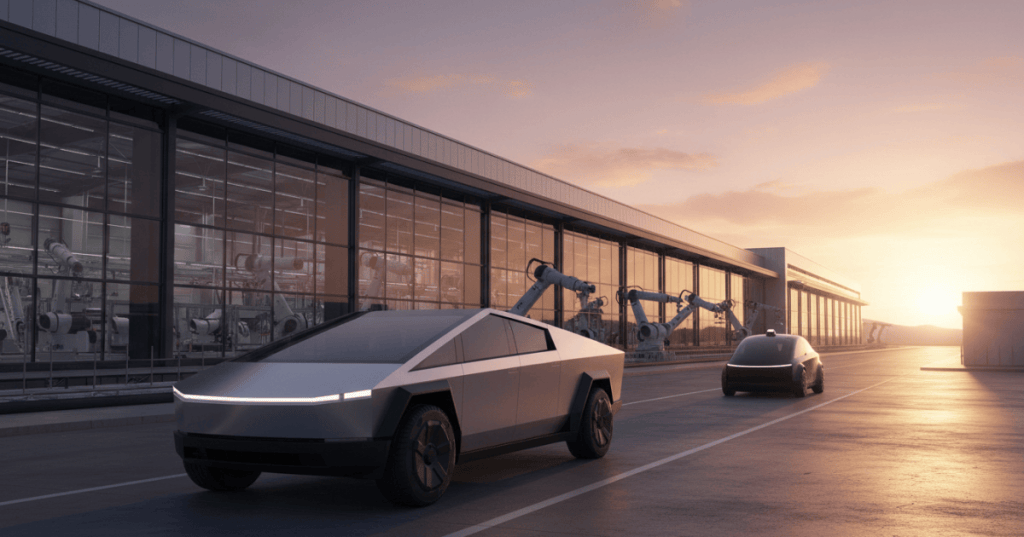
Tesla plans to wind down Cybertruck production at its Austin, Texas, factory around the middle of 2027 to expand manufacturing of its Cybercab autonomous vehicle, according to a November 6 statement by chief executive Elon Musk reported by Reuters. The decision marks a major change for the stainless-steel pickup introduced in 2023, although Tesla has not confirmed whether the vehicle will be discontinued worldwide or manufactured at another facility.
The Financial Times reported the development under a headline describing Tesla’s plan to axe the Cybertruck. Reuters independently reported Musk’s statement and the unresolved question of a possible production transfer. Austin is the only publicly known Tesla plant equipped to assemble the Cybertruck’s specialized body and components.
A shift toward autonomous vehicles
Musk said the Austin production wind-down would make space for higher output of the Cybercab, a purpose-built vehicle designed without conventional driver controls. Tesla’s third-quarter 2026 filing identifies Cybercab and the Tesla Semi among new product launches and describes autonomy as a major element of its manufacturing plans. The company is also promoting the Optimus humanoid robot as part of its longer-term strategy.
The shift does not mean a robotaxi network is already operating at the scale envisioned by Tesla. Cybercab’s driverless design raises regulatory, safety-validation and fleet-management questions. Reuters reported that U.S. regulators were seeking information about the company’s vehicle self-certification.
Cybertruck’s commercial challenge
Cybertruck’s wedge-shaped stainless-steel body and steer-by-wire system distinguished the pickup from conventional trucks. However, its production complexity, changing prices, recalls and limited access to international markets constrained the vehicle’s expansion. Tesla does not separately publish Cybertruck deliveries, reporting them within an “Other Models” category that also includes other vehicles.
That category recorded 8,295 deliveries in the third quarter of 2026, down from 12,364 in the preceding quarter, according to figures cited by Reuters. The 32.9% sequential decline cannot be attributed solely to Cybertruck because the category covers multiple models. BitcoinVersus.Tech previously compared the pickup with rivals in its 2026 pickup-truck ranking.
What happens next
Musk described the existing Cybertruck fleet as remaining on the road for years. Owners will therefore be watching for continued service, parts availability and software support, even if production eventually stops. Tesla has not provided a replacement factory, final assembly date or comprehensive end-of-production plan.
The decision highlights a wider strategic wager: shifting industrial capacity from a distinctive consumer pickup to autonomous mobility and robotics. Earlier BitcoinVersus.Tech coverage of robotics control electronics and industrial networking hardware illustrates the technology required for broader automation, although neither supplier’s work establishes Tesla’s commercial prospects. Investors and customers will need evidence of Cybercab production volumes, safety approvals and sustained demand before judging the transition.
We volunteer daily to ensure the information on this platform is Verifiably True. If you would like to support the research, please scan QR code.

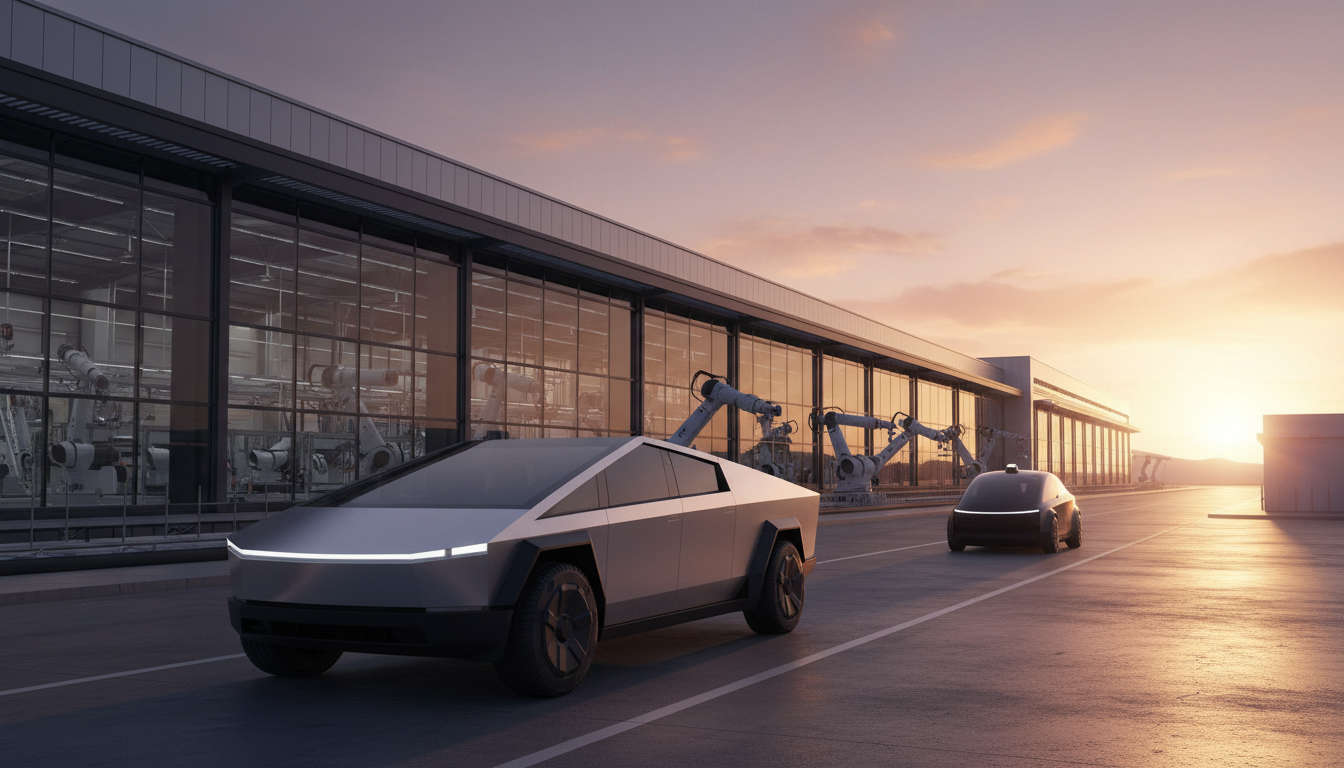
Editor’s Note: The November 6 report is based on Reuters and Financial Times coverage of Musk’s statement. Tesla has confirmed an Austin factory wind-down plan, not a global Cybertruck discontinuation. The delivery chart represents Tesla’s combined Other Models category, not Cybertruck-only deliveries. The in-story factory image is conceptual.


Leave a Reply