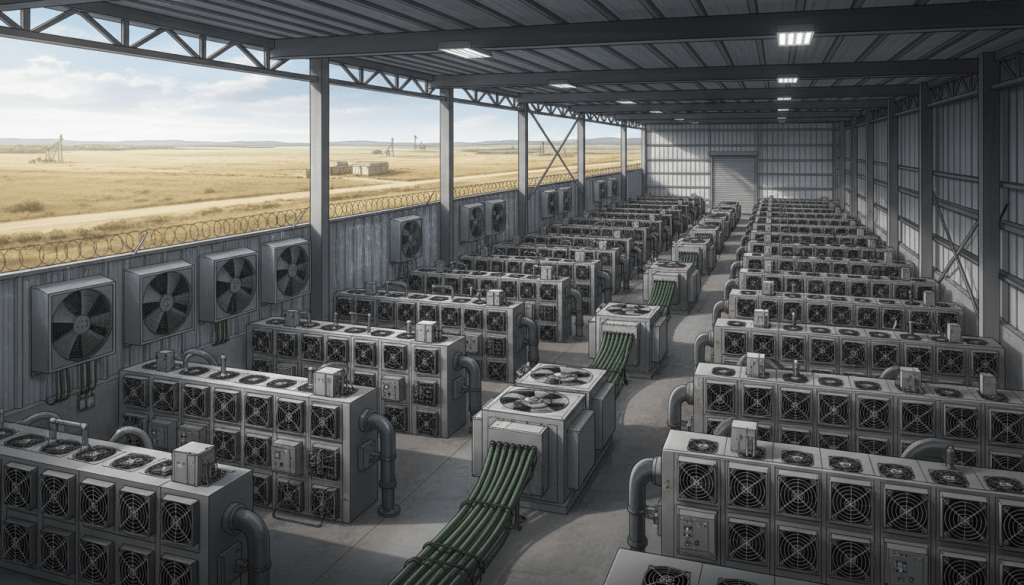
Bitcoin mining operator Bitai Technology has disclosed operating facilities in Texas and Indiana alongside a proposed conversion of part of its Texas infrastructure to artificial-intelligence computing. An October 25, 2026 amended SEC registration statement describes land acquisitions and development agreements. The filing establishes the company’s plans and stated operating configuration; it does not prove the proposed AI expansion has been financed, constructed or commissioned.
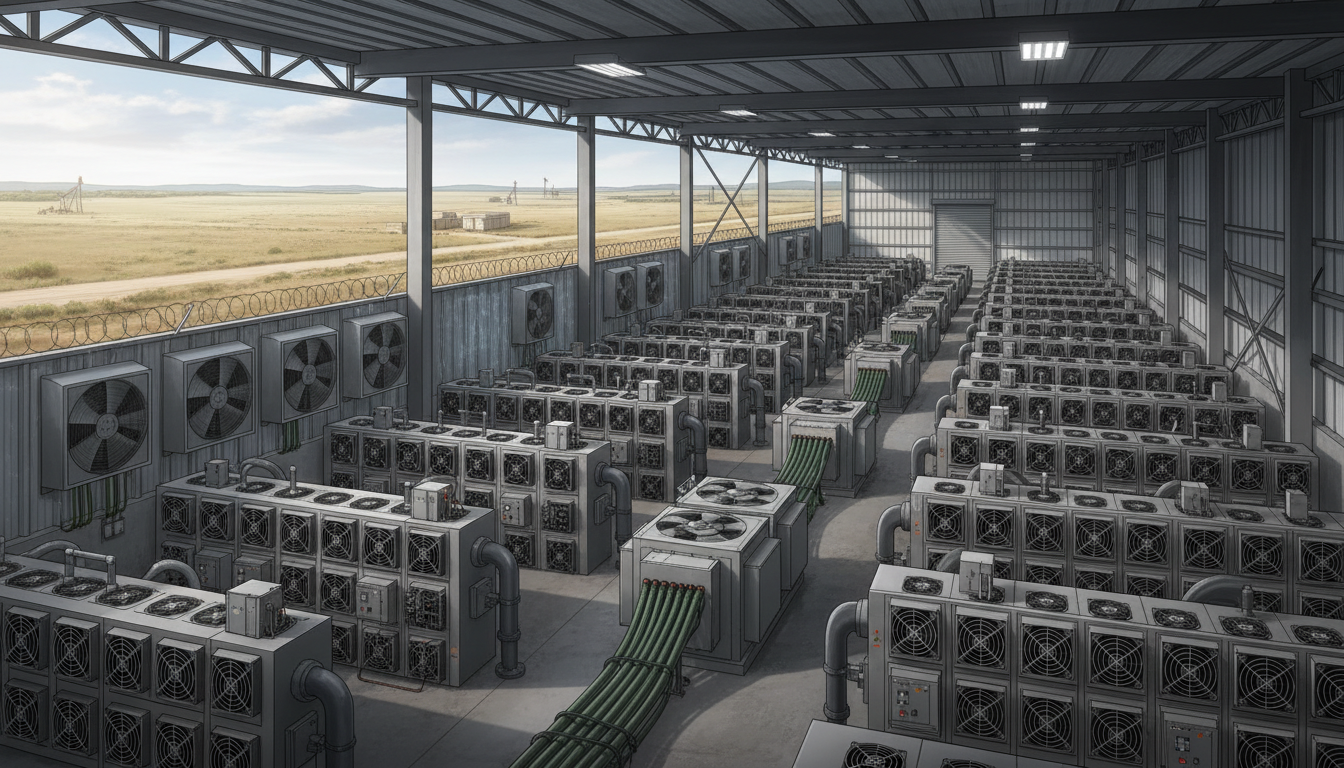
Dumas mine operating, Wheeler conversion proposed
The company’s earlier registration statement says its Dumas, Texas, site began operating in July 2026 with 20 megawatts of electrical capacity. It describes water-curtain cooling and a grid connection supplied by Xcel. The company reported 2,268 hosted machines at the filing date, against stated simultaneous capacity of roughly 2,500 to 2,800 units. Machine count is a reported snapshot, not proof of sustained full-load operation.
Bitai also describes an approximately 20 MW hosting facility in Marion, Indiana, operating under a facility-use agreement since April. Separately, the company says it is negotiating construction contracts to convert and expand its Wheeler, Texas, cryptocurrency facility into an AI data center. The amended filing outlines a preliminary cooperation framework with Aleria and Ricloud AI; economic arrangements and governance of the proposed venture have not been finalized.
The Wheeler plan targets an initial 30 MW of total power capacity with 25 MW of IT load by February 2027, followed by a proposed 60 MW total and 50 MW IT load by June 2027. Both dates are company targets rather than completed deployments. Comparable distinctions between electrical interconnection and operating compute capacity appear in BitcoinVersus.Tech’s analysis of miners’ power assets.
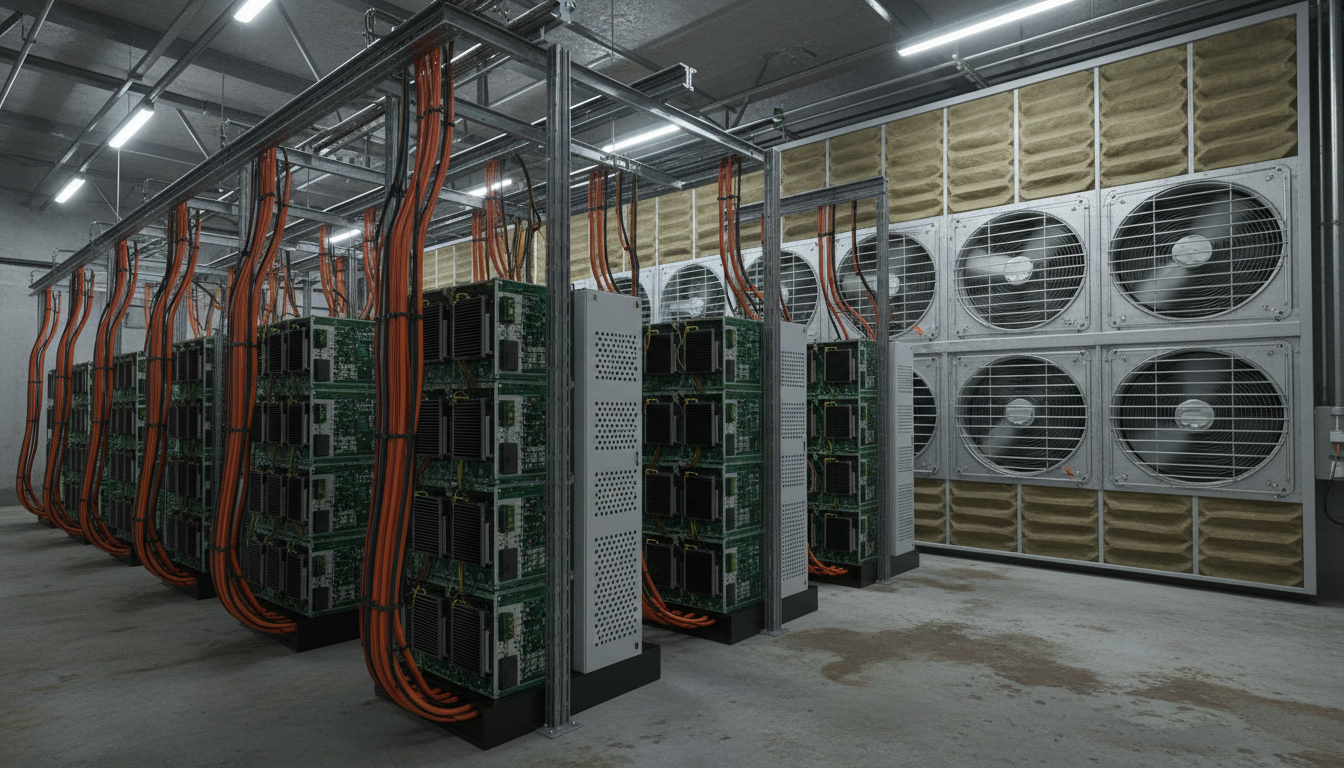
Cooling and power determine the economics
ASIC hosting facilities and AI GPU centers both consume substantial electricity, but their mechanical and network requirements differ. Water-curtain evaporative cooling can help remove ASIC heat in dry climates; dense AI servers may require liquid-cooling loops, more stringent uptime guarantees, fiber connectivity and higher-capacity rack distribution. BitcoinVersus.Tech’s 100 MW mining-site filing analysis examines similar distinctions between proposed and operating capacity.
A mining site with 20 MW of nameplate electrical capacity does not necessarily deliver 20 MW continuously to ASICs. Transformers, cooling, auxiliary loads, outages and curtailment all affect usable compute power. The distinction matters when evaluating projected AI conversions and Bitcoin output. The operational trade-offs also appear in BitcoinVersus.Tech’s ASIC power-targeting coverage.
Land purchases and preliminary agreements provide site control and a route toward engineering, not guaranteed revenue. The next material evidence would include executed construction contracts, financing commitments, permits, equipment orders and measured commissioning milestones. BitcoinVersus.Tech previously covered another miner’s proposed AI expansion, where stated megawatts likewise require careful separation from energized IT load.
BitcoinVersus.Tech Editor’s Note: We volunteer daily to ensure the credibility of the information on this platform is Verifiably True. If you would like to support to help further secure the integrity of our research initiatives, please donate using the QR code provided

For best QR-code scanning results, please scan this donation code from a desktop or larger screen. Mobile screens may prevent camera recognition. Verify the receiving address 3C9o19EH5HSiwEPyCTmEKzxhNCbo2X6TTb before sending.
Disclaimer: BitcoinVersus.Tech is not a financial advisor. This media platform reports on financial subjects purely for informational purposes.


Leave a Reply