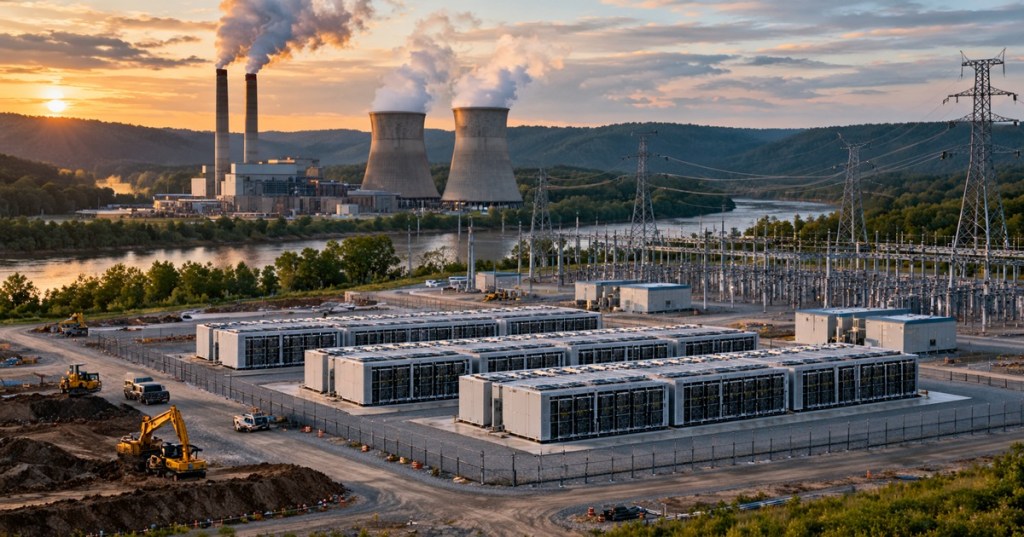
A recent SEC filing reveals a planned 100 MW Bitcoin-mining project in Pleasants County, West Virginia backed by a signed 10-year power purchase agreement at $0.048 per kilowatt-hour. The project has not begun commercial operation, making the filing a useful early signal of a new mining site before energization.
The project belongs to Bitari, which says it plans to build the site in three phases of 30 MW, 30 MW, and 40 MW. The company’s SEC registration filing says Element H Data, or EHD, will make 100 MW of interruptible capacity available and may, at its discretion, provide as much as 120 MW.
The filing gives unusually specific economics for a development-stage mine: a 10-year power-delivery term, a fixed stated energy price of $0.048/kWh, interruptible capacity, and a provision requiring Bitari to pay based on deemed generated energy if it does not take the full contracted quantity in a given year.
The PPA is the strongest evidence the site is real
A mining-company announcement can describe a site years before construction. A signed power agreement is a stronger signal because electricity is the core operating input of a Bitcoin mine. BitcoinVersus recently explained how a power purchase agreement turns future electricity into a contracted project input.
Bitari says it signed the EHD PPA on July 3, 2025. The 10-year delivery term does not begin until the commercial-operation date, which is defined around completion of the additional behind-the-meter infrastructure and Bitari’s mining facilities. The company explicitly says that date has not occurred yet.
That distinction is important. This is not an operating 100 MW mine being rediscovered in a filing. It is a development-stage project with contracted power that still has major execution steps ahead.
The power would come from a 1,300 MW plant
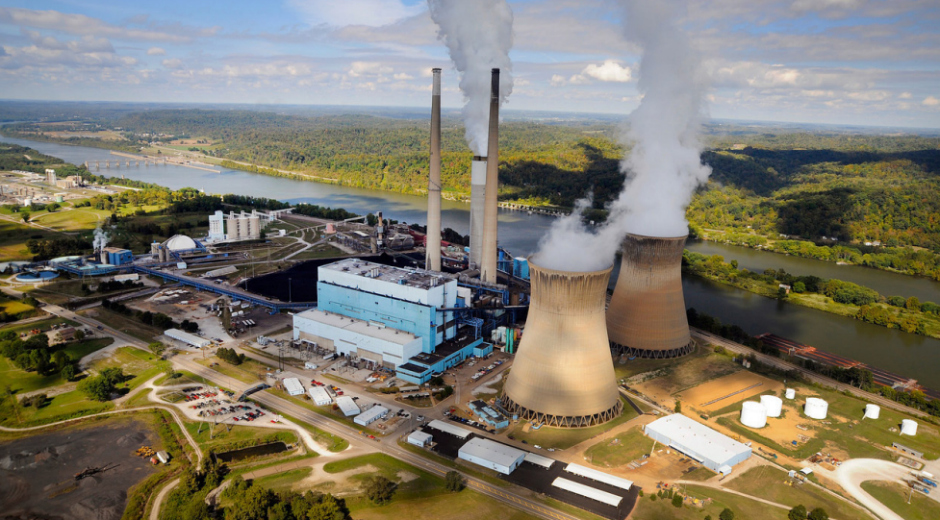
The filing says EHD purchases power from Omnis Pleasants, which operates Pleasants Power Station, a roughly 1,300 MW coal-fired power plant in Pleasants County. EHD has agreed to have additional electrical infrastructure built behind the meter so energy can be delivered to Bitari’s planned hosting facilities.
Behind-the-meter arrangements can be attractive to large computing loads because the mine sits physically close to generation instead of depending entirely on a conventional retail delivery path. BitcoinVersus covered the same basic infrastructure logic in MicroBT’s 20 MW natural-gas mining deployment, where generation and compute are deliberately brought together.
The West Virginia project is much larger. At 100 MW, it would be roughly five times the power capacity of Bitari’s currently listed 20 MW Wheeler, Texas operation and five times its 20 MW Dumas site.
The planned site is 30 MW + 30 MW + 40 MW
The SEC filing lays out a three-phase development plan rather than a single 100 MW energization event. Phase capacity is listed as 30 MW, another 30 MW, and then 40 MW.
That phased approach is common in Bitcoin mining because operators can install transformers, containers, cooling systems, networking, and ASIC fleets in blocks. It also reduces the amount of capital that has to be committed before the first megawatt produces revenue.
Bitari’s own facilities page now labels West Virginia its “Flagship Project,” lists the site at 100 MW, and says a power purchase agreement has been signed. The public website therefore matches the capacity disclosed in the SEC filing.
The power price is competitive—but it is interruptible
At 4.8 cents per kilowatt-hour, the stated PPA price sits in the range that can support modern Bitcoin mining when machine efficiency, pool fees, financing, cooling overhead, and Bitcoin hashprice cooperate.
But the 100 MW is explicitly described as interruptible. That means the headline energy price cannot be analyzed like perfectly firm 24/7 power. Downtime matters because every curtailed hour is an hour the ASIC fleet is not hashing.
This is why miners increasingly chase power near generation and accept flexible-load structures. BitcoinVersus’ stranded-energy explainer covers the underlying reason: Bitcoin mining can move toward energy that is difficult to monetize through ordinary demand.
The biggest risk is upstream power supply
The filing also contains a major caveat. Omnis Pleasants, the upstream power source behind EHD’s PPA, filed for Chapter 11 bankruptcy protection in July 2026. Bitari warns that this could affect EHD’s ability to obtain and deliver power under the West Virginia agreement.
The site lease is also still under discussion. Bitari says it does not own the West Virginia land and expects to enter a lease with EHD after approval of the project plan. Preliminary terms call for symbolic rent of $1 per year, but the lease has not yet been finalized.
Those facts keep this story in the development category. A signed PPA is meaningful evidence that the company is trying to build the site, but it is not proof that transformers have been energized, miners delivered, financing completed, or the upstream generator stabilized through bankruptcy.
Why this is the kind of filing worth watching
Bitcoin-mining sites often become visible publicly before construction through power contracts, utility filings, interconnection studies, zoning cases, environmental permits, land records, or SEC exhibits. In this case, the PPA gives more information than a typical announcement: exact MW, exact electricity price, contract duration, interruptibility, upstream generator, planned phases, and the fact that commercial operation has not started.
That makes the Pleasants County project a useful example of how future hashrate can be detected before it appears on the network. The ASICs are not hashing yet, but the power contract says someone is preparing room for them.
What would confirm construction is actually moving
- Final site lease: confirmation that Bitari has secured the land rights described in the SEC filing.
- Electrical construction: permits, transformer orders, switchgear installation, or behind-the-meter substation work.
- Local permits: grading, building, stormwater, road, or fire-code filings tied to the mining campus.
- Equipment commitments: disclosed ASIC purchases, hosting contracts, or container deployments associated with the West Virginia site.
- Commercial-operation notice: the clearest signal that the 10-year PPA delivery term has actually begun.
Those are the next documents worth watching. If they appear, the project moves from “contracted power and planned site” toward an actual new 100 MW addition to U.S. Bitcoin-mining infrastructure.
BitcoinVersus.Tech Editor’s Note: Bitari’s SEC filing confirms a signed PPA and a planned 100 MW West Virginia Bitcoin-mining site, but commercial operation has not begun. The site lease remains under discussion, and the upstream Pleasants Power Station operator entered Chapter 11 in July 2026. This should be treated as strong development evidence, not as confirmation that 100 MW of new hashrate is already online.
Follow BitcoinVersus.Tech on X for Bitcoin mining, power markets, data centers, semiconductors, and infrastructure filings.
Support independent technology reporting: Bitcoin donations help fund BitcoinVersus.Tech research and publishing.
Disclaimer: BitcoinVersus.Tech provides technology news and analysis for informational purposes only.


Leave a Reply