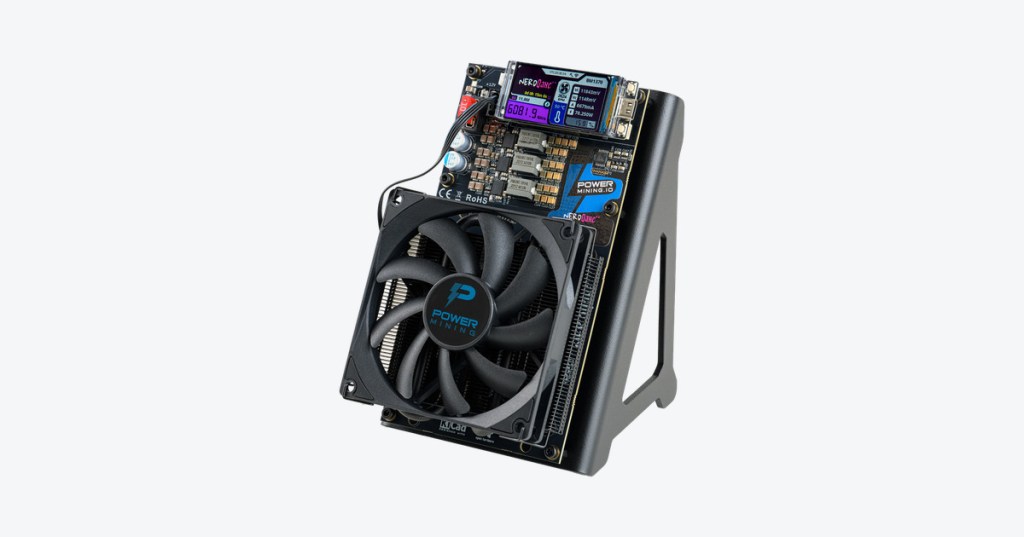
Open-source Bitcoin mining firmware NerdQAxe 1.1.1, released October 31, 2026, replaces a vulnerable certificate-trust bundle, adds optional Ethernet compatibility and repairs mining-pool connection problems. The project’s official GitHub release documents changes for supported NerdQAxe, NerdOCTAXE and other related boards. The release is a software security and reliability update, not a new ASIC hashrate record.
Small Bitcoin miners use specialized SHA-256 chips alongside an ESP32 controller that manages work assignments, networking, telemetry and cooling. A device can continue displaying hashrate even when a mining pool rejects its shares. Firmware behaviour therefore matters independently of the chip’s advertised terahashes per second.
New certificate store follows eMudhra compromise
The most consequential security change replaces ESP-IDF’s embedded certificate-authority lists with a pinned Mozilla/curl certificate store dated October 20, 2026. The revised bundle governs system-certificate validation for encrypted Stratum connections, GitHub firmware updating, external API calls and Discord notifications. A compromised certificate authority can undermine assumptions about which encrypted endpoints a device should trust.
In merged pull request #742, the contributor reports testing two NerdQAxe++ miners and a NerdQX. All three had accepted 12 affected certificate chains before the change and rejected them afterward, while valid TLS sessions continued to work. Those are developer-reported tests, not an independent site audit. Operators using a manually supplied custom certificate must review its validity separately; the new system bundle does not replace custom trust settings.
Ethernet arrives, subject to hardware limitations
Version 1.1.1 adds automatic detection of a W5500 Ethernet HAT on compatible NerdQAxe+, NerdQAxe++ and NerdOCTAXE-Gamma boards, plus NerdAxeGaia through an interposer. The same firmware can boot with or without the optional adapter. However, pin conflicts prevent support on boards fitted with a CAN HAT, and on certain temperature-multiplexer configurations, including NerdOCTAXE-Gamma revision 3.4. Ethernet requires the actual accessory; a firmware download cannot create a physical network port.
A new NerdAxeGaia hardware target uses one BM1373 chip, a 12-volt TPS546D24A power regulator and a LilyGO T-Display-S3. Board support is distinct from verified commercial availability, power consumption or delivery schedules. Earlier BitcoinVersus.Tech reporting on NerdOS 1.1.0.1 provides the preceding software baseline.
Stratum fixes aim to prevent rejected work
The update fixes a crash after reconnecting to a pool that returned an incomplete subscription response. For Stratum V2, the miner now requests version rolling and rejects incompatible pool settings instead of generating invalid shares. Version rolling changes part of the block-header search space; it is a protocol capability, not a guaranteed improvement in mining luck. BitcoinVersus.Tech’s Stratum V1 versus V2 comparison explains the broader protocol differences.
Additional changes expose per-chip hardware error rates through the dashboard API, fix a stuck found-block display and make resetting all-time statistics optional. Operators should note any intentional counter reset before comparing performance records. Previous reporting on open-source ASIC firmware fundamentals and pool failover configuration describes related monitoring practices.
The project separately released 1.0.37.4-LTS on October 31 with a backported certificate fix. Long-term-support users should not assume it includes every new Ethernet or dashboard feature. Diagnostic pre-releases can expose crash dumps containing network credentials; ordinary 1.1.1 builds do not bundle those diagnostics.
The confirmed advances are narrower TLS trust, more predictable Stratum handling and optional wired networking. Independent measurements of mining uptime, rejected-share reductions, wall power and fleet-wide stability remain necessary before claiming operational performance gains.
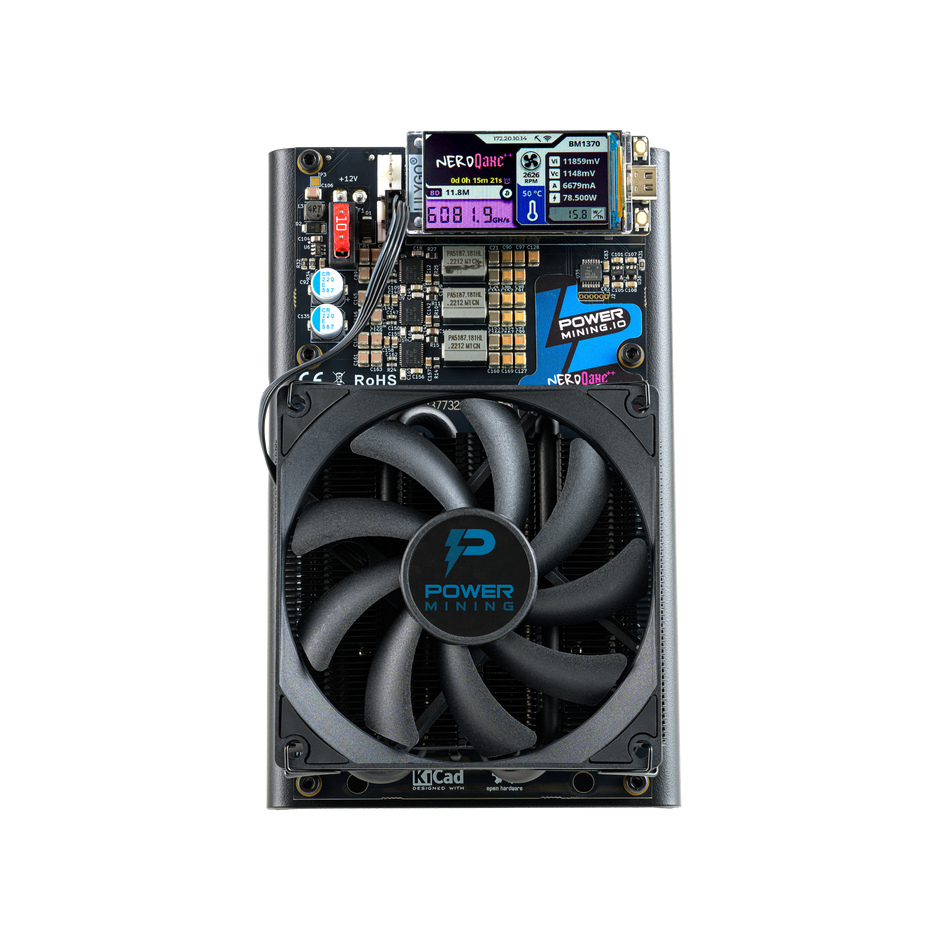
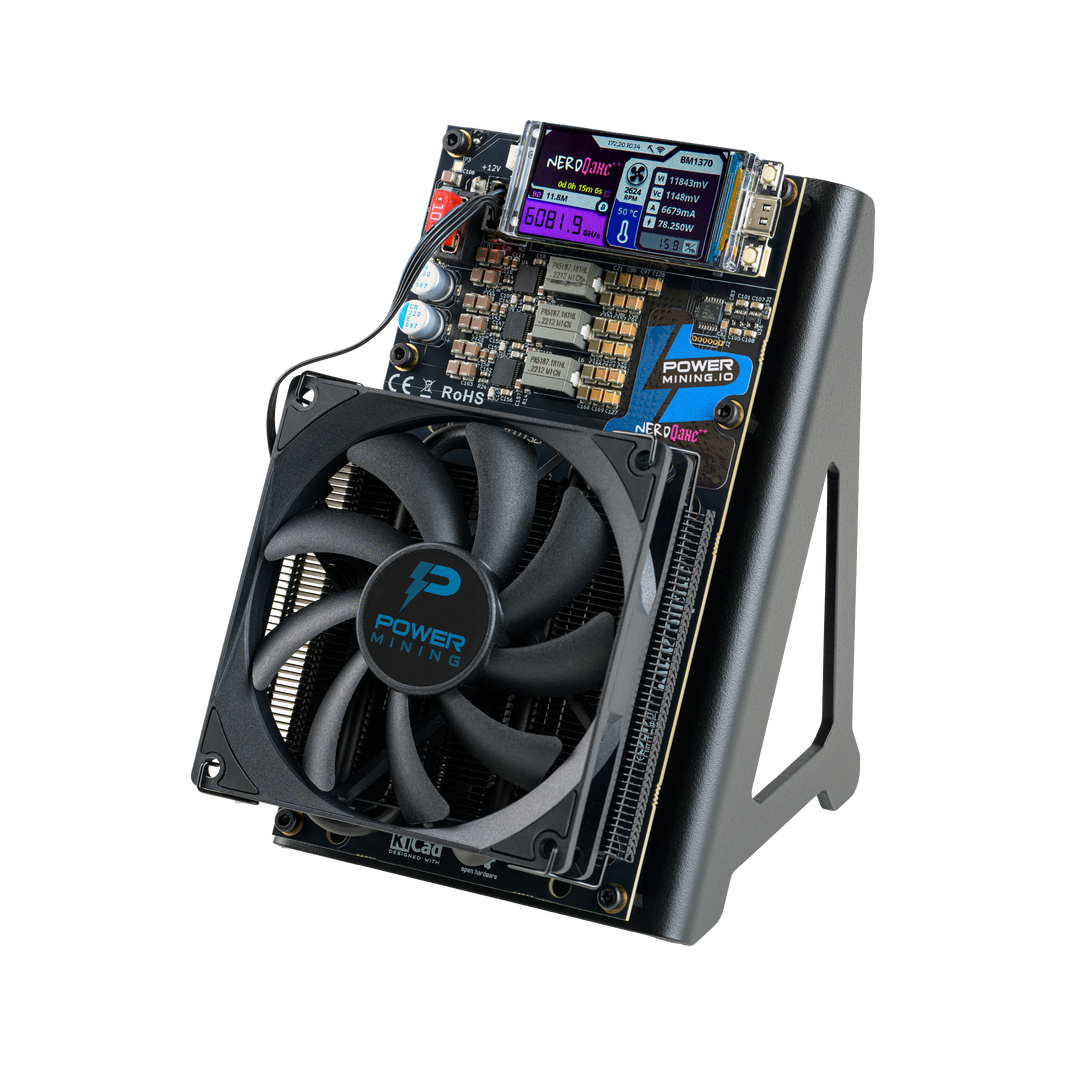
Editor’s Note: Verified against the developer’s October 31, 2026 official v1.1.1 release, the merged certificate-store fix and developer testing record, and the separate 1.0.37.4-LTS release. Board capabilities, security properties and stability corrections are developer documentation; no firmware binary was flashed or miner independently benchmarked for the article. Two authentic NerdQAxe++ Rev6 photographs are credited to Power Mining. The January 16, 2026 Red Fox Crypto YouTube guide explains earlier hardware setup, not the October 31 software release. The saved YouTube player and actual playback require separate verification.

To donate 5,000 satoshis, display the original Bitcoin donation QR on a second screen and scan it with a compatible Bitcoin wallet. On mobile, use another device or a wallet’s supported saved-image QR scanning function. Confirm the displayed payment destination before transferring funds.
We volunteer daily to ensure the information on this platform is Verifiably True. If you would like to support the research, please scan QR code.
BitcoinVersus.Tech is not a financial advisor. Technical mining coverage is informational; review release compatibility and create a configuration backup before modifying firmware.


Leave a Reply