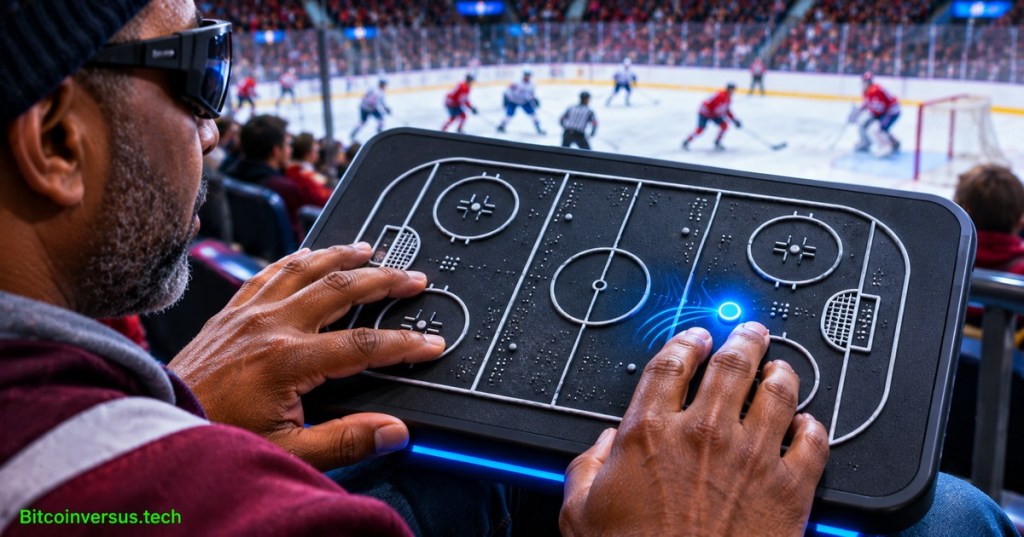
A modern hockey broadcast can carry far more than video and audio. The NHL’s EDGE system records puck and player positions through arena-based tracking hardware, turning movement on the ice into data. Haptic technology translates digital information into physical sensations such as vibrations. Together, the systems can let a spectator follow the puck through touch, even when the game itself cannot be seen clearly.
On November 5, 2026, the National Hockey League and Ticketmaster announced that Seattle-based OneCourt’s tactile tablets would be offered free of charge to blind and low-vision fans at all home games for four NHL clubs: the Washington Capitals, Colorado Avalanche, Chicago Blackhawks and Detroit Red Wings. Devices will also be available at major league events in North America during the 2026–27 season.
How hockey becomes a tactile broadcast
The NHL describes its EDGE network as using tracking technology to capture where the puck and players move during games. OneCourt says its software converts official positional feeds into moving vibration patterns across a tabletop device, with wireless connectivity supporting the arena experience. A tactile rink representation helps the fan associate positions with the ice surface. The process supplies spatial information alongside conventional commentary rather than replacing audio broadcasts or live attendance.
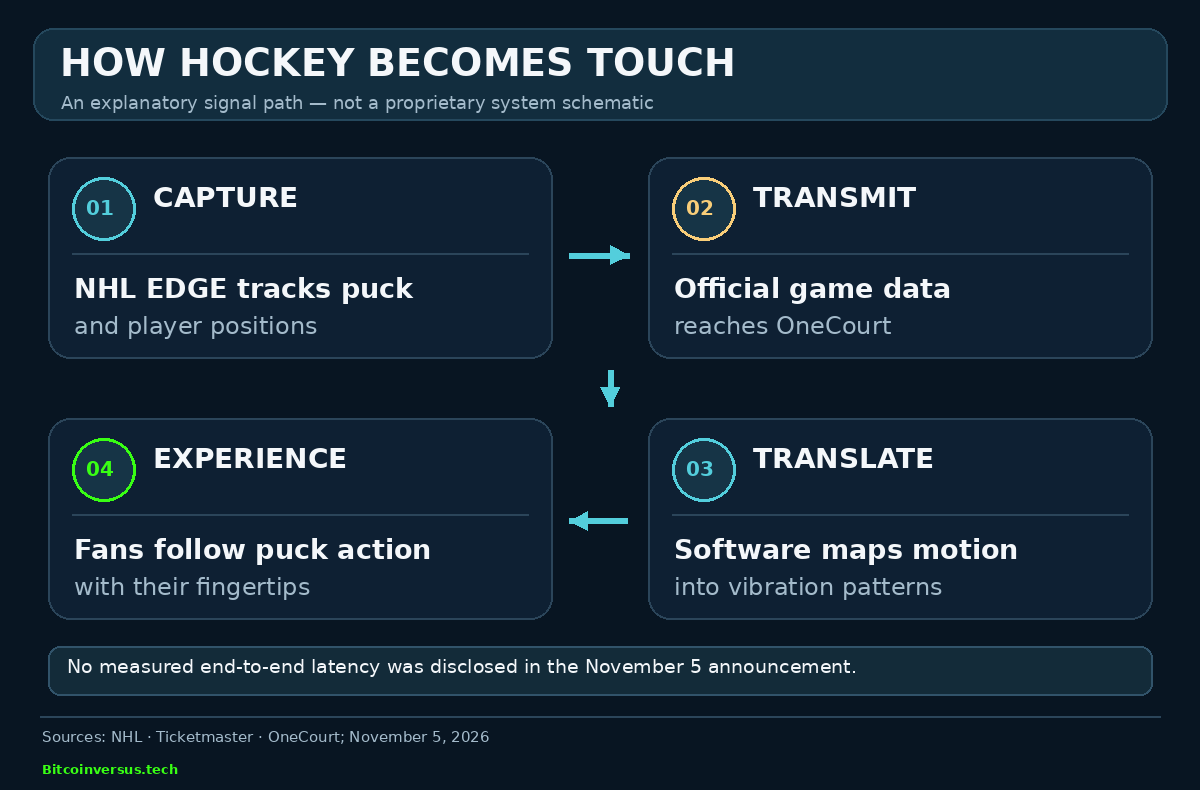
According to OneCourt’s stadium technology description, the service can use Wi-Fi or 5G links and maps tracked movement into physical feedback. Neither the NHL nor Ticketmaster specified an independently measured end-to-end latency, device inventory at each arena, accuracy rate or accessibility outcome in the announcement. Tracking data also serves other purposes: earlier BitcoinVersus.Tech reporting on NFL live-data infrastructure explains how professional leagues process movement information beyond ordinary television footage.
OneCourt representative Brie Frazier demonstrates tactile sports technology in a March 19, 2025 interview. The video predates the NHL expansion and does not depict a 2026 NHL deployment. Source: Double Tap on YouTube.
Four clubs and an additional major-event program
The tactile offering first appeared at the October 25 Heritage Classic in Winnipeg, preceding the November announcement. The next announced stops are the December 31 Winter Classic in Salt Lake City, February 5–6, 2027 NHL All-Star Weekend at UBS Arena and the February 20 Stadium Series at AT&T Stadium. Those future dates are scheduled events, not completed activations.
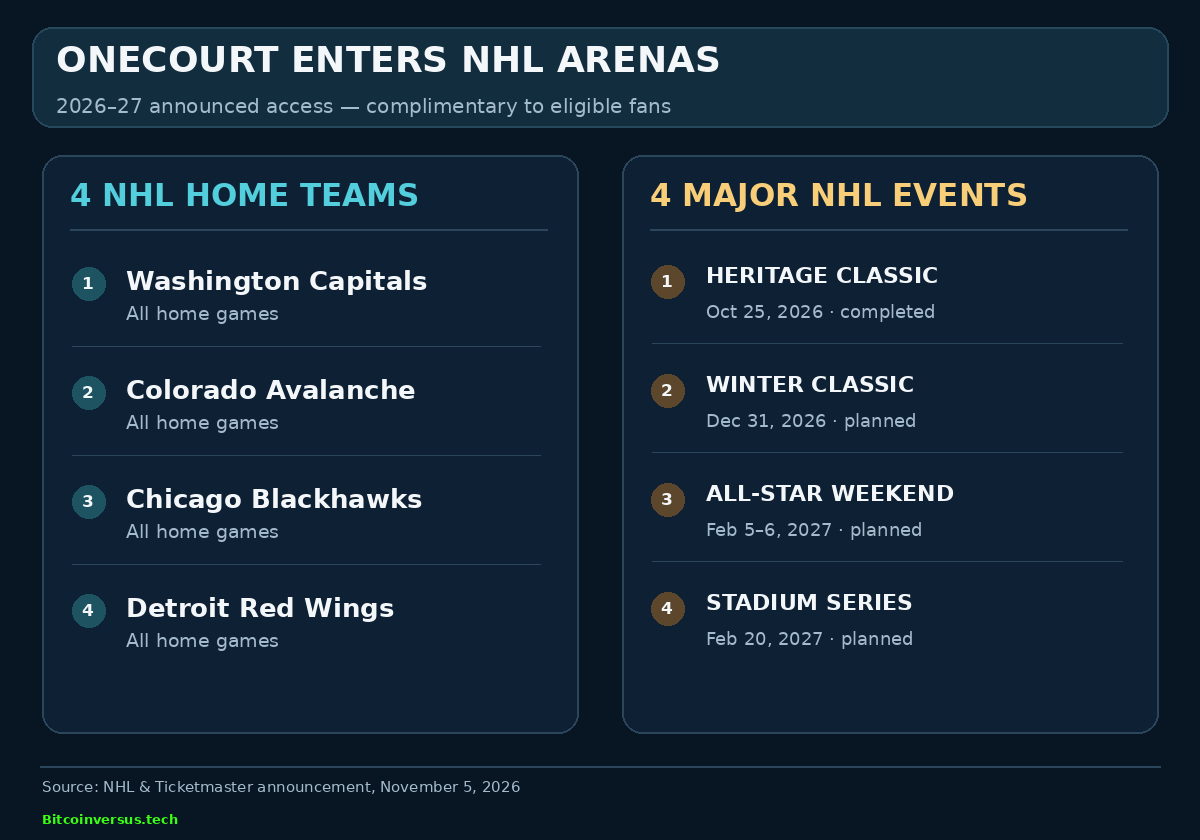
At league marquee events, Ticketmaster says fans can request complimentary devices at Guest Services. Availability at four teams’ home games is a defined initial rollout, not confirmation that all 32 NHL teams provide the same service. The companies have not published a universal reservation process or a guaranteed device count per game. Fans planning to attend should contact the participating venue’s accessibility team about pickup arrangements.
Accessibility extends beyond a single device
Ticketmaster says OneCourt has also reached home games for nine NBA teams since 2025 and was used in NFL pilots. BitcoinVersus.Tech previously covered OneCourt’s deployment for Seattle Seahawks fans. The NHL program extends the same accessibility concept to a faster, continuous-flow sport, where clear representations of puck movement can be particularly important.
New sports technologies do not all solve the same problem. NBA experiments with connected balls and referee wearables focus on data collection and game operations; low-latency coaching video systems address performance review. OneCourt’s goal is fan access. The NHL separately offers American Sign Language broadcasts, addressing a different audience and accessibility need.
The expansion makes an existing source of professional sports tracking data useful in a new way. Whether the service scales beyond the four teams, how many spectators use it and how they rate their experience remain open questions. Verified adoption and user testing would be more informative than assuming technical availability alone guarantees an equal experience.
Primary sources: NHL, November 5, 2026; Ticketmaster, November 5, 2026; OneCourt technical description; NHL EDGE data background. Independent reporting: GeekWire, November 5, 2026. Video: Double Tap’s OneCourt demonstration, March 2025.
Editor’s Note: Participating teams, event dates, platform capabilities and the complimentary access terms are attributed to the NHL, Ticketmaster and OneCourt. BitcoinVersus.Tech has not independently tested the NHL tablets, measured wireless latency or verified device availability at individual games. The featured cover is AI-generated conceptual artwork, not a documentary photo or an exact product rendering. Both article graphics are original source-based illustrations. The linked video demonstrates OneCourt’s earlier sports technology, not a 2026 NHL activation.
Support BitcoinVersus.Tech
To support independent technology reporting, scan the original donation QR below for an optional 5,000-satoshi contribution. On a phone, display the code on another screen and scan with a compatible Bitcoin wallet, or import the saved QR image if supported. Verify the destination and amount before confirming payment.

We volunteer daily to ensure the information on this platform is Verifiably True. If you would like to support the research, please scan QR code.


Leave a Reply