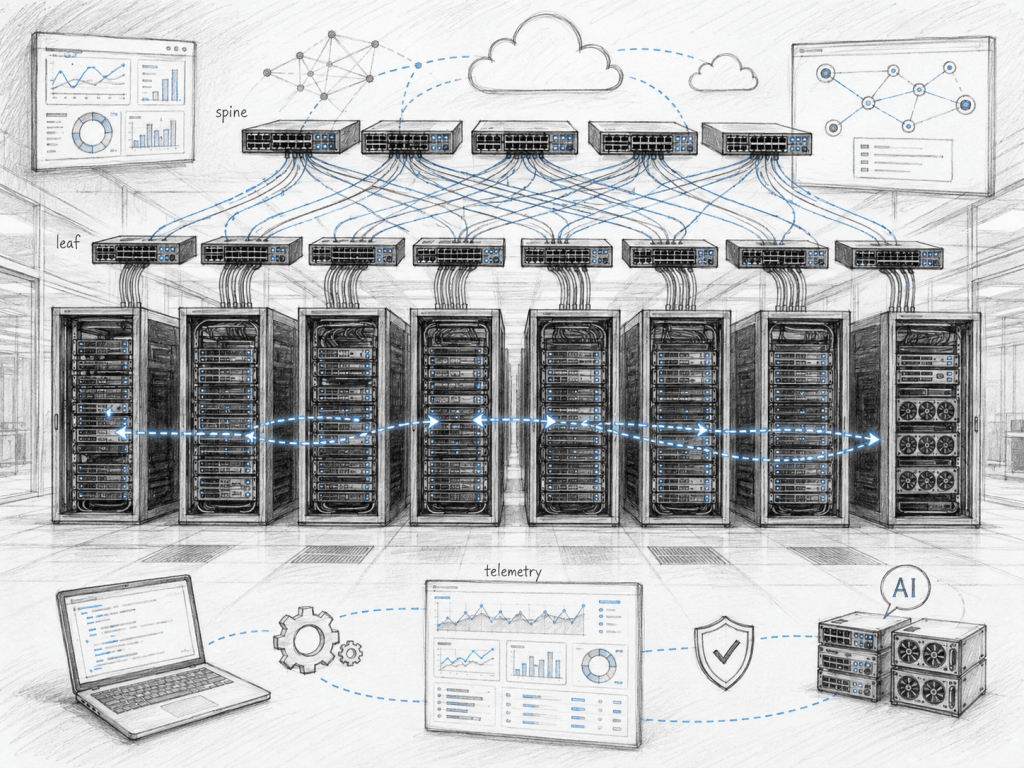
Cisco Nexus networking platforms help modern data centers build scalable spine-leaf architectures designed for cloud computing, AI infrastructure, storage, and high-volume east-west traffic.
Technologies such as VXLAN and EVPN extend network segmentation and workload mobility beyond traditional VLAN limitations, allowing logical networks to operate independently from the underlying physical fabric.
High-throughput switching silicon, low-latency forwarding, and ECMP-based spine-leaf designs provide the predictable bandwidth required by distributed applications, GPU clusters, storage systems, and AI workloads.
VXLAN supplies the overlay network while EVPN provides a scalable control plane for exchanging endpoint and routing information across the fabric.
Cisco Nexus environments also incorporate network telemetry, automation, APIs, Python, Ansible, NX-OS, and Nexus Dashboard to reduce repetitive configuration and improve operational visibility.
BitcoinVersus.Tech Editor’s Note:
We volunteer daily to ensure the credibility of the information on this platform is Verifiably True. If you would like to support to help further secure the integrity of our research initiatives, please donate here: 3C9o19EH5HSiwEPyCTmEKzxhNCbo2X6TTb
BitcoinVersus.tech is not a financial advisor. This media platform reports on financial subjects purely for informational purposes.


Leave a Reply