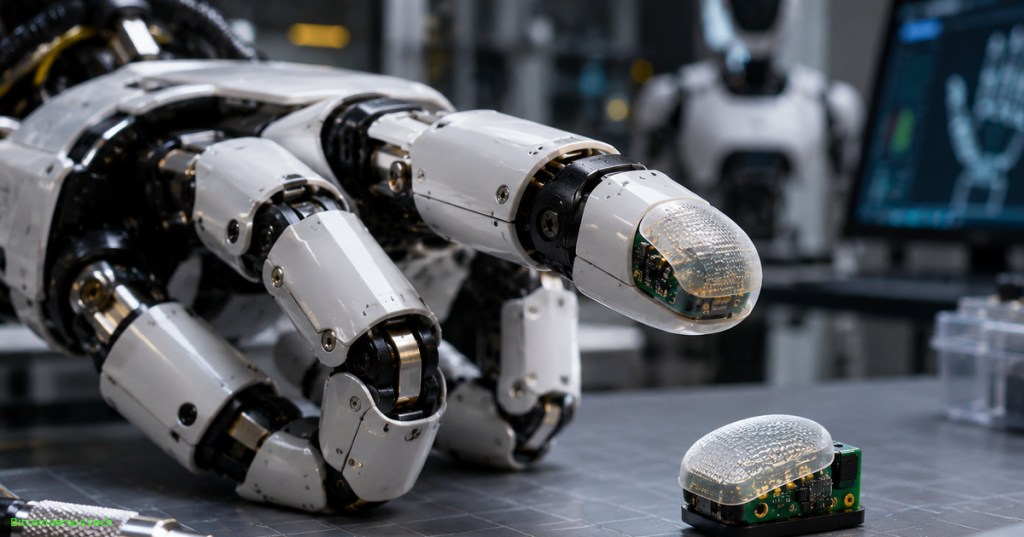
Belgian sensor manufacturer Melexis introduced the MLX90901 on November 12, 2026, a compact fingertip module that measures contact forces in three dimensions for robotic hands. The device senses the force pressing into its surface and sideways forces that can signal object movement or a slipping grasp. It moves the company’s Tactaxis magnetic-sensing technology into a packaged evaluation product, not a documented mass-market humanoid deployment.
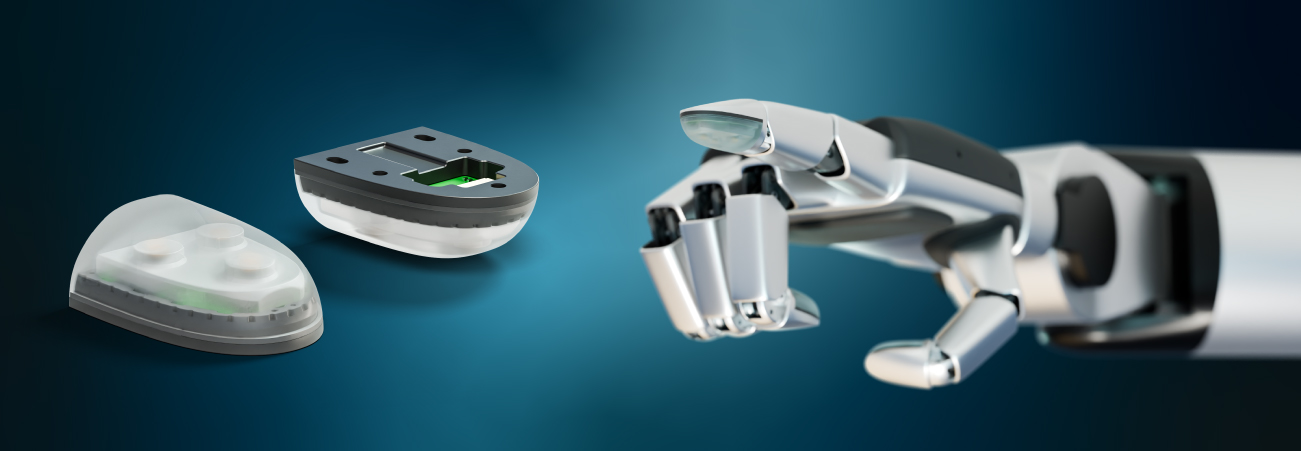
Melexis provides an official video demonstration on its MLX90901 product page, including fingertip construction and a piano-key manipulation example. The company-hosted video is linked directly because a verified, embeddable YouTube identifier was unavailable.
How three-axis fingertip sensing works
A conventional simple gripper may rely on motor current or a single-axis contact sensor. MLX90901 uses a magnetic sensor, an elastomer containing magnetic elements, and accompanying electronics. As the fingertip material deforms, the electronics estimate a three-component force vector: one normal component and two lateral shear components. The output gives a controller additional information for adjusting grasp pressure without relying solely on cameras.
Melexis specifies a 15-newton normal-force range, an extended normal-force range of 25 N, and 4 N of shear-force range. The manufacturer lists 10% full-scale accuracy and a 200-millinewton detection limit. A 200 mN threshold is not evidence of 200 mN measurement accuracy, and full-scale percentage figures cannot be treated as the same as real-world success rates.
A small module with a 400 Hz readout
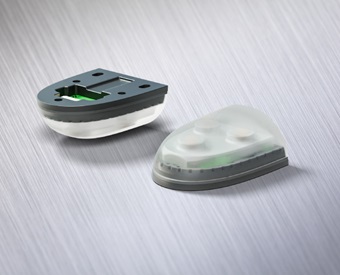
The module measures approximately 18.5 × 23.6 × 9.4 mm and operates at 3.3–5 V while consuming under 100 mW, according to its published product information. It can produce three-axis data and a contact-location heatmap at up to 400 readings per second. The I²C interface supports communication at up to 1 Mbit/s. Fast sensor updates can support tighter grip control, but actual robot responsiveness also depends on actuation, software latency, mechanical compliance and task-specific tuning.
The difference from earlier sensing approaches matters. Microchip’s 800 Hz capacitive digitizer processes a different kind of touch sensing and is not a direct like-for-like fingertip module. Sharpa’s tactile robotic-hand system illustrates the larger end-to-end challenge of combining sensing, software and dexterous movement.
Evaluation available; deployment evidence remains limited
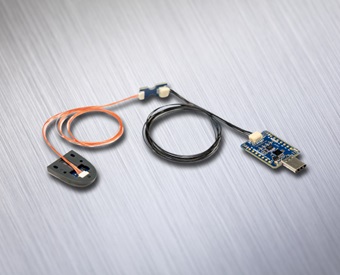
Melexis says the DVK90901 development kit is available, using a Melexis.IO USB-C bridge to transfer I²C sensor data to a PC for visualization and logging. Its companion interface and Python software tools allow manufacturers to study force response before designing a robot hand around the component. The MLX90901 product page separately describes engineering samples available in limited quantities, not unrestricted volume supply.
The development follows Melexis’s April collaboration with OYMotion on tactile hands. It also addresses problems visible in Panasonic’s touch-guided manipulation work and robotic training-data research, where detecting contact and interpreting contact remain separate engineering tasks.
Integration questions remain substantial: fingertip abrasion, repeatability, slip detection under different surfaces, contamination, calibration over a service life and safe response to sensing faults. Melexis has not disclosed a mass-production customer count or independently verified multi-shift factory performance for the new module. Its November announcement is best understood as an evaluation-ready hardware milestone, not proof that humanoids now manipulate unfamiliar objects as reliably as people.
Primary sources: Melexis November 12 announcement; MLX90901 specifications and official demonstrations; DVK90901 development-kit documentation; April OYMotion integration announcement. Device performance figures are vendor specifications and require independent qualification in target applications.
Editor’s Note: Melexis specifications, availability language, product imagery and release dates were checked against the manufacturer’s published records. The 1200 × 630 photorealistic featured cover is original conceptual artwork, not an actual MLX90901 installation, and carries only the required 10-point neon-green Bitcoinversus.tech watermark at bottom-left. The three in-story images are authentic Melexis product or evaluation-kit materials, with credits and distinctions from field deployment. The official product video page is linked rather than misrepresented as a verified WordPress video embed. Independent performance testing and mobile-browser media verification were not performed.

BitcoinVersus.Tech is volunteer-run and publishes independent technical reporting. An optional 5,000-satoshi donation supports research. Scan the original QR from a second screen with a compatible Bitcoin wallet. On the same phone, use a wallet that supports importing a saved QR image. Independently verify recipient 3C9o19EH5HSiwEPyCTmEKzxhNCbo2X6TTb and the 5,000-satoshi amount before sending. Bitcoin transactions are generally irreversible.
We volunteer daily to ensure the information on BitcoinVersus.Tech is Verifiably True. Technical journalism is informational, not an endorsement, certified engineering qualification, financial advice or investment advice.


Leave a Reply