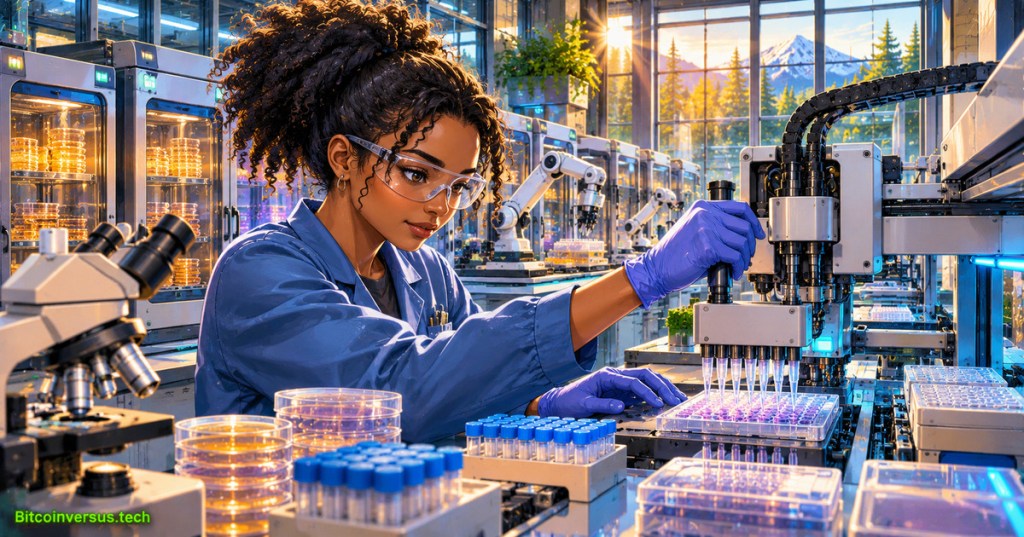
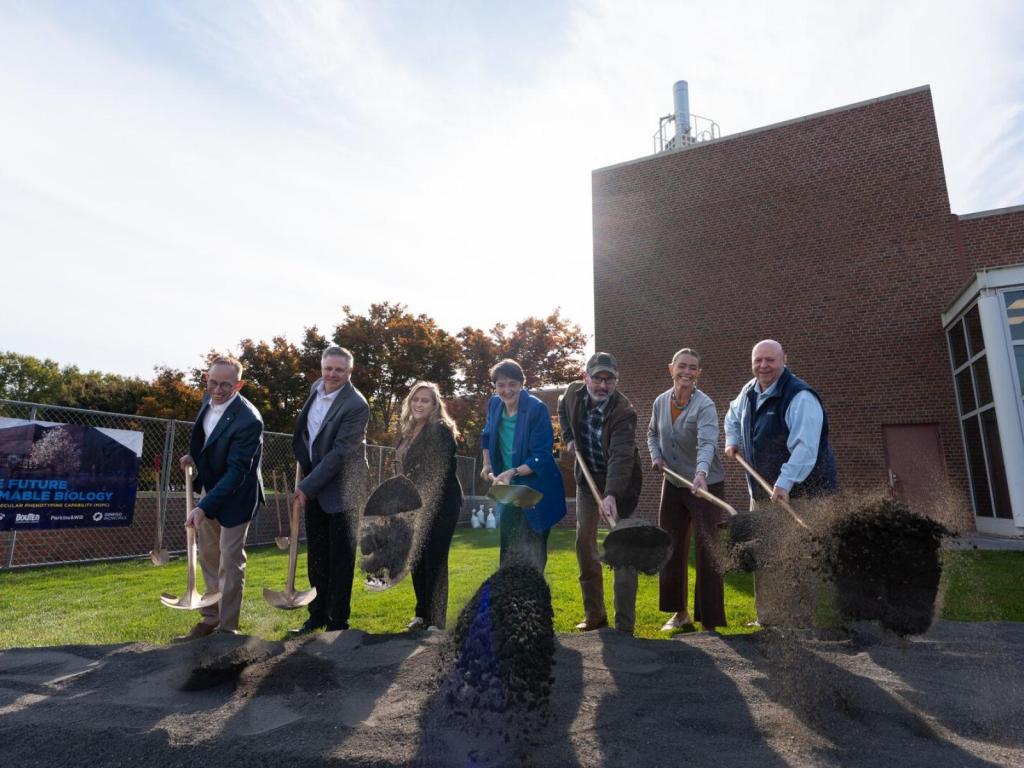
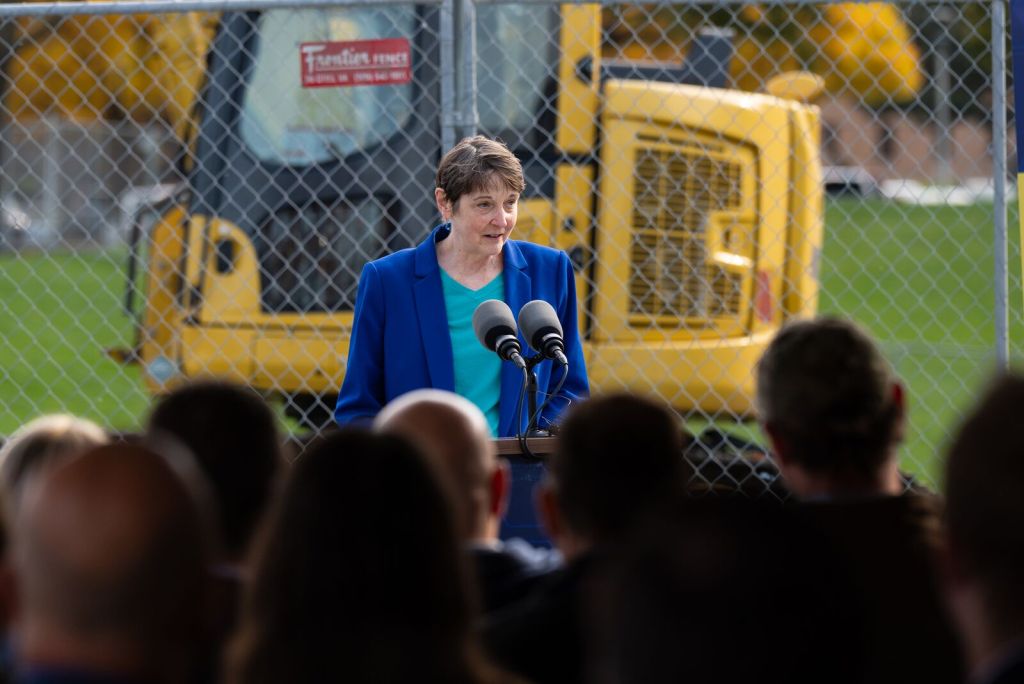
Pacific Northwest National Laboratory has broken ground on a 30,800-square-foot autonomous biosciences facility in Richland, Washington, with more than 100 connected instruments planned for microbial research. The Microbial Molecular Phenotyping Capability, or M2PC, will expand the Department of Energy’s Environmental Molecular Sciences Laboratory (EMSL), with access for outside research teams targeted for 2029. Construction started with an October 20, 2026 ceremony; the automated facility is not operational yet.
One laboratory, more than 100 robotic instruments
PNNL’s planned platform would link automated cultivation, sample preparation, functional testing and molecular analysis under coordinated software. Industry partner Ginkgo Bioworks is supplying the connected equipment. Researchers want to measure microbial phenotypes—observable traits such as growth rate, chemical production and responses to environmental conditions—and connect those results with genes and cellular chemistry.
A test cycle could begin with a software-directed series of growth conditions. Machines would prepare the cultures, collect measurements and return data to computational models. Researchers could then select follow-up experiments based on observed results, reducing repetitive manual transfers between instruments. Designing an effective closed loop will require careful calibration, contamination controls, reproducible datasets and human scientific review.
Why Washington’s project matters
Microorganisms can make compounds, modify minerals and transform waste, but finding a useful strain involves extensive screening. Scientists must determine which environmental conditions change the output, whether performance survives repeated cultivation and whether a process can scale beyond a small vessel. PNNL argues that high-throughput experimentation could shorten some discovery cycles from years to months or weeks. That timing is a development objective, not a measured result from M2PC.
The public research facility is intended to support work on biofuels, bioproducts, materials recovery, environmental cleanup and microbial responses to changing conditions. Potential health or industrial benefits would depend on successful follow-on studies, regulatory requirements and economics; the laboratory’s construction alone does not establish commercial readiness.
Researcher access, costs and AI safeguards
PNNL says universities, private companies and other national laboratories will be able to seek instrument time through EMSL’s competitive proposal program at no cost to approved users. Applications are expected when the new capability opens in fiscal 2029. The project is funded through DOE’s Biological and Environmental Research program. PNNL has not reported completed M2PC experiments or peer-reviewed production-scale performance results.
The distinction between autonomous workflows and scientifically trustworthy results is critical. Robots can repeat a flawed experiment very quickly; AI may also recommend poor conditions when training data are sparse or biased. Controls for biosafety, traceable protocols and validation against independent measurements will determine how much labor automation actually saves. PNNL’s AutoLabs research offers an example of AI translating scientists’ requests into robot-readable instructions in an existing laboratory.
The project joins an expanding field of automation. BitcoinVersus.Tech has examined AI performance on wet-lab tasks, Opentrons’ laboratory robotics funding, Multiply Labs’ robotic pharmaceutical manufacturing plans and Stanford’s multi-agent virtual biotechnology work. Those projects vary in maturity and are not components of M2PC.
A successful opening in 2029 would give external scientists access to a large integrated microbial-research platform. The engineering benchmark, however, will be reliable experiments and useful validated findings—not simply the number of robots installed.
Sources
PNNL: October 22 groundbreaking announcement; EMSL: M2PC facility specifications and 2029 timeline; PNNL: AutoLabs research and demonstration; GeekWire: independent reporting on access to the planned facility.


Leave a Reply