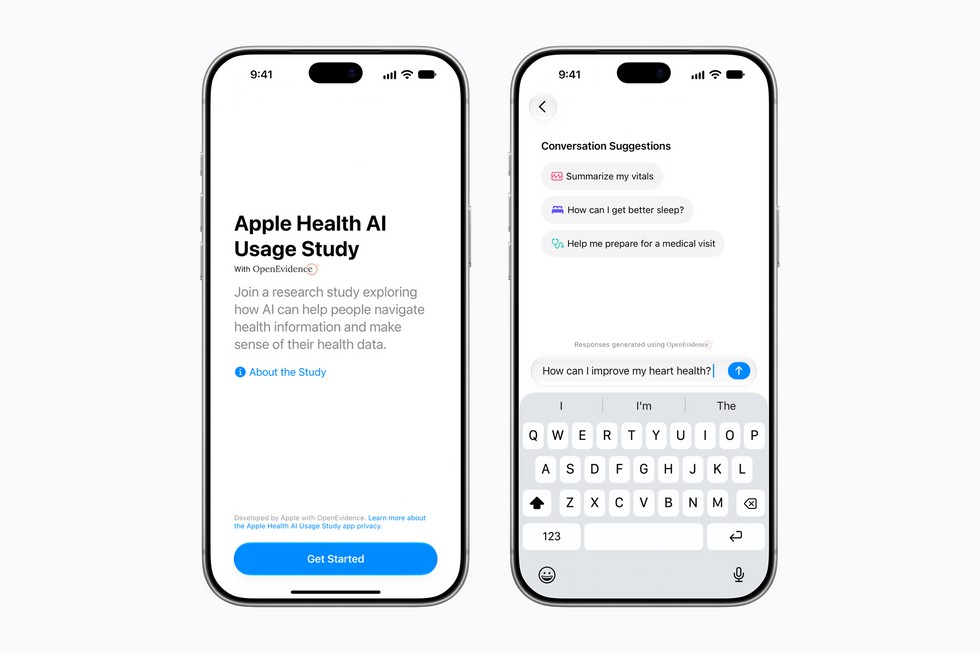
Apple launched a U.S. research study on November 15, 2026, inviting up to 200,000 eligible adults to test a conversational health assistant built with clinical AI company OpenEvidence. The Apple Health AI Usage Study will examine whether people understand AI-generated explanations, judge their quality appropriately and use the information to prepare for medical appointments. Enrollment and an associated iPhone app are available, but no study outcomes have been published.
The project separates a research-only conversational tool from Apple’s established Health app. Participants can ask everyday health questions, review links to medical literature and provide feedback on the explanations. Apple says the research will inform health-AI design; it has not announced a medical diagnosis product or a new Siri clinical service. BitcoinVersus.Tech previously covered reported plans for a more proactive Siri assistant, a separate development.
Clinical citations are not clinical validation
OpenEvidence supplies the clinical AI technology while Apple designs the study experience. Apple says answers draw on established medical literature, including journals such as The New England Journal of Medicine, JAMA and Nature, and display linked peer-reviewed citations. Citations can help readers trace claims back to sources, but their presence alone cannot establish that an answer is complete, current or appropriate for an individual patient.
An important research question is whether participants can distinguish persuasive wording from reliable medical guidance. A response may correctly summarize one paper yet omit uncertainty, conflicting evidence, interactions or patient-specific risks. Findings will depend on the study’s evaluation design, participant mix and quality-control procedures. As a parallel example of limited AI evaluation, BitcoinVersus.Tech examined AI performance across 100 laboratory tasks; controlled benchmarks are not a substitute for clinical validation.
Optional HealthKit data and the privacy question
Participants may optionally share HealthKit information, including resting heart rate, sleep, activity and laboratory results, to test whether personal context improves relevance and comprehension. The option matters because wearable readings may be incomplete, noisy or misleading without medical history. A connected smart ring, for example, can provide additional measurements, as discussed in BitcoinVersus.Tech’s report on consumer AI wearables.
Archival Apple Support tutorial showing features of the ordinary Health app, January 9, 2024. Credit: Apple Support/YouTube. The video predates the AI research app and does not show the new study.
Apple says participants control access to HealthKit measurements and study surveys, and says study data will not be used to train AI models. The company describes privacy protections and safety guardrails designed to direct concerning questions toward clinicians. The public announcement does not provide independent security-audit results or detailed false-negative rates for those warnings; both deserve attention before drawing conclusions about safety.
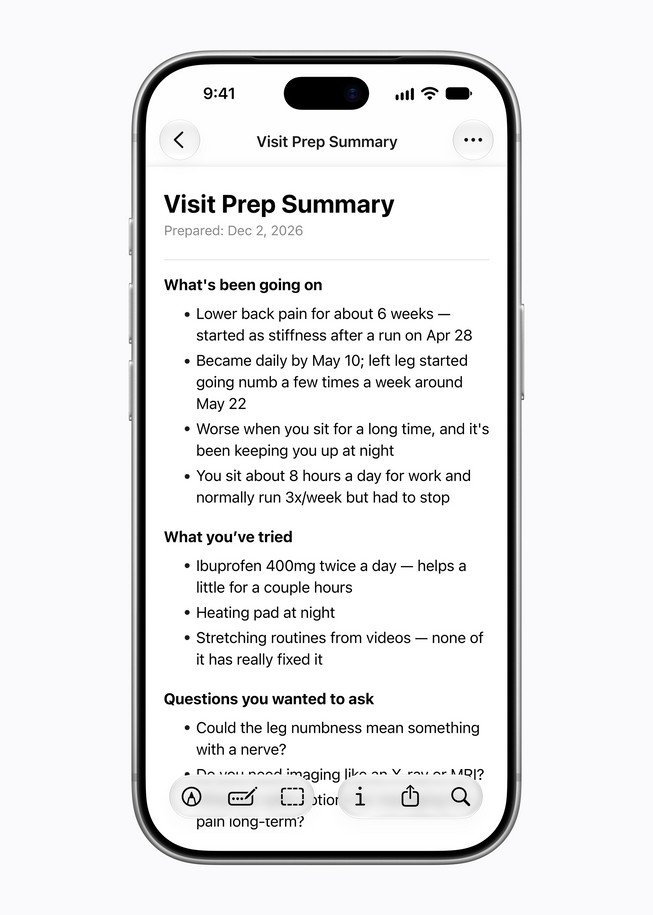
Apple’s demonstration shows a Visit Prep Summary that organizes symptoms, attempted remedies and questions for a clinician. The example is a product illustration rather than evidence of improved patient outcomes. In healthcare, improving appointment preparation could be valuable, but overstated confidence or incorrect summaries can also undermine decisions. BitcoinVersus.Tech’s coverage of hospital robotics trials similarly distinguishes tests from verified clinical deployment.
Who can participate and what the survey measures
The study accepts eligible U.S. adults age 21 or older who have an Apple Intelligence-capable iPhone, specified by Apple as iPhone 15 Pro or later, running iOS 26 or later. Interested users can review the dedicated study app and consent process. Apple has not published enrollment totals or demonstrated that all 200,000 places will be filled.
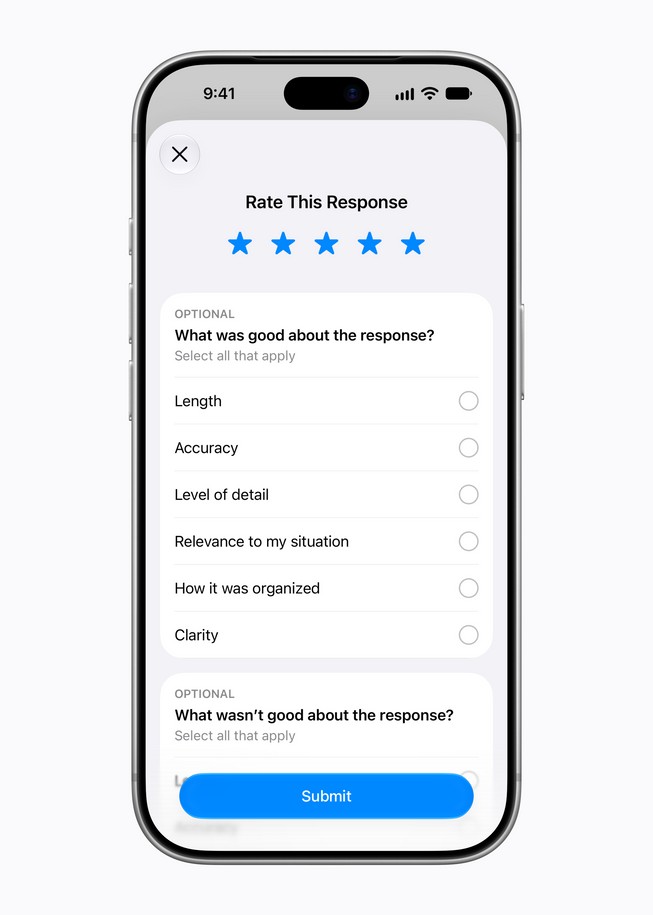
Participants can rate responses on measures such as accuracy, level of detail, relevance, organization and clarity. Feedback can reveal usability problems, although satisfaction scores alone do not prove medical accuracy. Apple’s research announcement offers no completed results, quantified benefit, or timetable for a broader consumer service. The dedicated app is not intended to diagnose or treat health conditions and must not replace qualified medical advice.
Sources and verification
Primary reporting: Apple Newsroom, November 15, 2026; Apple’s study app listing; Apple’s Health data documentation; and ABC News reporting. Product claims are attributed to Apple; no independent clinical outcome assessment was identified in the cited launch materials.
Editor’s Note: Enrollment limit, age and device requirements, study purpose, citation approach and stated privacy safeguards were checked against Apple’s November 15 announcement and official App Store listing. The 1200 × 630 colored-pencil featured cover is original conceptual art, not an actual application screenshot. Three in-story app images come from Apple Newsroom. The Apple Support video is archival context from 2024, not launch footage. Independent study outcomes, clinical performance and actual end-user video playback have not been verified.
Support BitcoinVersus.Tech
Optional 5,000-satoshi donations support independent reporting. Open the article on another screen and scan the approved QR code with a compatible Bitcoin wallet. If viewing on a phone, save the QR image and import it into a wallet supporting image-based QR scanning. Check the destination and amount before sending.

BitcoinVersus.Tech is volunteer-run and aims to make independent technology reporting verifiably true. Donations are voluntary, and Bitcoin payments are generally irreversible. Verify recipient 3C9o19EH5HSiwEPyCTmEKzxhNCbo2X6TTb and 5,000 satoshis before payment. Reporting provides information rather than medical advice, a guarantee of clinical safety or a promise of investment results.


Leave a Reply