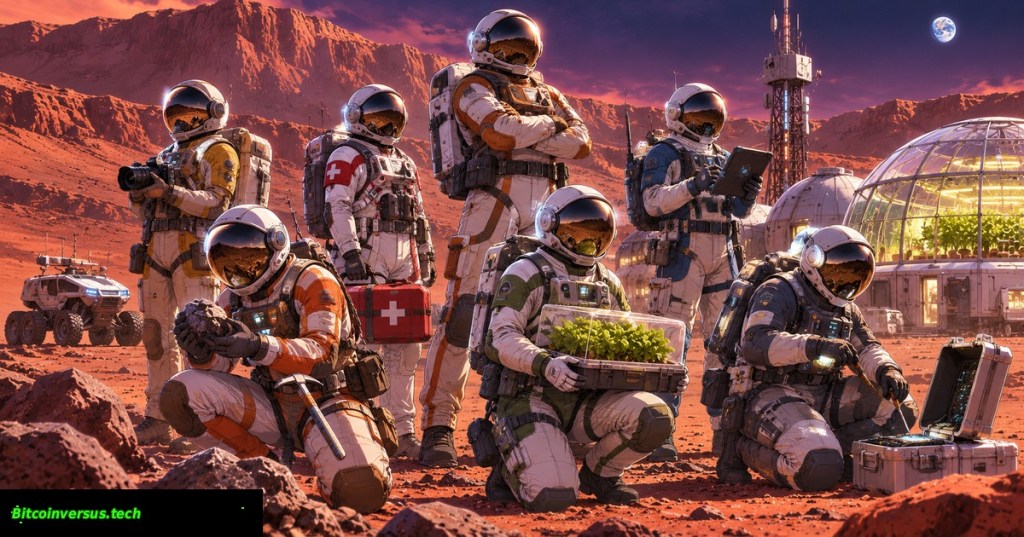
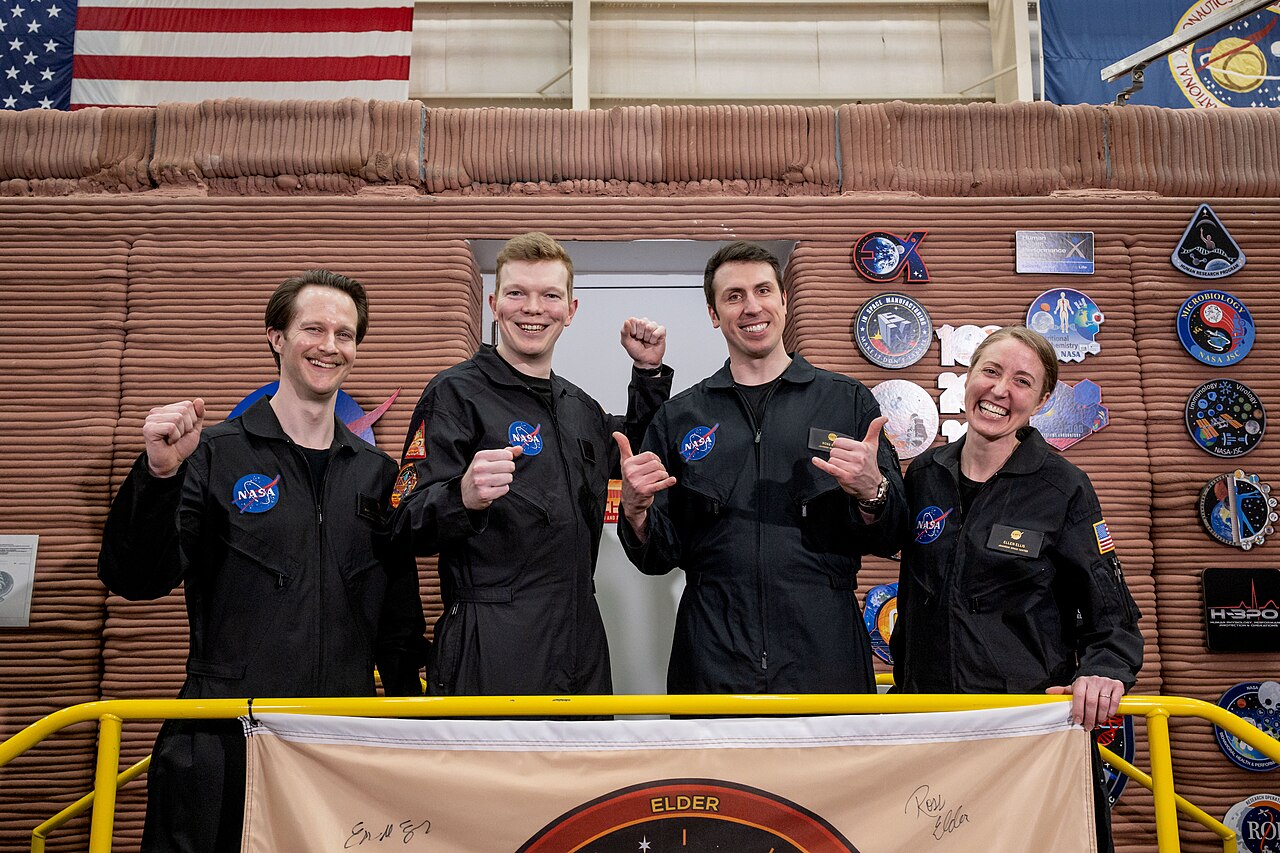
NASA’s second simulated Mars crew emerged on October 31, 2026 after spending 378 days inside a 1,700-square-foot habitat in Houston. Its November 9 report describes repairs, crop cultivation, simulated Marswalks and communications delayed by up to 22 minutes each way. The milestone invites a fresh look at BitcoinVersus.Tech’s seven-person Mars shortlist from 2023.
Exceptional intelligence and athleticism do not independently establish mission readiness. NASA identifies five hazards: radiation, isolation, distance, changing gravity and hostile closed environments. A long mission needs science, medicine, engineering and experienced leadership. The people below are editorial possibilities, not a NASA-selected Mars crew.
NASA Johnson’s original October 31, 2026 CHAPEA Mission 2 egress ceremony. An Earth-based isolation study, not a flight to Mars.
The seven Mars candidates: countdown from #7 to #1
The ranking considers NASA’s November 2026 active-astronaut list, spaceflight records and complementary specialties. It does not assess confidential medical fitness, consent or future mission requirements.
#7 — Jessica Meir: extreme-environment physiology
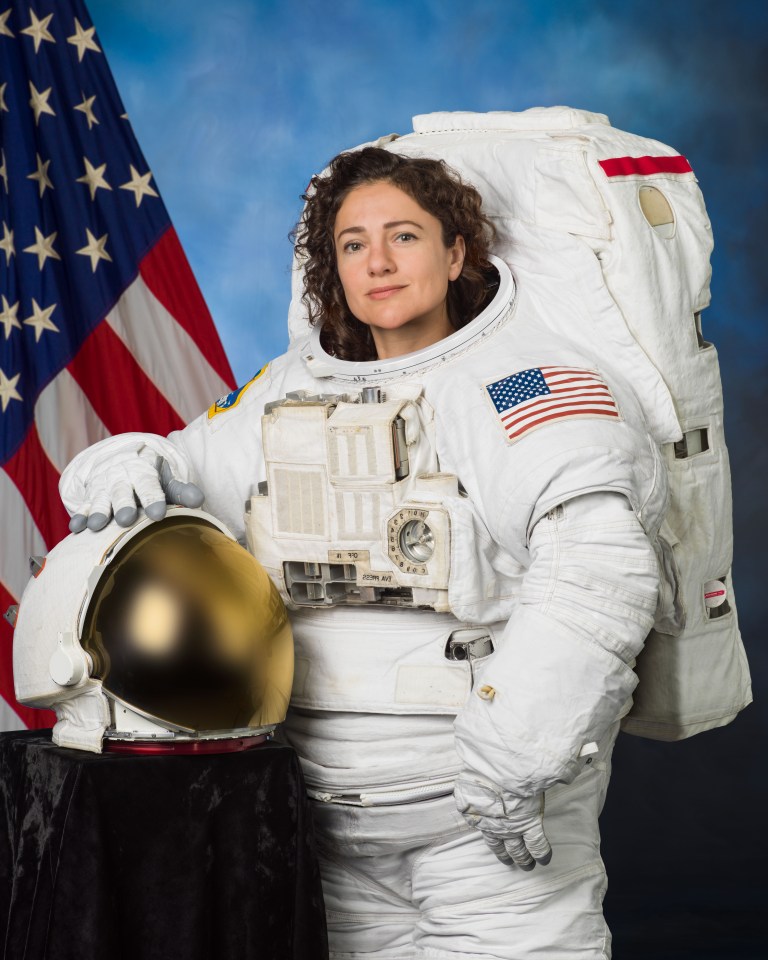
Jessica Meir trained as a marine biologist, researching how diving mammals and birds withstand demanding environments, and participated in NASA’s underwater NEEMO analog program. She later served aboard the International Space Station and commanded Crew-12, returning on October 8, 2026 after a 237-day expedition. Her experience connects life-science research, long-duration spaceflight and small-crew leadership. Such abilities could support studies of human adaptation and habitat health on Mars. However, expertise in extreme-environment physiology does not establish personal tolerance for deep-space radiation or guarantee medical fitness for a particular expedition.
#6 — Raja Chari: test pilot and spacecraft commander
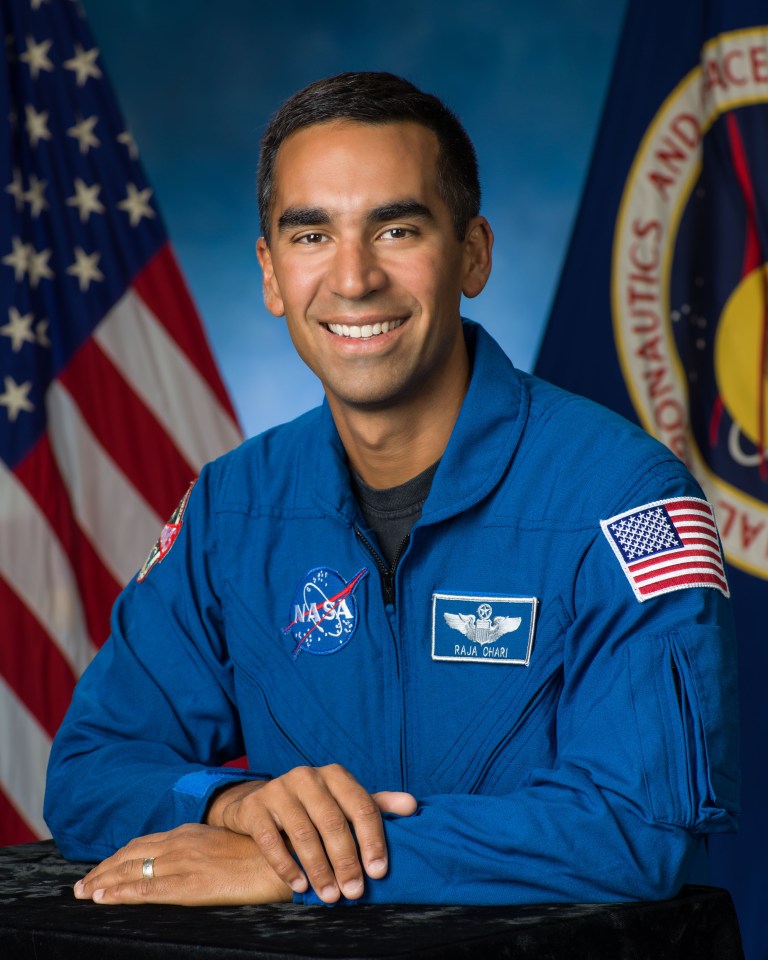
Raja Chari earned aerospace engineering credentials from the U.S. Air Force Academy and MIT and trained as a test pilot. Before commanding NASA’s Crew-3 mission, he worked in advanced flight testing, where system failures and rapidly changing conditions demand sound judgment. His mixture of practical aircraft experience, spacecraft command and engineering education could support vehicle operations during a Mars journey. Landing on Mars would nevertheless involve unfamiliar aerodynamics, propulsion and autonomous decision-making; demonstrated competence aboard an orbital spacecraft cannot be treated as proof of success in a future planetary descent.
#5 — Zena Cardman: geobiology and crisis leadership
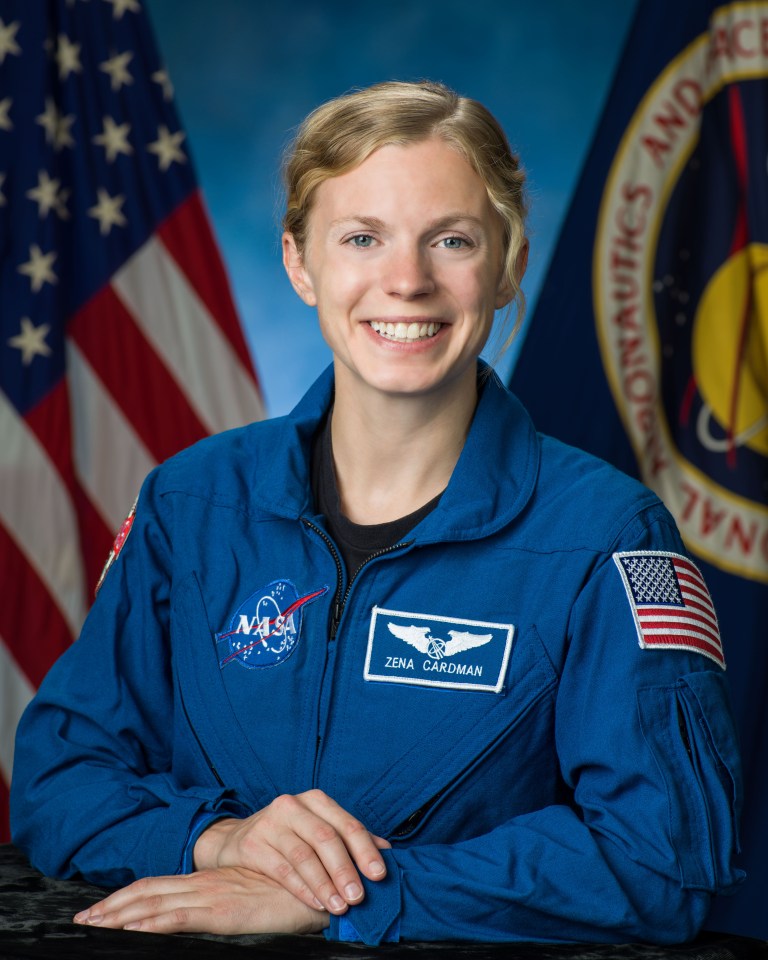
Zena Cardman studied microbes and chemical cycling in harsh environments, including Antarctic field sites. Her research could support the search for signatures of ancient Martian life, habitat biochemistry and environmental sampling. Cardman also commanded NASA’s Crew-11 expedition, which returned in January 2026 after 167 days when an onboard medical incident prompted an early homecoming. The mission gives her a relevant record of crew leadership under operational pressure. It also illustrates a critical difference between the space station and Mars: an interplanetary crew cannot rely on a rapid return to Earth for treatment.
#4 — Anil Menon: emergency and aerospace medicine
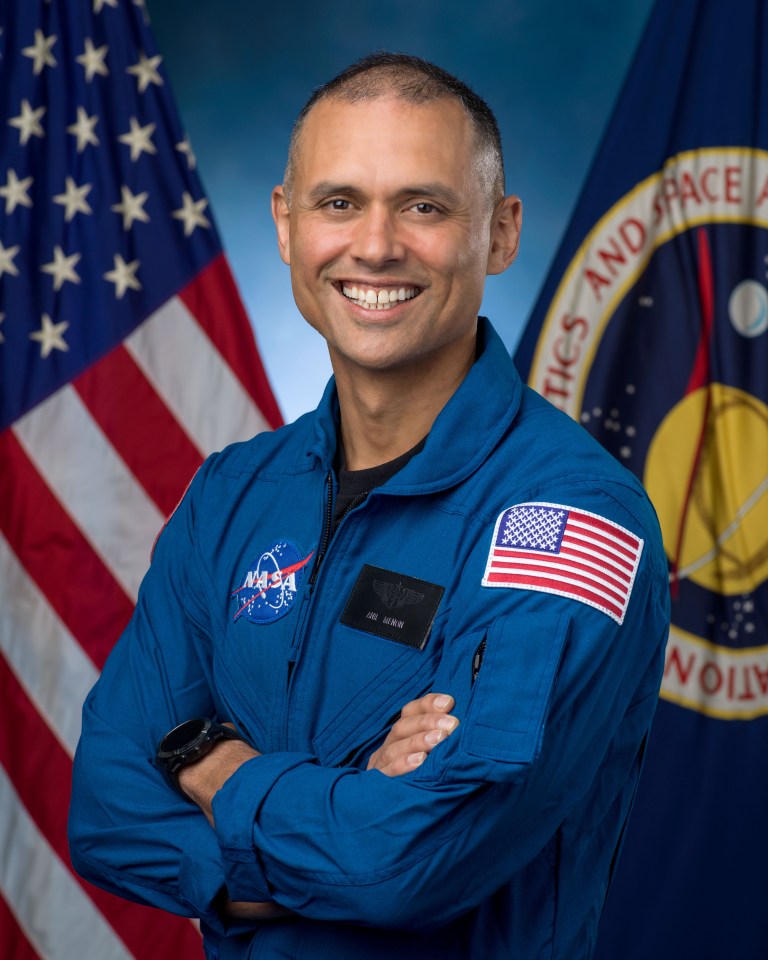
Anil Menon brings a physician’s experience in emergency care, wilderness medicine and aeromedical operations. Before selection as an astronaut, he worked as SpaceX’s first flight surgeon and supported NASA space station crews. He launched aboard Soyuz MS-29 in July 2026 for an extended orbital expedition. An autonomous Mars crew would need people able to handle injuries and illness without immediate specialist assistance, especially when communications with Earth are delayed. Menon’s combined medical and aerospace background is valuable, although no single crew physician could replace a well-equipped medical bay, redundant systems or comprehensive mission-specific training.
NASA’s official October 1, 2026 Crew-13 launch coverage, featuring Jessica Watkins. No Mars crew assignment is implied.
#3 — Kayla Barron: nuclear engineering and submarines
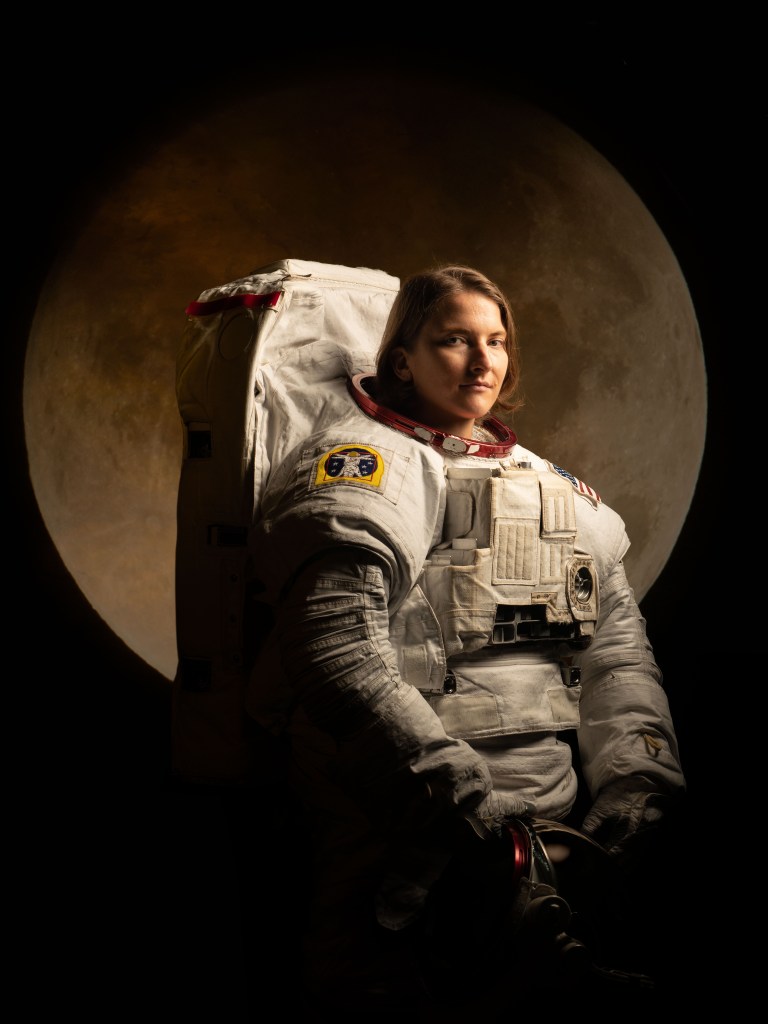
Kayla Barron studied nuclear engineering at Cambridge and served as a U.S. Navy submarine officer before joining NASA. She completed a 177-day International Space Station expedition that included two spacewalks and was assigned to command Crew-14. A confined submarine offers an informative parallel to closed-loop habitat operations: teams must monitor power, life support, maintenance schedules and operational discipline away from normal infrastructure. Barron’s engineering and small-crew experience could help manage comparable systems on Mars. The parallel has limits, however, because submarines do not face deep-space radiation, reduced gravity or the logistics of an extraterrestrial surface base.
#2 — Frank Rubio: prolonged isolation and medicine
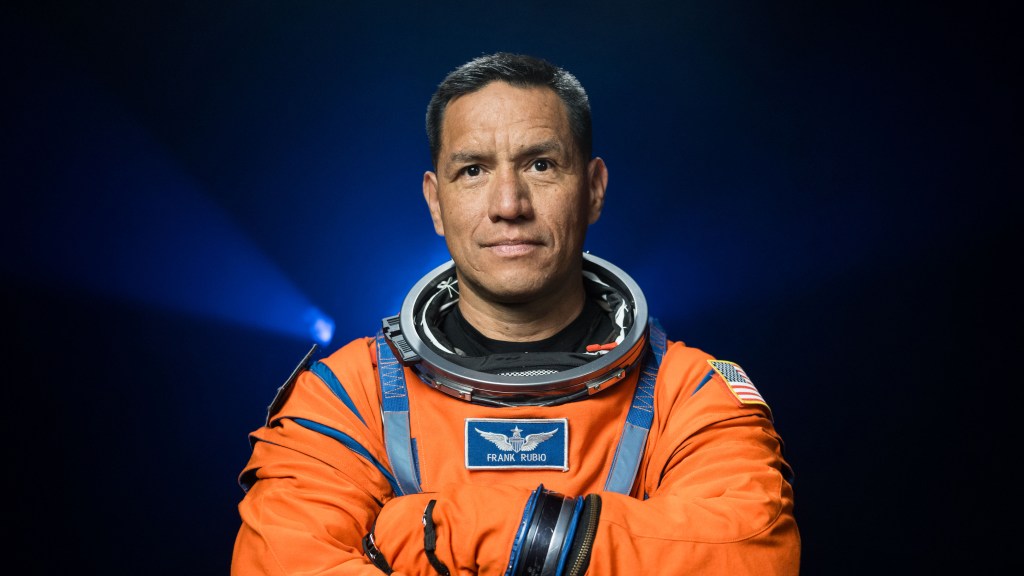
Frank Rubio completed 371 consecutive days aboard the International Space Station, the longest single spaceflight by a U.S. astronaut. His earlier service as a helicopter pilot and his training as a physician provide useful experience with flight operations, human health and high-stakes decisions. NASA assigned him to the Artemis III orbital docking test mission. A long stay in Earth orbit offers some of the strongest direct evidence available for handling isolation and extended spaceflight, but it does not reproduce the severe radiation exposure, limited resupply and potentially multi-year duration of a crewed Mars mission.
#1 — Jessica Watkins: Mars geologist and commander
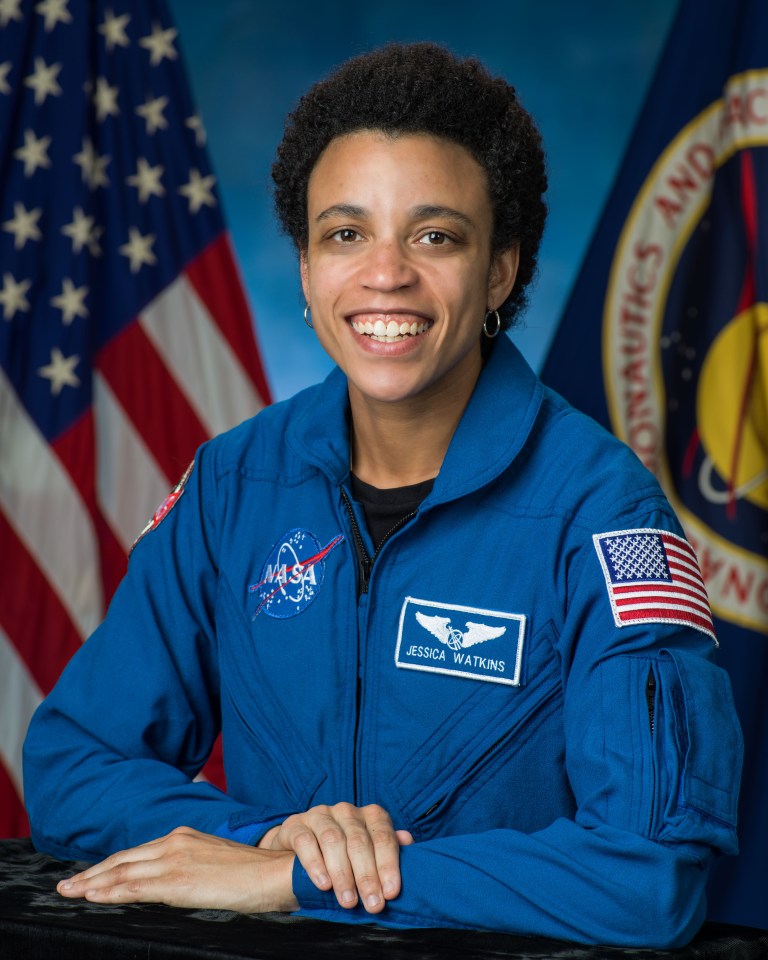
Jessica Watkins stands at No. 1 because her scientific training directly addresses Mars. She earned a doctorate in geology studying landslides on Mars and Earth and contributed to the science team supporting NASA’s Curiosity rover. After roughly 170 days aboard the International Space Station during Crew-4 in 2022, she returned to orbit in October 2026 as commander of Crew-13. A human Mars mission would place high value on geological field judgment, responsible sample collection and operational leadership. The ranking remains an editorial assessment only; NASA has not announced Watkins or any other person on the list for a Mars expedition.
Why the 2023 list changed
The first ranking also named Myron Rolle, John Urschel, Anna Kiesenhofer, Victor Glover, Reid Wiseman and Fabiola Mann. Success in medicine, mathematics or sport deserves recognition, but completed spaceflight offers additional evidence. NASA shifted Glover and Wiseman to emeritus status in September 2026, after Artemis II flew in April. Their careers remain distinguished; emeritus status changes their active-flight eligibility.
Mission readiness also depends on the machines. NASA’s ESCAPADE probes, Perseverance’s geological surveys and proposed BioPod food-growing systems illuminate distinct unresolved engineering needs. BitcoinVersus.Tech previously examined the competing human-Mars mission timelines.
NASA’s September 2026 retrospective of the completed Artemis II lunar flight; genuine deep-space operational context, not Mars crew selection.
What NASA has not established
CHAPEA measured crew activities under simulated limitations; its final health and performance conclusions still require analysis. No published record proves any ranked individual could safely withstand an actual Mars expedition. Future selection would depend on radiation protection, spacecraft reliability, interpersonal compatibility, informed consent and medical screening. The seven names are a reasoned editorial ranking, not a flight manifest.
Primary sources and verification
NASA CHAPEA Mission 2 retrospective, November 9, 2026; NASA’s five human-spaceflight hazards; November 2026 Astronaut Fact Book; the linked NASA biographies of all seven candidates; September 9, 2026 emeritus announcement; and Artemis II April 10 splashdown release. NASA has not endorsed or selected the ranking.
Editor’s Note: CHAPEA’s 378-day experiment was conducted on Earth, and its volunteers are distinct from the ranked astronauts. The CHAPEA photograph is authentic NASA/James Blair documentary imagery. The countdown additionally uses seven individually sourced, authentic NASA astronaut portraits, one beside each ranked biography, shown in reverse rank order (#7 through #1). All three embedded videos are official NASA media depicting CHAPEA, Crew-13 or Artemis II. The cinematic-anime 1200 × 630 cover represents seven fictional suited explorers in an imaginary habitat and is not a photograph of named individuals. Mobile layout and browser playback require separate live testing.
Support BitcoinVersus.Tech
BitcoinVersus.Tech is a volunteer-run independent technology publication. An optional 5,000-satoshi contribution supports ongoing reporting. Scan the original QR from another device with a compatible wallet, or save the QR image on a phone and use a wallet supporting saved-image scanning. Verify the recipient 3C9o19EH5HSiwEPyCTmEKzxhNCbo2X6TTb and amount before an irreversible Bitcoin transfer.

Donations are voluntary. All editorial research aims to be verifiably true. The ranking is educational analysis, not astronaut-selection certification, individualized health advice or a financial recommendation.


Leave a Reply