
The conventional answer to basketball’s greatest-power-forward question is Tim Duncan. His five championships, two MVPs and three Finals MVPs are an imposing résumé. Yet Kevin Garnett might be the greatest power forward ever if the judgment centers on the entire job description at peak performance: scoring, passing, rebounding, guarding different positions and organizing a defense. The argument goes beyond fitting beside other superstars. It asks whether prime KG offered the broadest collection of elite skills ever assembled at power forward.
NBA-produced archival video: highlights from Kevin Garnett’s 2003–04 MVP season.
The 2004 peak looks almost impossible
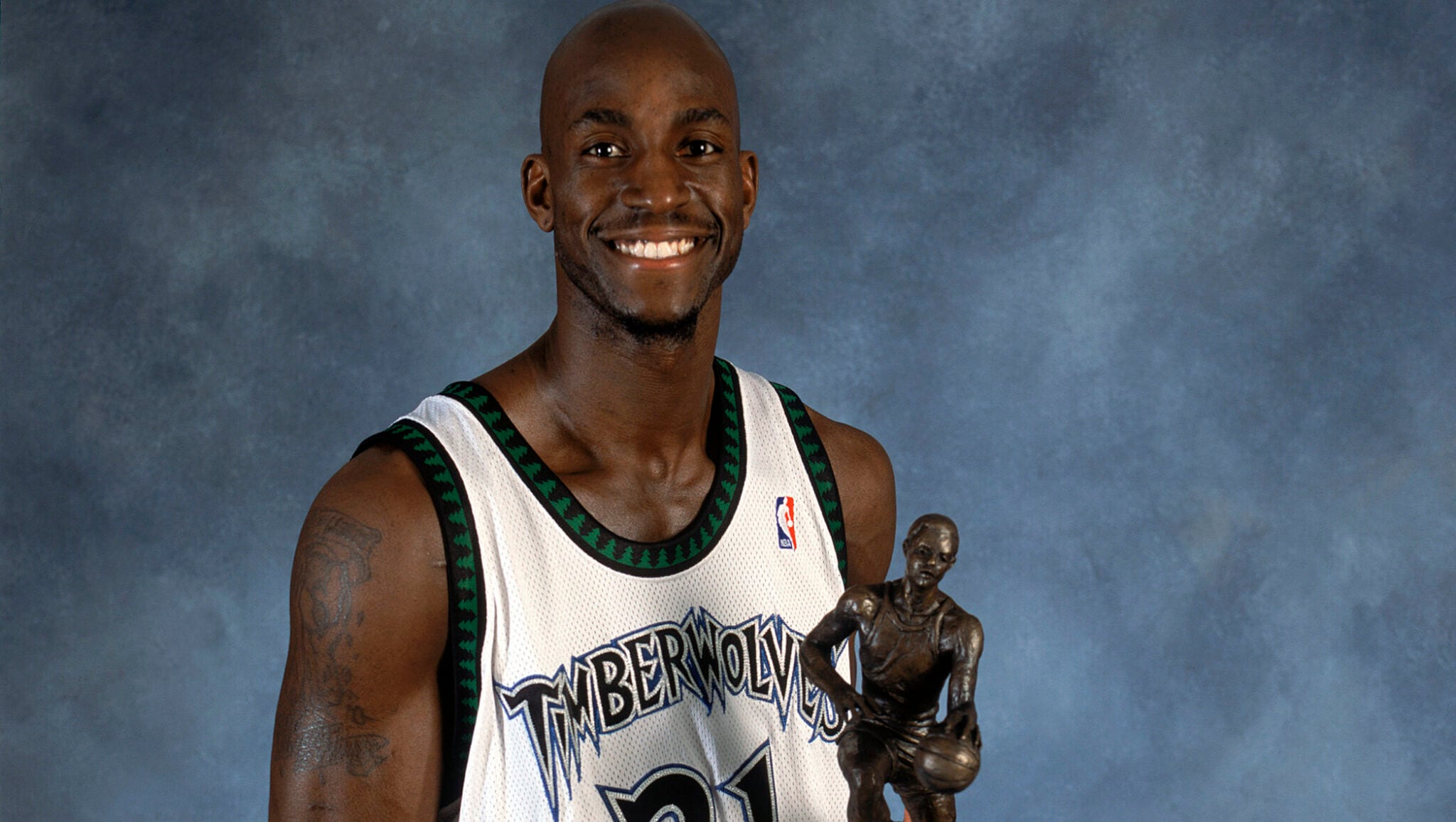
During the 2003–04 regular season, Garnett averaged 24.2 points, 13.9 rebounds, 5.0 assists, 1.5 steals and 2.2 blocks in all 82 games. Minnesota finished 58–24, best in the Western Conference. KG received 120 of 123 first-place MVP votes and led the league with 18.3 win shares, an estimated impact metric. Those figures establish an exceptional peak; win shares alone cannot determine the best player in history. Full 2004 statistical record.
The signature playoff performance came on May 19, 2004: 32 points, 21 rebounds, four steals and five blocks in Game 7 against Sacramento, securing Minnesota’s first trip to the conference finals. The Lakers eventually won the next series 4–2, but the unforgettable night showed KG could overwhelm a playoff game in several categories simultaneously. NBA’s official Game 7 retrospective.
Defense was an entire system, not one assignment
Garnett’s help rotations, switch recoveries and constant communication made him more than a shot blocker. He could pressure on the perimeter, recover to protect the rim and direct teammates into position. Twelve All-Defensive selections and the 2008 Defensive Player of the Year award document a prolonged defensive peak. Boston’s title was a team accomplishment, but KG was its defensive centerpiece. The value of a player affecting multiple defensive actions recalls our Wembanyama-versus-Dončić impact analysis.
Official NBA Vault video revisiting Garnett’s 2008 Defensive Player of the Year award.
What Duncan still has over KG
The same-season comparison favors Garnett in several categories, but not all. In 2003–04, Duncan averaged 22.3 points, 12.4 rebounds, 3.1 assists and 2.7 blocks across 69 games. KG played 82 games and averaged more points, boards and assists; Duncan blocked more shots. Different minutes and responsibilities complicate any one-year verdict.
Duncan was a more dependable low-post creator and delivered under championship pressure. In the 2003 NBA Finals, he averaged 24.2 points, 17.0 rebounds and 5.3 assists while San Antonio won the title. Duncan’s five rings, three Finals MVPs and 15 All-Defensive selections constitute the strongest response to KG’s versatility case. No fair analysis can pretend Garnett’s one championship gives him a superior postseason résumé. Duncan’s Hall of Fame profile.
The perfect power on a Starting 5 team forward, or the greatest?
Picture Stephen Curry, Michael Jordan, LeBron James, Garnett and Hakeem Olajuwon at center. Hakeem was chiefly a center, even though he is sometimes included in PF debates. On such a hypothetical team, KG could facilitate from the elbows, set screens, defend an opponent’s best forward and cover mistakes behind the perimeter stars. He would contribute without needing to own the ball.
The fit argument is informative, not conclusive. Our Jordan–LeBron longevity comparison also separates peak excellence from full-career accomplishment. Garnett’s midrange jumper mattered, but he was not a prolific three-point shooter; modern three-point shooting standards should not be projected backward without qualification.
Stat comparisons also require context. The period, role and teammate quality shape production, as our LeBron–Cooper Flagg first-two-season comparison illustrates. Garnett could miss the efficiency of some elite postseason post scorers while providing more mobile defense and more passing. The tradeoff is central to the debate.
Official NBA 75 Stories video documenting Garnett’s two-way career and the 2008 Boston championship.
Verdict: Duncan remains the safer selection for greatest career. Garnett has a compelling claim for the best all-around peak at power forward. If the question is who could defend nearly everything, connect an offense and dominate without a narrowly defined role, KG might be the greatest power forward ever.
Sources: 2003–04 season statistics; Minnesota’s MVP retrospective; Garnett Hall of Fame profile; Duncan Hall of Fame profile; 2003 Finals statistics.
Editorial note: The greatest-PF conclusion is an argued judgment, not an official league ranking. Featured cover is original anime-style artwork. The historical NBA photograph and videos are credited authentic media.


Leave a Reply