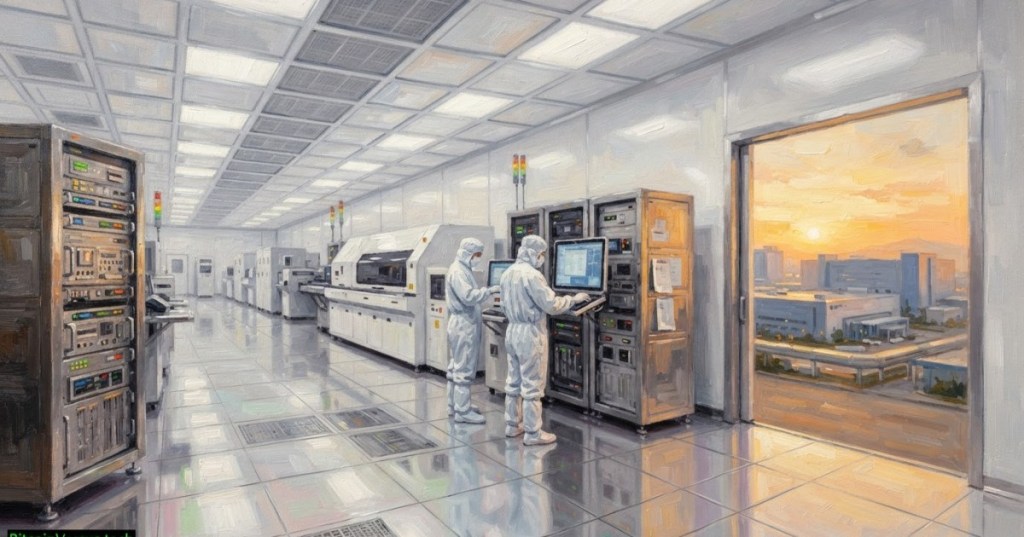
SK hynix has detailed an 874.6 billion won semiconductor testing facility inside its first Yongin memory plant in South Korea. The Trinity Fab project would give smaller materials, component and equipment suppliers access to production-grade cleanrooms, 300-millimeter wafer processes and engineering support. November 16 factory briefings describe 51 planned equipment units and 15 supplier rooms; the testbed is not yet operating. The Elec and The Korea Herald reported the layout and schedule.
A separate 1.4 trillion won supplier support program covers five years, but SK hynix announced the program in July 2026, not November. Its original statement covers research, verification, manufacturing and sales. November’s new development is a detailed presentation of Trinity Fab’s physical design and funding; treating both figures as newly announced spending would be misleading.
Archival CNBC video from August 13, 2026, covering SK hynix’s expanding memory manufacturing. Factory background, not footage of the November Trinity Fab briefing.
A test factory inside a memory factory
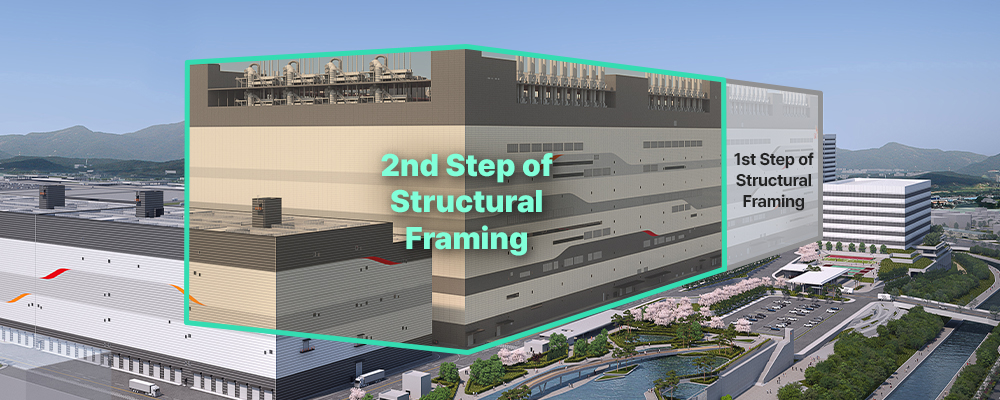
Trinity Fab is planned within roughly 3,300 square meters of the first Yongin fab, known as Y1. Approximately 800 pyeong will host a shared qualification line, while another 200 pyeong will be allocated to supplier installations. The equipment list includes 26 process tools, 11 inspection and metrology units and 14 auxiliary systems. Fifteen rooms are reserved for outside companies to install their own equipment.
Access to cleanroom air handling, specialty gases, ultrapure water and exhaust infrastructure matters as much as machinery. Materials that function in research laboratories can behave differently under factory contamination limits, vibration, chemical flows and wafer handling requirements. Our explanation of photoresist and photolithography covers one example of process sensitivity.
The validation area is designed around 12-inch, or 300 mm, wafers. An argon fluoride immersion lithography scanner is planned, but extreme ultraviolet tools will not be installed inside Trinity Fab. Later EUV evaluation may require access to neighboring SK hynix production equipment, rather than a dedicated system in the shared facility.
How the project is financed
The reported 874.6 billion won budget comprises 373.6 billion won from South Korea’s central government, 57.7 billion won from local authorities and roughly 443.3 billion won in SK hynix support. The company’s contribution consists principally of cleanroom space and engineering resources, not an equivalent cash payment. The amounts sum to 874.6 billion won; SK hynix’s share represents approximately 50.7%.
A nonprofit foundation is expected to coordinate supplier access and protect sensitive commercial information. Facility completion is targeted for May 2027; equipment installation and qualification would follow, with supplier testing services expected in the fourth quarter. The timetable is a plan, not evidence that equipment is commissioned or materials have qualified.
Archival official SK Group video, June 23, 2019, showing SK hynix fabrication personnel and cleanroom procedures. It does not depict Trinity Fab.
The expensive qualification bottleneck
Supplier validation requires repeated wafer trials, parameter tuning, yield measurement and documentation. New deposition components or etch chemistries may work in a research lab yet fail within an established production sequence. Trinity Fab aims to reduce requalification cycles; supporters estimate that commercialization could be shortened by about a year, but no post-opening performance results exist.
The bottleneck extends across chipmaking. BitcoinVersus.tech covered Applied Materials’ equipment sales and the challenge of stochastic defects in EUV production. Access to production-grade testing could improve suppliers’ chances, but does not guarantee competitive costs or good yields.
Demand for advanced memory adds urgency. SK hynix is expanding manufacturing, including HBM4 readiness; broader supplier qualification could reduce reliance on single-source parts and tools. Nevertheless, better supplier access, faster output and lower memory prices are separate outcomes that require independent evidence.
What comes next
The next milestones are construction completion, tool delivery, wafer-level qualification and access for suppliers. The ultimate test is whether smaller firms can move from promising prototypes into stable customer production without disruptive trials. Trinity Fab promises a practical route to process qualification; its commercial benefits must be measured after operations begin.
Sources: SK hynix supplier policy, July 2, 2026; SK hynix Yongin expansion plan; The Elec, November 17; Reuters, November 16.


Leave a Reply