America’s largest technology companies command trillion-dollar valuations, but substantial engineering and commercialization are occurring at smaller public firms. BitcoinVersus.Tech ranks seven companies with equity market capitalizations below $100 billion, counted down from seventh to first. The selection spans quantum computing, industrial robots, cybersecurity, optical connectivity, artificial intelligence infrastructure, semiconductors and spaceflight.
Valuations are rounded snapshots from Finviz around November 18, 2026, not fixed purchase prices. Ranking considers technical differentiation, verified customer traction, addressable markets and execution risk. Placement represents editorial judgment, not projected returns, investment advice or a claim that any stock is inexpensive.
#7. IonQ (IONQ), approximately $10.2 billion
IonQ reported $173.8 million in third-quarter revenue, including $83.5 million from its acquired SkyWater foundry business. Trapped-ion quantum systems could ultimately extend computing capabilities, but acquisition-driven sales are not proof of practical quantum advantage. Hardware reliability, dilution and commercialization timelines keep IonQ the most speculative pick. Our coverage of its Cambridge expansion explains the research pipeline.
IonQ official explainer: Learn Quantum, What Is Trapped Ion Quantum Computing? Archival educational video.
#6. Symbotic (SYM), approximately $20.4 billion
Symbotic automates distribution centers with mobile robots and software. Its latest reported fiscal quarter produced $721 million in revenue, up 22% annually, with 77 systems in deployment. The opportunity is measurable warehouse productivity, not hypothetical humanoids. Risk centers on project timing and large customers, including Walmart; the next earnings report is scheduled for November 23.
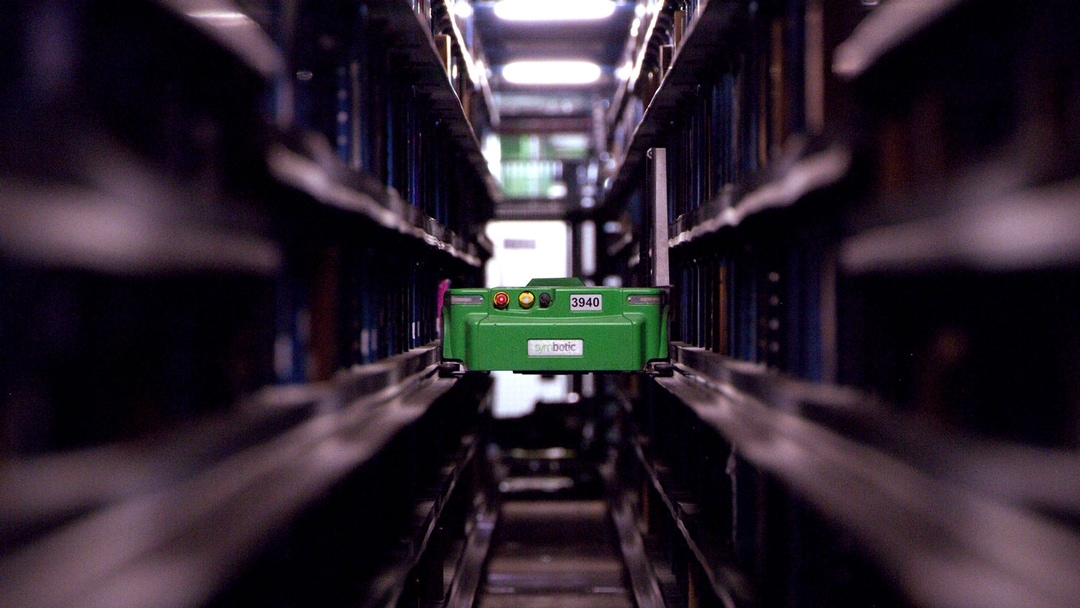
Archival Symbotic video, End to End System, published in 2025. The company’s demonstration illustrates warehouse automation, not November 2026 earnings.
#5. Rubrik (RBRK), approximately $22.7 billion
Rubrik focuses on cyber recovery, backup integrity and AI workload protection. Subscription annual recurring revenue reached $1.66 billion, growing 33% year over year at July 31. Recurring enterprise contracts offer a clearer business model than speculative hardware, although cybersecurity competition, customer spending and persistent GAAP losses remain important limits.
Rubrik official 2025 presentation of its Preemptive Recovery Engine. Product demonstration, not financial results.
#4. Credo Technology (CRDO), approximately $23.0 billion
Credo builds active electrical cables, optical links and signal-processing silicon for AI clusters. Fiscal first-quarter 2027 revenue reached $479 million, up 115% annually. Dense GPU racks need low-error, power-efficient data links; our 1.6T cable report covers its technical direction. Customer concentration and competing interconnect standards are notable risks.
Credo presentation on micro-emitter optics at OCP Global Summit 2026. Company technical demonstration.
#3. Nebius (NBIS), approximately $29.2 billion
Nebius rents AI computing infrastructure and develops data centers. Management reported strong third-quarter growth, while its shareholder letter describes more than $12 billion in customer contract value signed since the start of Q3. Our earnings analysis examines expansion spending. Power, debt financing, GPU obsolescence and contract execution could sharply reduce returns.
Nebius official 2025 talk on the architecture behind Nebius AI Cloud. Archival presentation.
#2. Astera Labs (ALAB), approximately $37.7 billion
Astera supplies PCIe retimers, fabric switches and memory connectivity for AI server racks. Third-quarter revenue reached $584.9 million, up 154% year over year, as its 320-lane Scorpio X switches entered volume production. Our report on Scorpio details the manufacturing ramp. Concentrated hyperscaler spending and a demanding valuation are central risks.
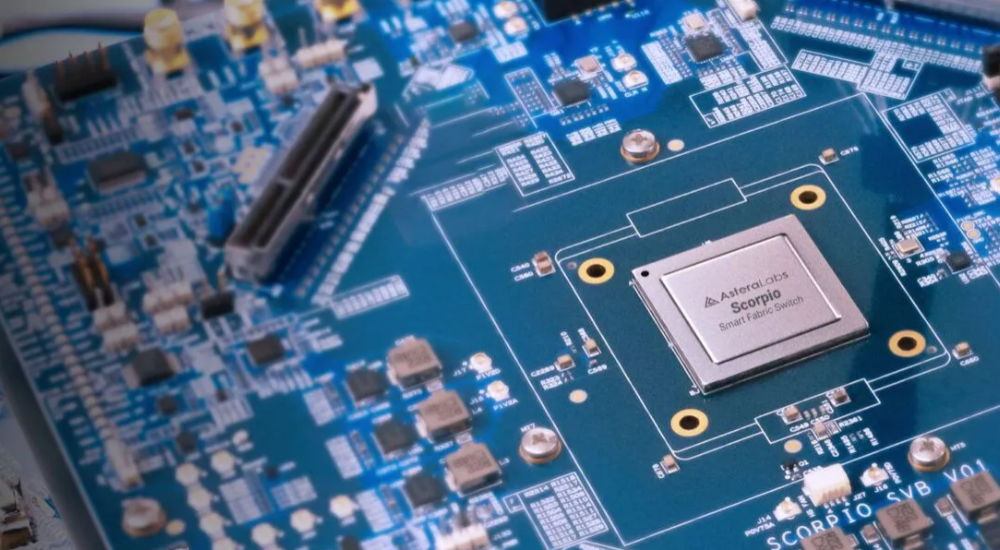
Astera Labs official Scorpio 320 Lane Fabric Switch demo, published June 2026.
#1. Rocket Lab (RKLB), approximately $33.5 billion
Rocket Lab combines operational launch hardware, spacecraft production and components. Third-quarter revenue was $268 million, up 73%, while backlog reached $3.57 billion. Electron completed its 100th launch on November 14; our launch report documents the milestone. Rocket Lab leads for breadth of demonstrated hardware, but its larger Neutron rocket remains unproven, with a debut targeted no earlier than 2027.
Official Rocket Lab launch broadcast of Electron flight 100, The Mountain God Rises, November 14, 2026. The video documents the company’s completed mission.
The ranking is not a buy list
All seven remain below the stated market-cap ceiling at the reporting snapshot. Operating progress does not settle valuation: dilution, interest rates, competition, customer concentration and failed technical milestones could outweigh sales growth. Check updated share counts and filings before drawing investment conclusions; a promising business can still be an overpriced stock.
Market-cap snapshot sources, November 18, 2026: IONQ, SYM, RBRK, CRDO, NBIS, ALAB and RKLB. Market values are approximate and fluctuate with prices and shares outstanding.


Leave a Reply