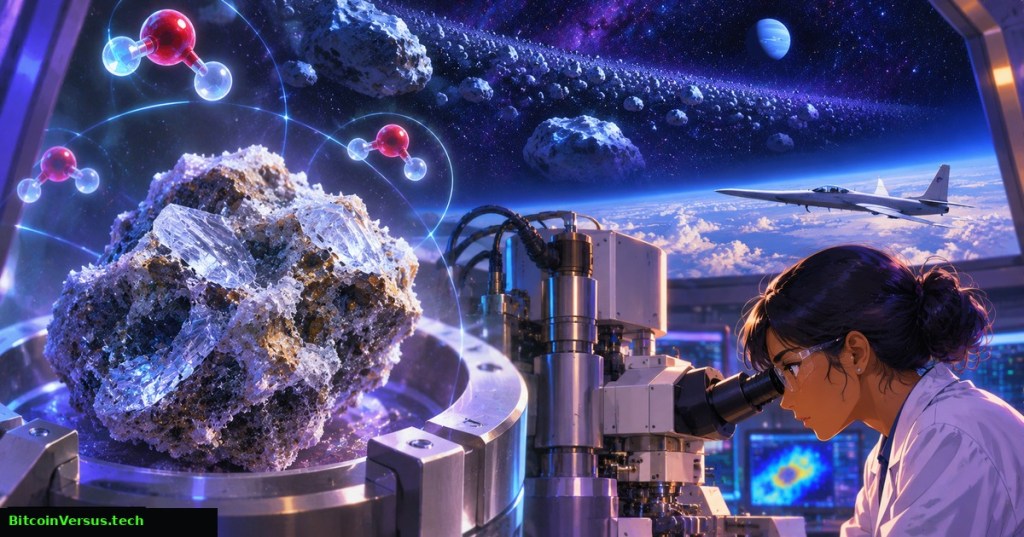
NASA and UCLA researchers have found evidence of an ancient reservoir of water ice beyond Neptune by analyzing just 12 microscopic grains of cosmic dust. The particles were collected in Earth’s upper atmosphere, but their chemical composition and radiation damage indicate a possible origin in the Kuiper Belt, a distant zone containing icy remnants from the early solar system.
The research appeared in Science Advances on November 11, 2026, followed by a NASA announcement on November 18. Scientists did not collect liquid water beyond Neptune or directly measure an enormous block of ice. Instead, they reconstructed the chemical characteristics of water that once reacted with minerals in the dust grains.
NASA 360’s 2017 presentation, The Kuiper Belt: A Vast Frontier, explains the icy region beyond Neptune. Archival background, not video documentation of the 2026 laboratory study.
How a research aircraft collected clues from deep space
NASA’s ER-2 high-altitude aircraft collected the interplanetary particles in the stratosphere. At Johnson Space Center, researchers Lindsay Keller and Christopher Snead used advanced electron microscopy to examine microscopic mineral structures and damage tracks. UCLA scientists Ming-Chang Liu and Kevin McKeegan applied oxygen-isotope measurements using an ion microprobe.
Some grains contained dense tracks left by solar energetic particles. The team interpreted the damage as evidence of lengthy exposure to conditions consistent with a Kuiper Belt origin. Hydrated clay minerals offered another clue: ancient water had apparently altered the parent material before the grains made their way toward Earth.
The oxygen signature matters more than the dust’s size
Oxygen occurs naturally as three stable isotopes: oxygen-16, oxygen-17 and oxygen-18. The last two contain extra neutrons. Their relative abundance can identify chemical processes and distinguish material formed in different environments. The study’s oxygen measurements and reconstruction point to water ice enriched in heavier oxygen compared with Earth’s ocean-water standard.
An estimated oxygen-18-to-oxygen-16 ratio for the original water was up to about 15% higher than the terrestrial ocean standard, according to the researchers’ modeling. The percentage describes a ratio of oxygen isotopes, not the amount of water, the mass of the Kuiper Belt or a direct measurement of remaining ice. It is an inferred upper-limit scenario, not an independently observed reservoir-wide average.
Why the outer solar system may have kept its own water
Solar ultraviolet chemistry in the young solar system could have produced oxygen-enriched ice. The research suggests giant planets, particularly Saturn and possibly Uranus and Neptune, limited the inward movement of solids and kept some outer material separate from the regions where Earth and many meteorites formed. Such separation could help explain differing isotope patterns among solar system samples.
Official NASA Video animation, February 2020, reconstructing the shape of Arrokoth from New Horizons observations. The Kuiper Belt object’s ancient structure supplies broader scientific context, not a direct sample from the 2026 dust study.
Astronomers already know that Voyager is exploring the farthest regions of space, while planetary missions such as BepiColombo at Mercury investigate the inner solar system. The new laboratory work provides a different route: testing distant material after microscopic particles reach Earth naturally.
What remains uncertain
Twelve grains are a small sample, and the Kuiper Belt origin rests on particle-track evidence rather than a direct spacecraft collection. Mineral alteration, source identification and isotopic modeling introduce uncertainty. A stronger conclusion would require additional grains, improved measurements and consistency across independent studies.
NASA’s Webb observations of evolving stars and Perseverance’s Mars fieldwork likewise demonstrate why different instruments and samples answer different planetary questions. The dust result strengthens an explanation for how primordial water was distributed; it does not establish how much remains beyond Neptune today.
Primary research and supporting sources
- Keller, Snead, Liu and McKeegan, A Primordial Heavy Water Reservoir in the Outer Solar System, Science Advances, November 11, 2026
- NASA Science, November 18, 2026 announcement
- UCLA Department of Earth, Planetary, and Space Sciences, research summary
- NASA Kuiper Belt background
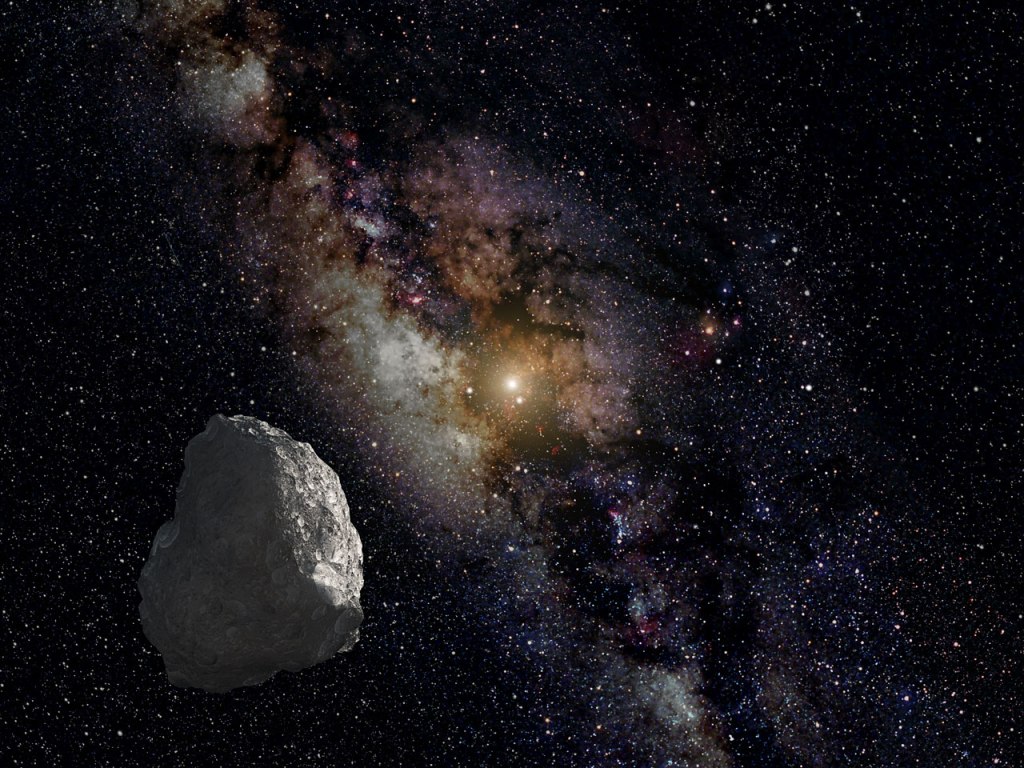
- NASA/ESA/G. Bacon, original Kuiper Belt illustration
Editor’s Note: We volunteer daily to ensure the credibility of the information on our platform is Verifiably True. If you would like to support our work and the integrity of our research initiatives, scan the QR code below to donate 5,000 sats.

For mobile scanning, open the article on another screen and scan the QR code using a Bitcoin wallet. Verify receiving address 3C9o19EH5HSiwEPyCTmEKzxhNCbo2X6TTb before sending.
BitcoinVersus.Tech reports on science, technology, finance and engineering for informational purposes. The publication does not offer financial, medical, investment or legal advice.


Leave a Reply