
The World Bank Group is investigating whether regulated dollar stablecoins could move development financing more efficiently. In a November 17, 2026 announcement, the institution named Citi and Circle as collaborators on payment infrastructure that could work with traditional correspondent banks. Circle’s USDC would provide the prospective digital-dollar settlement mechanism; Citi would connect the effort to established banking networks. No live World Bank USDC disbursement or launch date was announced.
The effort matters beyond cryptocurrency trading. Development funds often pass through multiple institutions, accounts and national systems before reaching approved projects. The World Bank wants to examine whether the costs, delays and fragmented records associated with cross-border transfers can be reduced without bypassing financial safeguards.
Circle’s November 17 announcement confirms its participation alongside Citi and the World Bank. The post announces an exploration, not a live payment product. Original X post.
What Citi and Circle would actually do
The proposal centers on an intermediated, interoperable payment model. Citi’s existing bank relationships could handle institutional access, local compliance and connections to ordinary accounts. Circle would contribute technology to issue and settle USDC, a dollar-denominated stablecoin. The arrangement is intended to operate alongside existing payment systems, rather than require every recipient to hold cryptocurrency or replace commercial banks.
A workable deployment would still need clear rules for validating recipients, converting money into local currencies, preserving transaction records and reversing or resolving errors where possible. Sending a stablecoin between blockchain addresses is only one stage of the complete payment journey.
FundsChain already tracks hundreds of projects
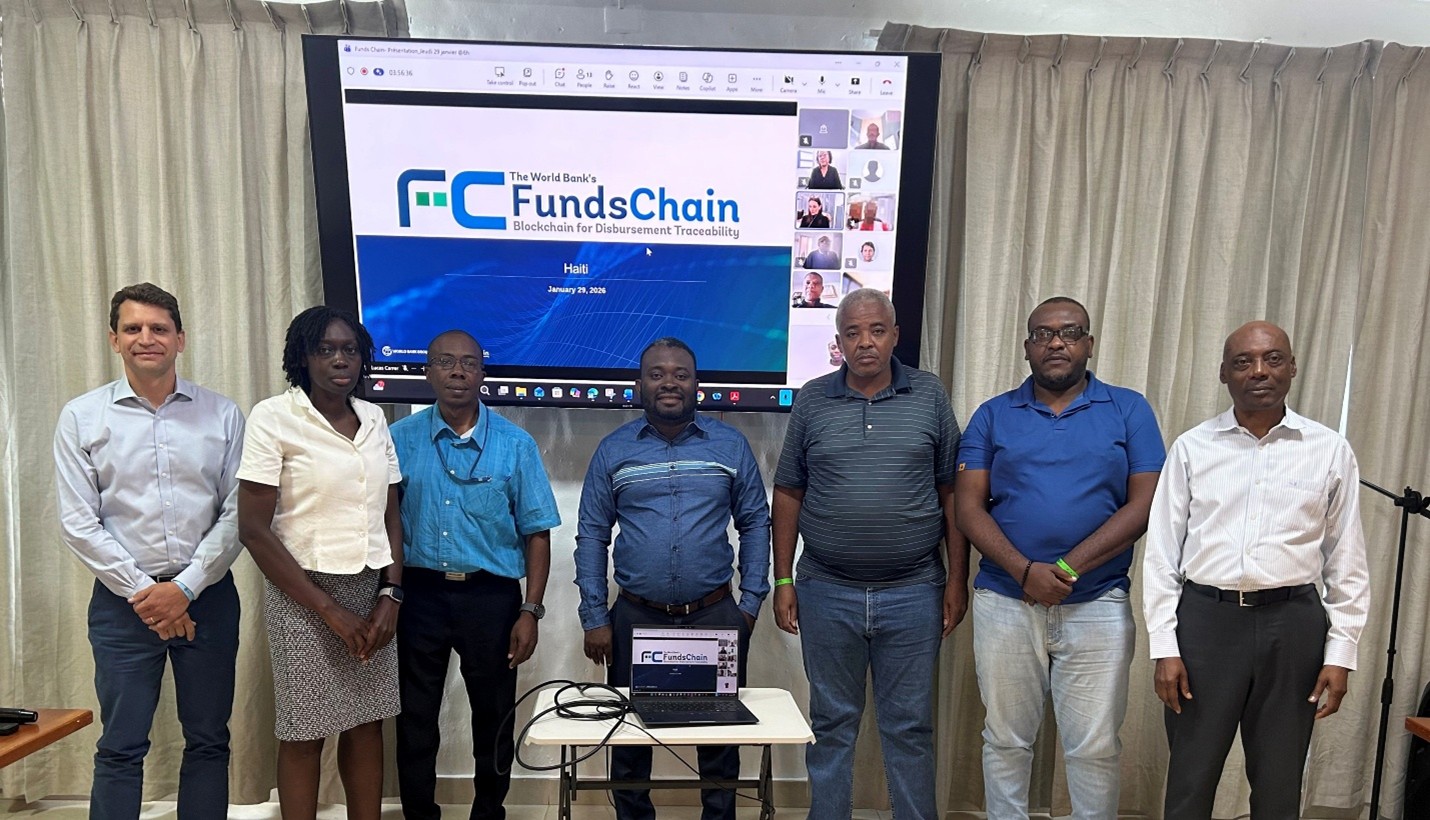
The proposed study builds on FundsChain, the World Bank’s existing blockchain-based system for tracing project disbursements. According to the November announcement, more than 350 projects in 96 countries are onboarded to its digital ledgers. Authorized participants can follow how project funds are used. The important distinction: FundsChain’s documented tracking deployment is not proof that those projects receive USDC. Ledger visibility and actual money settlement are separate capabilities.
World Bank Group official Thomas Puschnik explains FundsChain at a Government Blockchain Association event, published March 23, 2026. His earlier adoption figures predate the World Bank’s November 350-project update. Original video.
A cheaper payment has to be proven
The expected advantages include continuous settlement availability, clearer transfer tracking and fewer handoffs, particularly for projects in markets with limited international payment access. Yet a blockchain transfer can still incur fees, operational delays, foreign-exchange spreads and costs to redeem stablecoins into usable local money. Currency restrictions, counterparty risk, data protection, anti-money-laundering controls and reserve transparency are also material constraints.
The World Bank’s June 2026 report on stablecoins in humanitarian cash transfers had already examined alternative delivery models and their limitations. Technical feasibility should not be confused with verified savings for governments or people receiving assistance.
Circle’s official May 2024 developer workshop explains cross-border USDC payment mechanics. It is older product education, not evidence of World Bank deployment. Original video.
What would confirm real progress?
A credible next milestone would be a named pilot in a jurisdiction where regulated stablecoins are permitted. Beyond transaction execution, the participants would need to report end-to-end settlement time, cost per transfer, redemption reliability, compliance outcomes and an auditable comparison against the existing banking route. The announcement supplies none of those measured performance results yet.
The broader finance trend is already visible in Citi and Coinbase’s payment-rail work, UK bank experiments with tokenized deposits, three central banks’ simulated FX settlement, and Visa’s planned stablecoin settlement support. The World Bank adds a development-finance test case, but its prospective benefits must be evaluated with actual transaction data.
Primary sources and verification
World Bank Group, November 17, 2026; World Bank stablecoin policy reference; World Bank, Stablecoins in Humanitarian Cash Transfers, June 2026; World Bank FundsChain documentation; original posts and video links credited at their point of use. The announced initiative is exploratory; no commercial rollout, savings benchmark or transferred USDC amount was independently verified.
Cover note: The featured image is an original photorealistic editorial illustration of global banking infrastructure, not a photograph of World Bank, Citi or Circle operations.
Editor’s Note: We volunteer daily to ensure the credibility of the information on this platform is Verifiably True. If you would like to support to help further secure the integrity of our research initiatives, please scan the QR code below

BitcoinVersus.tech publishes financial and technical journalism for informational purposes. The article is not financial, investment, legal or cybersecurity advice; stablecoins, payment infrastructure and tokenized assets carry economic, regulatory and operational risks.


Leave a Reply