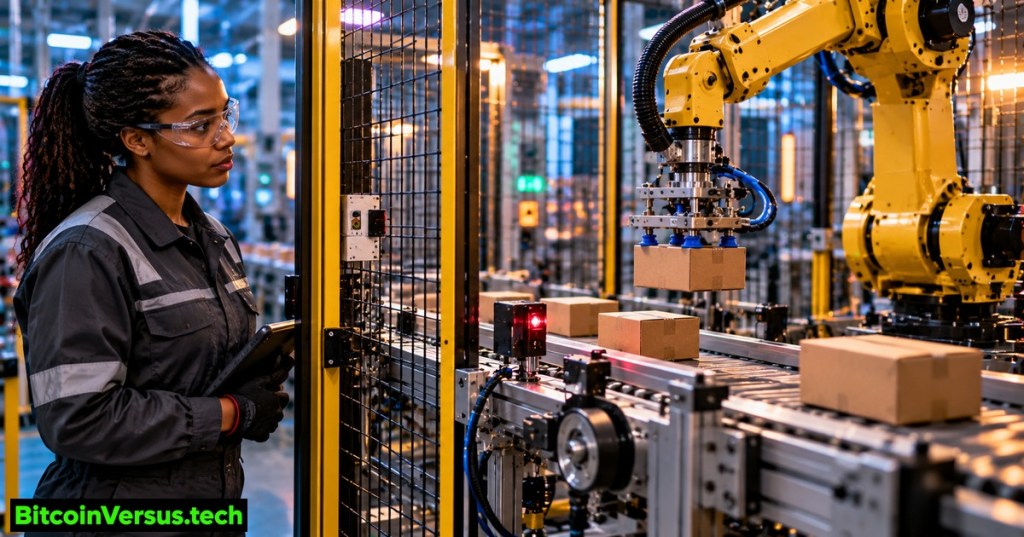
North American companies ordered 10,989 industrial robots worth $723.5 million in the third quarter of 2026, increases of 24.8% in units and 26.1% in value from Q3 2025, according to the Association for Advancing Automation (A3). Behind the headline gain is a change in the industries buying factory automation: semiconductor and electronics manufacturers nearly doubled orders, while automotive parts suppliers also surged.
A3 released the figures on October 28. They describe purchase orders, not robots already delivered, installed or working autonomously. The distinction matters when assessing how quickly manufacturing capacity is actually changing.
Source video: A3’s October 30 Business of Automation Q3 briefing, featuring market intelligence director Aaron Prather and principal analyst Alex Coleman.
Semiconductor and electronics orders nearly double
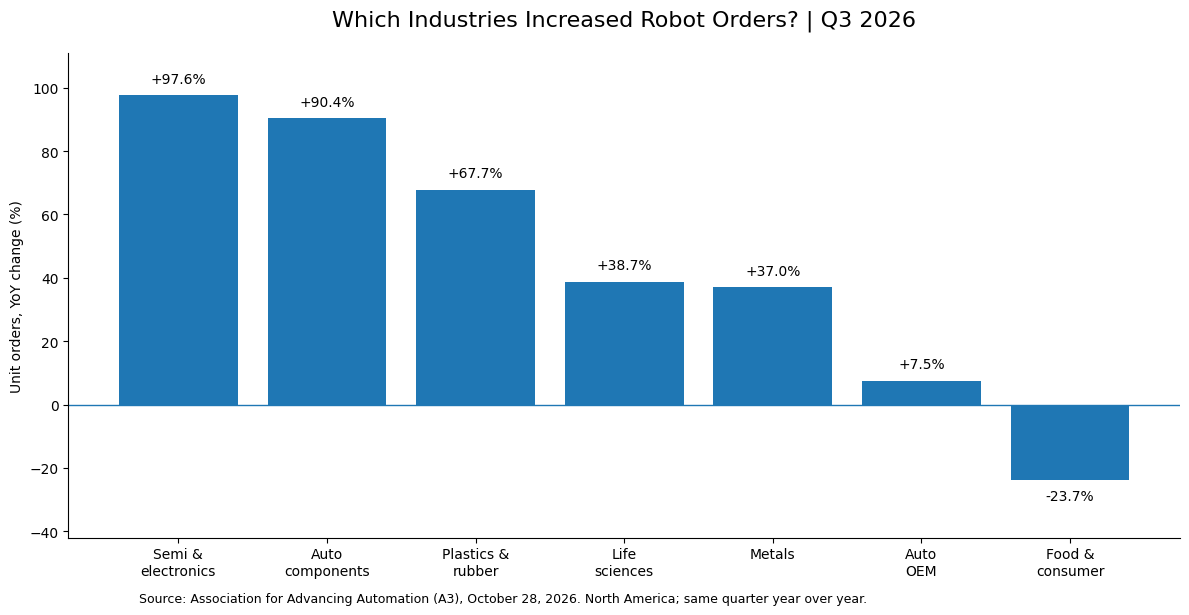
Robot unit orders rose 97.6% year over year in semiconductors/electronics/photonics and 90.4% among automotive component manufacturers. Plastics and rubber increased 67.7%; life sciences, pharmaceuticals and biomedical manufacturing climbed 38.7%; metals advanced 37.0%. Automaker orders rose 7.5%, while food and consumer goods fell 23.7%. Those percentages describe growth rates within each category, not equal volumes of machines.
Robot arms can move semiconductor wafers, transfer workpieces between inspection stations, load processing equipment and perform repetitive handling under controlled conditions. Their advantage is consistent motion and traceable cycles; their value still depends on uptime, integration and the complete manufacturing process. GM’s factory automation plans offer one example of how equipment orders can translate into longer-term manufacturing programs.
Collaborative robots gain a wider foothold
A3 counted 1,831 collaborative robots, worth $63.8 million, in Q3, about 56% more units than a year earlier. Cobots represented 16.7% of all robot units ordered but approximately 8.8% of reported order value: $63.8 million divided by $723.5 million. Average order values differ by product mix, so the gap is not proof that comparable cobots cost less than conventional robots.
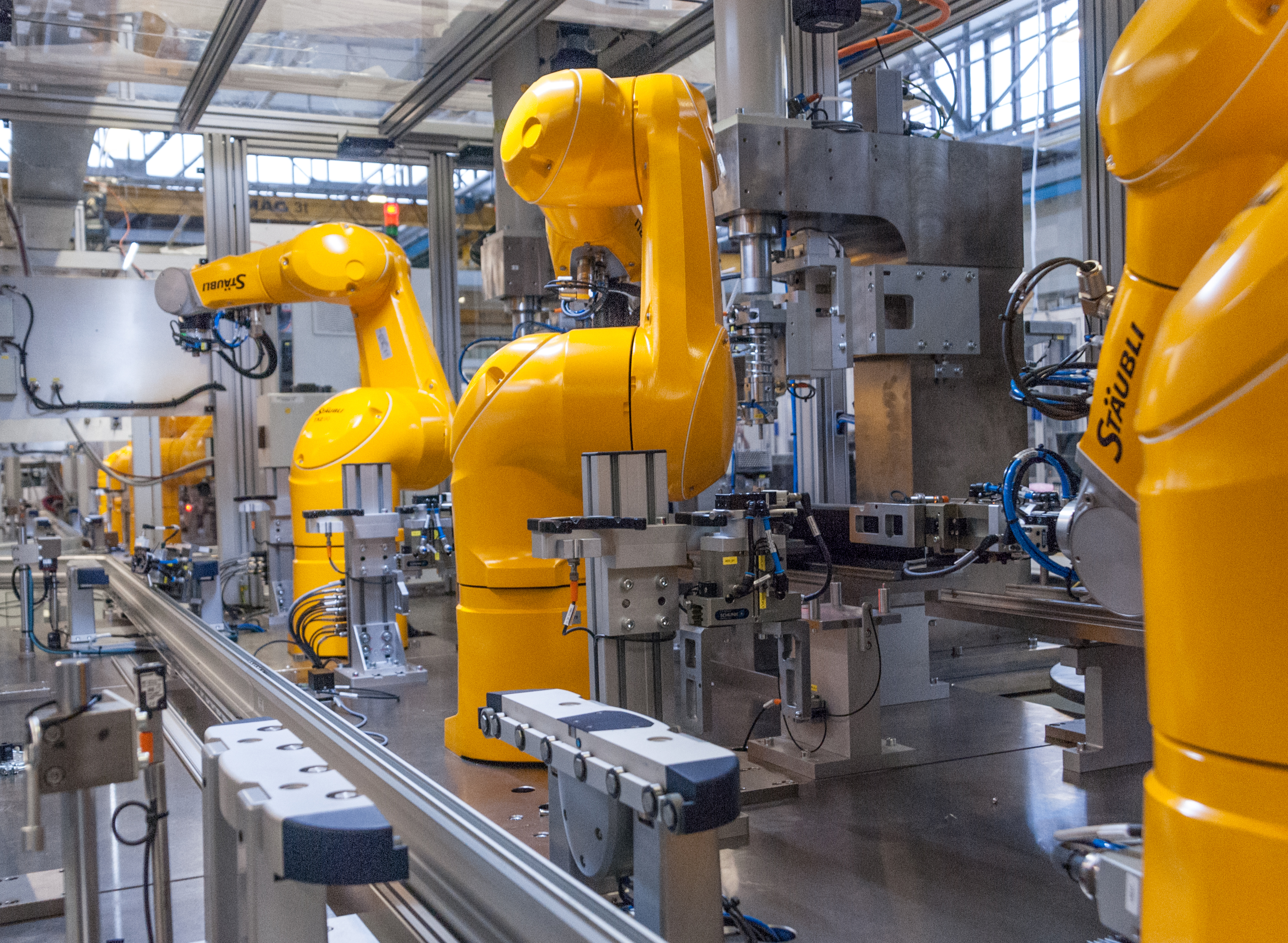
Companies increasingly use collaborative systems for accessible tasks such as material handling, machine tending and some forms of welding. Cobots do not automatically eliminate guarding requirements: safety validation depends on tools, force, speed, payload and human proximity. Robotics expansion also involves difficult hardware tradeoffs, including the cost of actuators and integration complexity.
A strong quarter is not yet a deployment boom
Through September, North American purchasers had ordered 28,984 robots worth about $1.89 billion, up 9.6% in units and 13.3% in value from the first nine months of 2025. The nine-month increase is slower than the Q3-only increase, indicating acceleration during the latest quarter rather than uniform growth all year.
Context video: A3’s earlier Q2 discussion. The second-quarter figures are historical comparison, not additional Q3 results.
A3 also says automaker orders, despite Q3 recovery, remained 17% below their year-earlier nine-month total. Demand for robots can rise while installation schedules are delayed by plant construction, financing, specialist hiring and safety approvals. The question is not simply how many units are purchased, but which applications achieve reliable production throughput. For context, see BitcoinVersus.Tech’s examination of long-term industrial robot growth and job displacement, its overview of robots performing real work, and the GXO–Apptronik warehouse trials.
Sources: A3 market release, October 28, 2026; A3 Business of Automation, October 30, 2026; Wikimedia Commons photo license. The charts reflect reported orders, not robot shipments, installed base, productivity gains or employment changes.


Leave a Reply