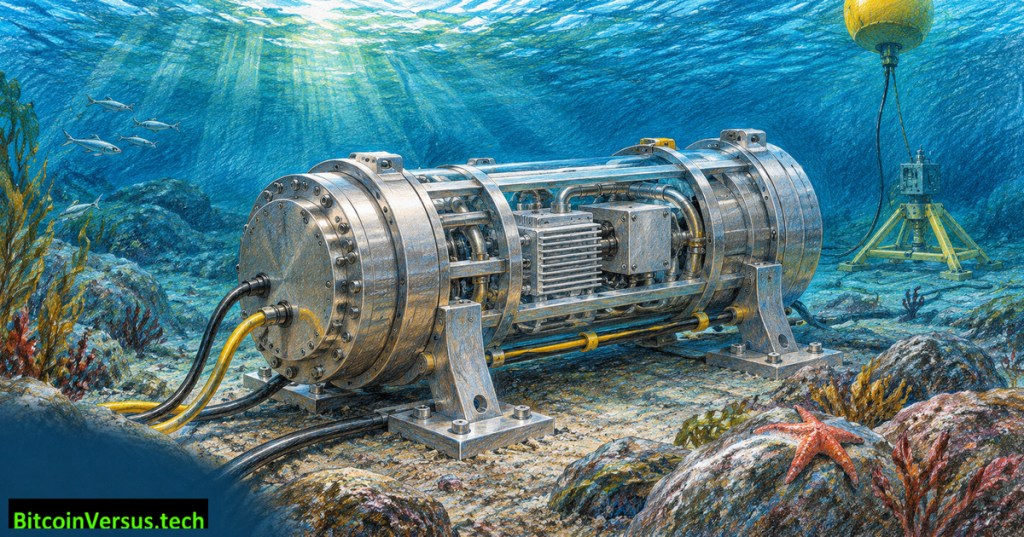
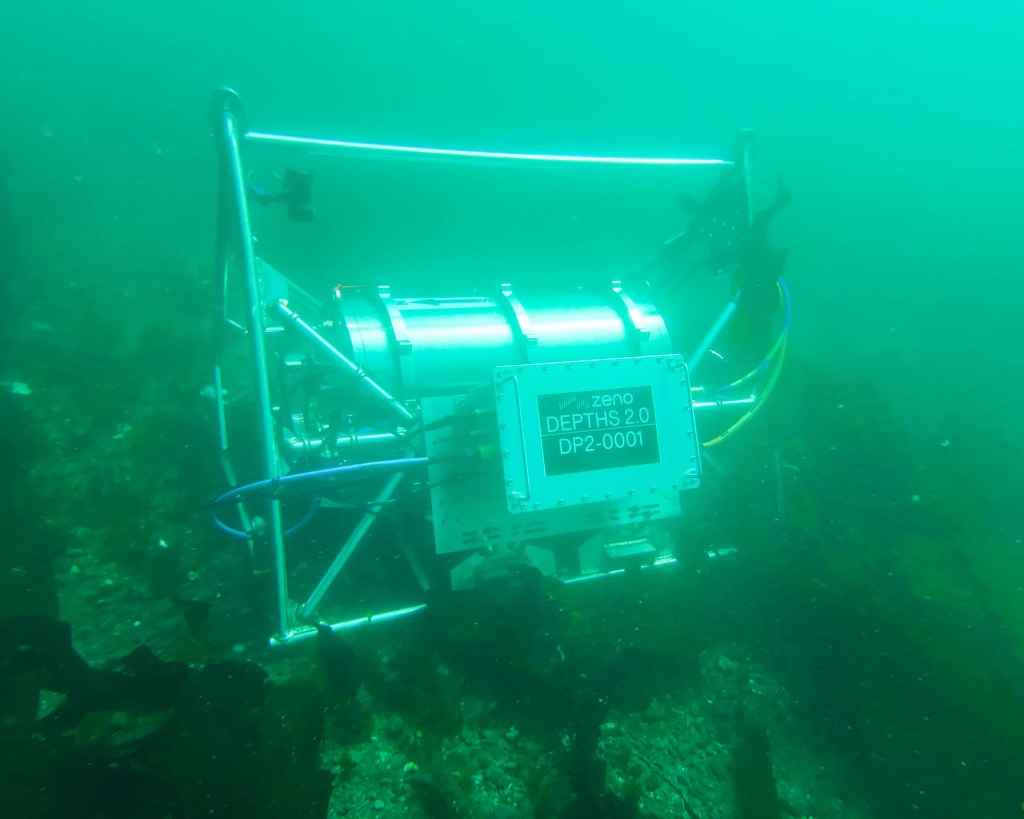
A power generator placed on the seafloor in Washington state produced more than 20 watts of electricity during a two-week test, according to Seattle-based Zeno Power. Announced November 19, 2026, the demonstration moves the company closer to a long-lived nuclear battery for underwater sensors and communications infrastructure. One distinction is essential: the device used an electric heater, not radioactive material, making the result an engineering trial rather than an operational nuclear deployment.
Zeno says its electrically heated Stirling generator operated in a controlled maritime environment and was successfully recovered after two weeks. The company calls the deployment the first instance of such a generator producing electricity on the seabed. An independent account by GeekWire confirms the company’s reported output and describes the intended follow-on testing.
Official Zeno Power overview, published June 2026. The video explains the nuclear-battery program; it is not footage of the November seabed test.
Why an underwater generator matters
A seabed sensor can remain deployed far longer than a conventional battery pack can supply electricity. Sending a ship or remotely operated vehicle to replace batteries is costly, weather-dependent and sometimes hazardous. A local generator could power instruments, subsea communications equipment or slow charging stations for autonomous underwater vehicles. Output measured in tens of watts is relevant for low-power electronics, not for ship propulsion or major industrial loads.
Zeno’s technology overview describes a planned Stirling radioisotope generator producing roughly 15 watts to hundreds of watts, with a target operating life of at least five years. Those figures describe the development objective, not an endurance measurement verified by the two-week trial. The company has a separate approach using thermoelectric conversion, without moving parts.
How a Stirling nuclear battery would work
A Stirling engine moves a working gas between hot and cold regions of a sealed system. A temperature difference drives mechanical motion, which a generator converts to electricity. For Zeno’s maritime design, radioactive decay from strontium-90 is intended to provide heat continuously; the surrounding seawater can serve as the cold thermal environment. The November prototype substituted an electrical heating element, allowing engineers to investigate the conversion hardware without placing radioactive fuel in the ocean.
Radioisotope power systems differ from nuclear reactors. They draw on decay heat without a controlled fission chain reaction. Readers can compare Zeno’s small-output approach with Deployable Energy’s planned 1 MW reactor test and Westinghouse’s microreactor criticality research. Power capacity, fuel handling and regulatory pathways are fundamentally different.
Zeno Power’s November 19 announcement on X links the two-week underwater trial to its proposed 2027 fueled deployment.
What the demonstration has not proved
The published announcement reports output exceeding 20 W but does not disclose continuous average power, total electrical energy delivered, heat-input power, conversion efficiency, water depth or a long-term failure rate. A momentary output threshold does not establish that 20 W was sustained throughout every hour of the trial. Claims about years of autonomous operation therefore remain design targets.
Stirling engines introduce moving mechanisms, seals and thermal interfaces that must survive prolonged submerged operation. A fueled design would also need approved containment, shielding, transport, recovery and environmental protections. Nuclear heat may improve endurance compared with finite batteries, but operating cost and reliability cannot be inferred from the demonstration alone. Our examination of an underwater geothermal generator’s 8.7-second test underscores why early power production must be separated from durable field performance.
Official Zeno Power video on manufacturing preparations at Vallecitos, published June 2026. The facility footage concerns future nuclear-battery production, not the electrically heated seafloor test.
The next milestone comes in 2027
Zeno plans a radiological demonstration in a controlled water tank before its first operational fueled seabed deployment, currently targeted for 2027. Its website separately lists a later product launch target, illustrating the difference between a prototype milestone and general product availability. The company says it has secured more than $165 million in funding and contracts, including federal work.
Broader power planning faces the same need for measured performance rather than projected capability. The difference between experimental hardware and delivered electrical capacity also appears in our reporting on the 320 MW Dow–X-energy construction permit and NASA’s lunar technology investments. For Zeno, the decisive evidence will be fueled operation, measured conversion efficiency, repeatable recovery and long-duration reliability under real seabed conditions.
Sources and verification
- Zeno Power: November 19 primary announcement
- Zeno Power: system architecture and planned specifications
- GeekWire: November 19 independent interview and photographs
- Zeno Power’s official social announcement
- Zeno Power: Powering the Next Frontier (video) and Industrializing Nuclear Battery Production (video)
Editorial note: The featured image is an original colored-pencil illustration. It is not a photograph of Zeno’s actual hardware. The in-story photograph is the company’s authentic deployment image. YouTube videos were released before the November test and are labeled accordingly.


Leave a Reply