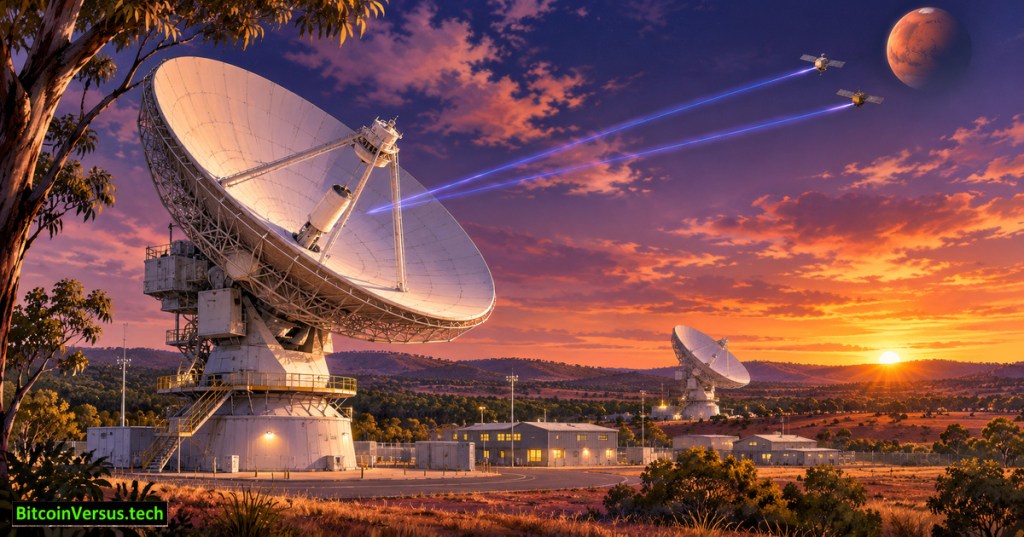
A single 35-metre radio dish in Western Australia is now communicating with two spacecraft orbiting Mars through separate X-band command signals. In a November 19, 2026 announcement, the European Space Agency (ESA) confirmed that Deep Space Antenna 4 (DSA 4) at New Norcia had established simultaneous two-way X-band links with Mars Express and the ExoMars Trace Gas Orbiter. ESA reports routine support for both during a single antenna pass.
The accomplishment is an upgrade to ground infrastructure rather than a new spacecraft radio. Mission controllers can handle two nearby targets without reserving two separate 35-metre dishes. Crucially, ESA had already commanded the same pair together using different radio bands in 2020; the new milestone is two concurrent X-band uplinks through one antenna feed.
A hybrid coupler makes two uplinks coexist
Deep-space receivers are familiar with multiple spacecraft per aperture, where a dish captures different spacecraft downlinks on separate carrier frequencies. Uplink is harder: two high-power command streams must share transmission hardware without corrupting one another. ESA equipped DSA 4 with a hybrid coupler built by Thales Alenia Space. The radio-frequency network enables a common antenna feed to carry two independently routed X-band command signals.
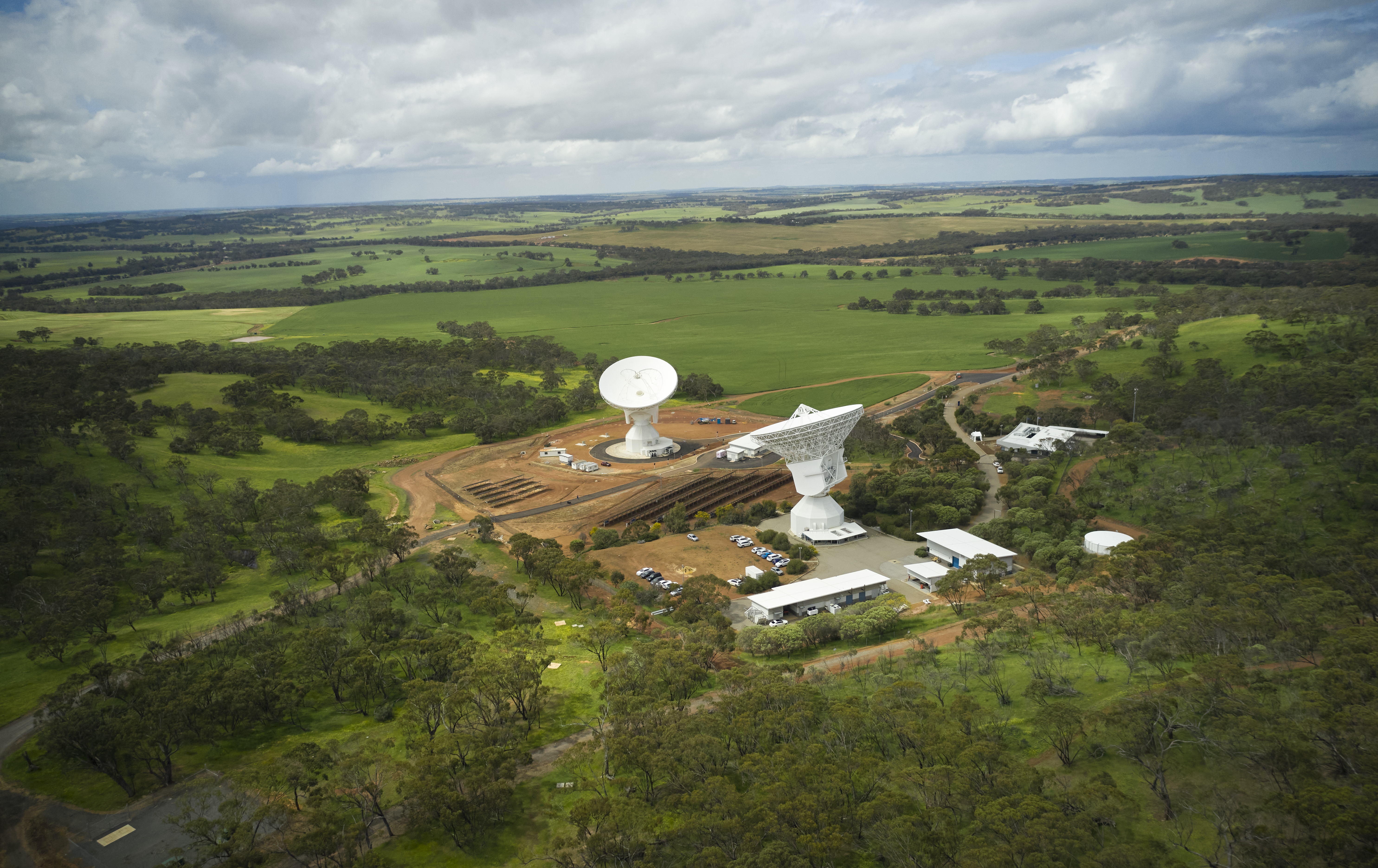
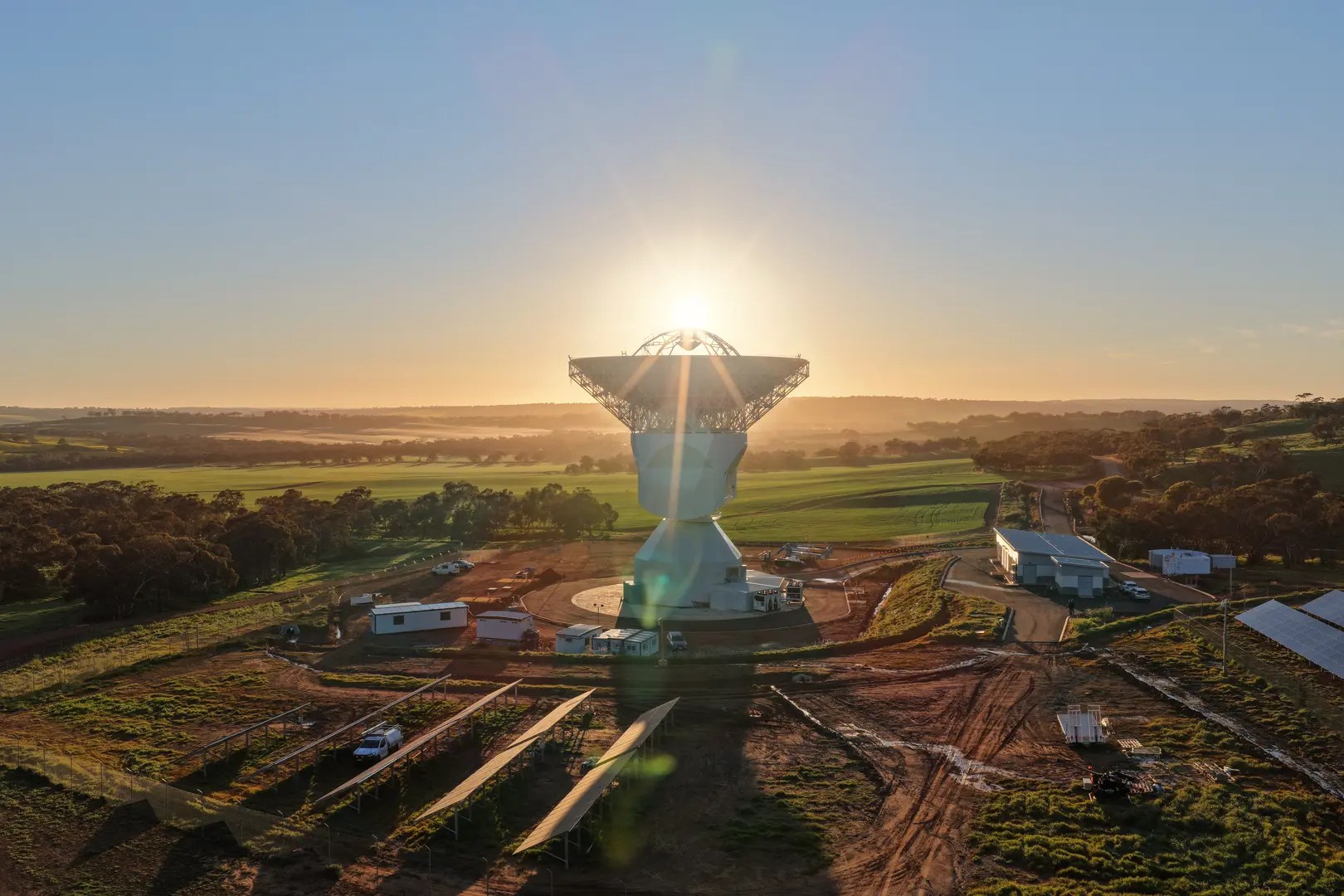
DSA 4’s reflector measures 35 metres across. Its ideal geometric circular area is A = π(17.5 m)² ≈ 962 square metres; actual effective radio aperture is smaller because illumination and other losses reduce efficiency. A large dish produces a narrow, high-gain beam, improving long-distance signal performance. Unlike two mechanically independent antennas, however, a shared dish points in only one direction at a time.
Why the two spacecraft must appear close together
The shared beam only works when two spacecraft occupy nearly the same direction in the sky as seen from Earth. Mars Express and Trace Gas Orbiter both circle Mars, making the geometry favorable. The technique cannot simply connect two arbitrary probes spread across the Solar System. Independent frequency planning, transmitter isolation, trajectory prediction and ground-station scheduling still matter; the hardware cannot remove light-time delays.
ESA first demonstrated simultaneous commanding in January 2020, transmitting S-band to Mars Express and X-band to Trace Gas Orbiter through older Deep Space Antenna 1. ESA says the arrangement reduced total network load by around 16%, but depended on Mars Express’s secondary S-band system, extra setup and a weaker signal around solar conjunction. DSA 4 permits both links in X-band, eliminating the earlier cross-band workaround. The 16% figure describes the older arrangement, not a newly measured DSA 4 capacity gain.
What extra antenna capacity means
ESA describes the dual-X-band capability as equivalent to adding a virtual ground station for some scheduling purposes. The comparison is operational, not a claim of doubled universal bandwidth or a new physical dish. The agency plans similar equipment for future Deep Space Antenna 5, extending the approach as deep-space mission demand grows. Real benefits depend on how frequently suitable spacecraft appear together and how ground time is allocated.
Ground-network capacity is becoming a substantial design constraint. Related coverage includes NASA’s satellite-relay modernization, Voyager’s interstellar radio delays, ESA and JAXA’s Mercury mission and the fundamentals of modern network transceivers. All depend on properly allocating communication links and maintaining signal integrity, albeit across different architectures.
The important result is practical: ESA expanded what one existing antenna pointing can accomplish. A new communications option is now operating at Mars, while broader scheduling benefits remain contingent on mission geometry and demand.
Sources and media credits
- ESA announcement, November 19, 2026: two simultaneous X-band uplinks
- ESA, April 2026: DSA 4 commissioning and infrastructure
- ESA, February 5, 2020: earlier mixed-band dual-spacecraft experiment
- ESA/Fisheye ground-station photograph and credit
- ESA New Norcia 2025 documentary on YouTube
- ESA Estrack 2025 documentary on YouTube
Media verification: The original 1200 × 630 anime cover is a conceptual illustration; visible beams, spacecraft and nearby Mars are symbolic rather than physically visible from the dish. The approved preexisting BitcoinVersus.tech watermark is copied once at bottom left. The two body photographs are credited ESA editorial imagery. Both official videos predate the 2026 X-band milestone and are identified as historical context.
We volunteer daily to ensure the credibility of the information on this platform is Verifiably True. If you would like to support to help further secure the integrity of our research initiative, please scan the QR code below.



Leave a Reply