
Bitcoin’s largest mining-pool operator is testing a different way for ASIC mines to communicate with their pool. On November 13, 2026, Foundry USA Pool said Stratum V2 testing had begun with customers. The upgrade targets the network messages that distribute jobs and return proof-of-work shares. It does not change the SHA-256 algorithm, increase a miner’s theoretical hashrate or alter Bitcoin consensus rules. Foundry described a test, not a completed pool-wide deployment.
A technical Stratum V2 explainer published by plebhash in 2024. Background education, not footage of Foundry’s November 2026 pilot Open the video on YouTube.
Why an ASIC farm needs a mining protocol
A miner’s hashing chips search for valid block headers, but networking and controller software determine which work they attempt. Traditional Stratum V1 typically sends jobs and receives shares over a persistent connection with no built-in encryption. Stratum V2 introduces authenticated encrypted transport, a binary messaging format and more efficient job distribution. The result can reduce exposure to network interception and avoid unnecessary traffic, although Foundry has not released pilot measurements of bandwidth savings, stale shares or uptime.
The scale matters. In a month-long sample ending November 16, Bitcoin Breakdown reported that Foundry had identified 1,138 of 4,411 Bitcoin blocks, or approximately 25.8%. Pool-attributed shares fluctuate, and identifying a block’s pool does not establish who owns the ASIC hardware. Even a restricted trial at a large service provider could influence how mining sites deploy proxies, authentication keys, failover servers and pool monitoring.
The overlooked distinction: encrypted jobs versus miner-selected blocks
The official Stratum V2 specification separates the Mining Protocol from Job Declaration and Template Distribution. A pool may support V2 connections while continuing to choose every transaction included in a candidate block. Genuine miner-directed transaction selection requires additional software: a template provider, generally a Bitcoin node, and a Job Declarator Client coordinating with the pool. The pool must accept the declared job. Foundry’s announcement does not confirm that its customers can exercise those features.
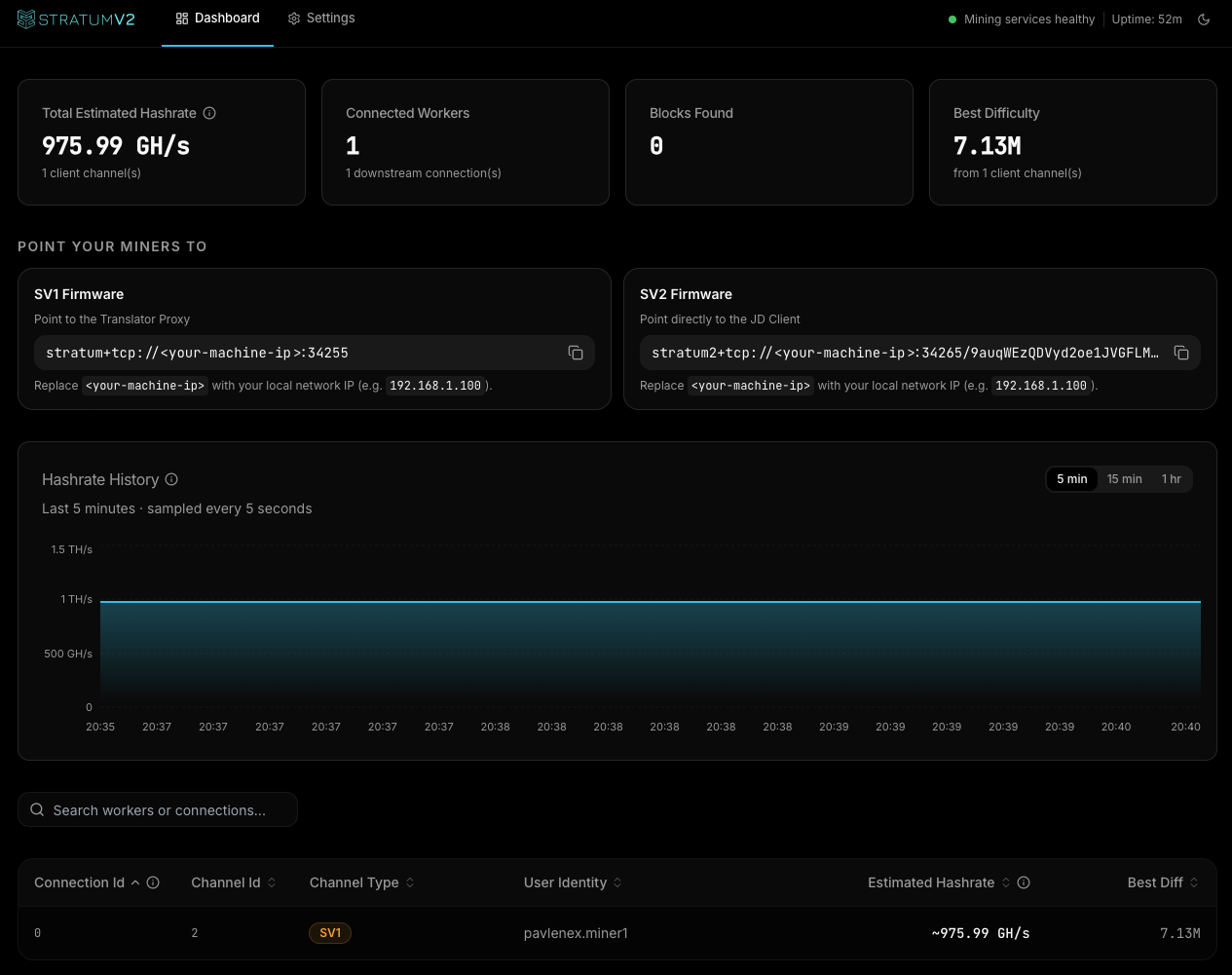
For infrastructure teams, migrating a fleet can mean installing a translation proxy between existing Stratum V1 ASICs and a V2 upstream connection. Supporting an encrypted connection does not automatically confer independent block-template authority. Facilities must validate compatible firmware, stable share accounting, session reconnection and controller failover before broadly changing production endpoints. A network-layer upgrade cannot replace testing the actual machines.
HashrateUp interviews DMND Pool’s Agustin Krupka about mining pools, Stratum V2 and transaction selection. Recorded in 2025, independent background rather than Foundry test evidence Open the video on YouTube.
Three recent developments, three different milestones
Foundry’s testing joins other November developments, but the accomplishments should not be conflated. MARA reported mining its first Stratum V2 block, a different milestone from a pool opening testing to customers. Bitcoin Optech’s November 20 roundup also documented a Stratum V2 application release adding Bitcoin Core 32.x compatibility and Job Declarator Client hardening. The software work does not demonstrate Foundry’s own deployment architecture.
Miners have also pursued template control through other routes. Our coverage of DATUM gateways explains the practical distinction between a pool managing payouts and an operator creating block templates. Our mining-pool rankings provide historical context for why the distribution of template control matters.
What would prove a meaningful rollout?
Foundry has not disclosed participant counts, test hashrate, a production timetable or whether Job Declaration is enabled. The strongest evidence would be published compatibility requirements, measured share and connection performance, documented production rollout and independently verifiable miner-created templates. Until those details appear, Foundry’s test is a significant infrastructure signal, not proof that Bitcoin’s largest pool has surrendered transaction selection to its miners.
Sources: Foundry’s original November 13 statement; Bitcoin Optech Newsletter #432 (November 20); Stratum V2 Job Declaration specification; Stratum V2 reference application repository.
We volunteer daily to ensure the credibility of the information on this platform is Verifiably True. If you would like to support to help further secure the integrity of our research initiative, please scan the QR code below.



Leave a Reply