
While some Bitcoin mining companies retire ASICs and rebuild their electrical sites for artificial intelligence, one hosting provider says its existing capacity will remain dedicated to mining. In a November 11, 2026 announcement, MillionMiner stated that its four U.S. facilities, totaling 95 megawatts across Nebraska, Mississippi and Missouri, will continue serving Bitcoin mining customers. Its expansion into GPU server sales is a separate business rather than a conversion of those four mines. The capacity and operational metrics are company-reported, not independently audited in the announcement.
MillionMiner’s official video introduces its U.S. ASIC-hosting facilities. Promotional site footage, not an independent audit of all four properties. Watch directly on YouTube.
Four sites, three states, one Bitcoin strategy
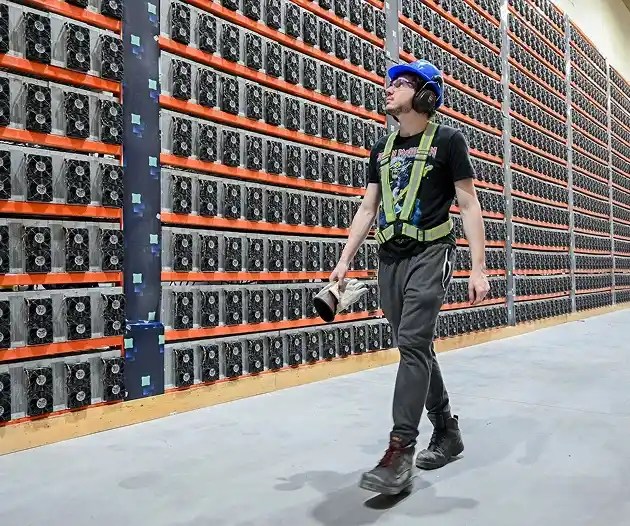
MillionMiner’s facility breakdown assigns 25 MW to Nebraska, 20 MW to Mississippi, and 25 MW to each of two Missouri sites. The total is 25 + 20 + 25 + 25 = 95 MW. Company material describes utility-grid connections, industrial ventilation, physical security and machine-level monitoring. Its hosting service keeps ownership of the ASIC with the customer and charges for hosting based on electrical consumption.
MillionMiner advertises hosting rates starting at $0.07 per kWh, alongside a dashboard for hashrate, temperature and payouts. Prices, uptime and electrical supply terms can vary by contract; the advertised starting rate should not be treated as a universal, audited cost for every miner. The company claims 1.79 EH/s of hosted hashrate and 99.9% uptime, without a public machine-by-machine inventory or independent verification accompanying the release.
Why 95 MW does not establish hashing efficiency
Electrical site capacity is not the same as measured electricity consumption. Dividing 95 MW by the advertised 1.79 EH/s produces roughly 53 J/TH, but the calculation would be misleading as a real efficiency measurement: it incorrectly assumes all 95 MW is being used by the reported mining fleet at the same moment. Idle electrical capacity and building overhead remain unknown.
For an illustrative ceiling, a fleet averaging 20 J/TH would need 20 MW of ASIC power to generate 1 EH/s. If every one of the 95 MW were devoted solely to such ASICs, the theoretical result would be 4.75 EH/s before cooling and distribution losses. Neither scenario is a measured MillionMiner operating result. Our earlier analysis, Your ASIC’s J/TH Is Not Your Site’s J/TH, explains why power boundaries matter.
Selling GPUs does not mean converting a mine
The new equipment catalogue includes GPU servers from Supermicro, Gigabyte, ASUS, Lenovo and Dell, with NVIDIA H100, H200 and B200 options. MillionMiner says the systems may be shipped to buyers or hosted in dedicated AI facilities. It has not published a separately audited AI capacity figure, customer utilization rate or commissioning record for those facilities in the November announcement. Selling GPU hardware is not the same as having a contracted, fully operational GPU data hall.
MillionMiner’s presentation at Bitcoin MENA 2025 covers its hosting and hardware business. Earlier event footage, not November 2026 commissioning evidence. Watch directly on YouTube.
A counterpoint to the miners leaving Bitcoin
The choice contrasts with companies redirecting electrical capacity toward AI. Core Scientific discussed exiting Bitcoin mining, while Keel is rebuilding a Washington mine into an AI data hall. Others pursue mixed models: HIVE is financing a separate 2,304-GPU cluster. According to CoinShares’ September research, the difference reflects both mining margins and the potential value of already-connected power sites.
Remaining committed to Bitcoin does not eliminate financial risk. Operators still face rising network difficulty, fluctuating hashprice, ASIC depreciation, electricity pricing and customer churn. Our coverage of Luxor’s model of unused ASIC capacity shows why installed machines cannot be equated automatically with profitable machines.
What evidence would confirm the strategy?
The strongest follow-up would be site-level metered load, verified active hashrate, electricity contracts, customer occupancy and records showing the four facilities remain mining-only as AI hardware sales grow. Until then, MillionMiner’s 95 MW pledge is a meaningful strategic statement from the company, not an independent confirmation of fully utilized or profitable mining capacity.
Sources: MillionMiner’s November 11 press release (company-authored); MillionMiner company and capacity overview; site power allocation and hosting terms; CoinShares mining industry research.
We volunteer daily to ensure the credibility of the information on this platform is Verifiably True. If you would like to support to help further secure the integrity of our research initiative, please scan the QR code below.



Leave a Reply