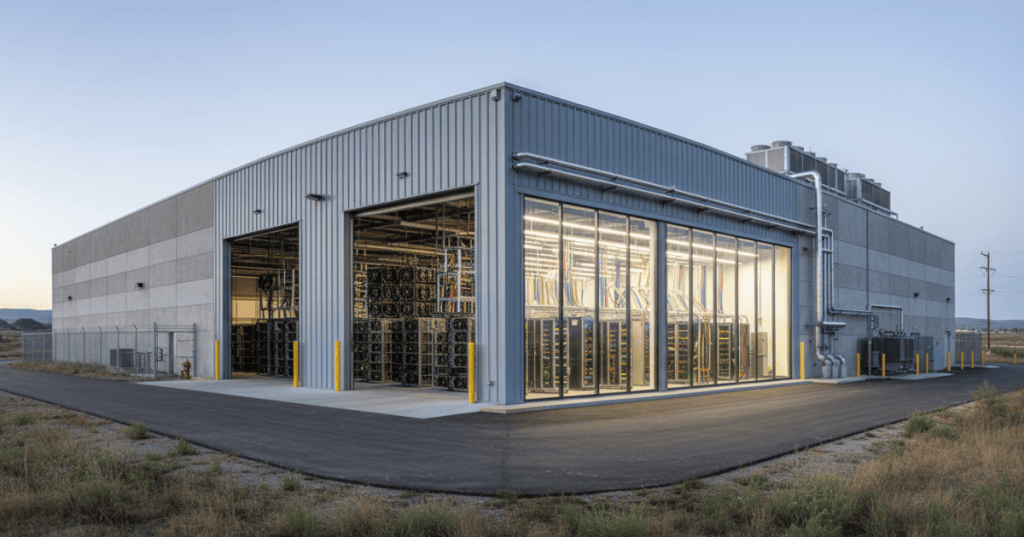
Core Scientific plans to end its remaining Bitcoin mining operations by December 2026 and enter 2027 as a dedicated high-density data center colocation provider. Chief Executive Adam Sullivan and Chief Financial Officer Jim Nygaard confirmed the timetable during the company’s November 5 earnings call, marking a decisive change for a business previously known for operating large-scale cryptocurrency mines.
The company’s third-quarter financial release reports $215.4 million in colocation revenue for the three months ended September 30, compared with $15.0 million a year earlier. Self-mining revenue fell to $12.3 million from $57.4 million, while hosted mining contributed another $5.2 million. Colocation supplied approximately 92.5% of the company’s $232.9 million quarterly revenue.
Why mining equipment is being retired
Bitcoin miners use application-specific integrated circuits, or ASICs, to calculate SHA-256 hashes and compete for block rewards. AI colocation instead supplies conditioned electricity, cooling, connectivity and physical space for customers operating dense GPU computing clusters. ASICs cannot simply be repurposed to run AI models; much of the value in a mining-to-AI conversion lies in existing electrical infrastructure and access to power.
Core Scientific’s September-quarter Form 10-Q identifies two remaining self-mining facilities and one hosted mining customer. Hosted mining is expected to conclude by December 31, while management said nearly half as many mining machines were online at September’s end compared with December 2025. Earlier BitcoinVersus.Tech reporting documented the company’s $444 million acquisition of Polaris DS and the resulting Muskogee power expansion.
485 MW already billing, with more capacity planned
The company was billing customers for 485 megawatts of colocation capacity at September 30, compared with 395 MW in June. Its CoreWeave contract covers approximately 590 MW, leaving about 105 MW in construction or commissioning. Separately, an agreement involving AMD and a neocloud customer covers roughly 530 MW to be delivered in phases from 2027 through 2028. Contracted capacity is not equivalent to commissioned, billable or physically consumed power.
Company disclosures project approximately $1.8 billion in average annual GAAP revenue after its roughly 1.1 GW contracted portfolio has been delivered and begun billing. The projection depends on construction, customer acceptance and financing. Related BitcoinVersus.Tech reporting on Riot’s 15-year AI lease demonstrates how long-term hosting contracts are reshaping the sector, but contract face value should never be confused with cash already received.
Capital costs and grid constraints remain
Third-quarter capital expenditure reached $985.1 million, while reported net income of about $1.18 billion included a major non-cash warrant valuation gain. Investors therefore should not interpret accounting net income as recurring colocation cash generation. The company’s investor presentation also distinguishes gross utility power, leasable customer megawatts and future expansion opportunities.
Expansion still faces equipment delivery, interconnection approvals, utility pricing, cooling requirements and tenant concentration. Recent analysis of miner-to-AI valuations cautioned that energized buildings and GPU-cloud services have different capital structures and financial risks. For mining operators that remain committed to hashing, hashprice and network difficulty continue to determine the economics of every deployed megawatt.
The year-end exit remains management guidance rather than a completed shutdown. Investors can evaluate execution through the remaining miner count, operational megawatts, new billing starts and future cash flow instead of announcements alone.
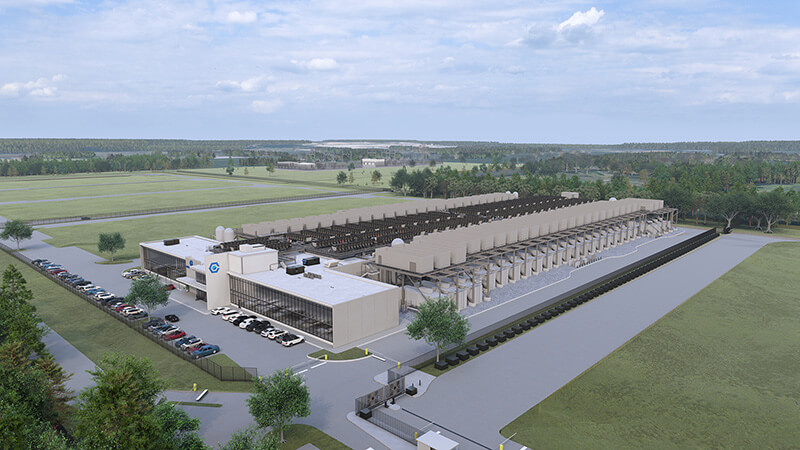
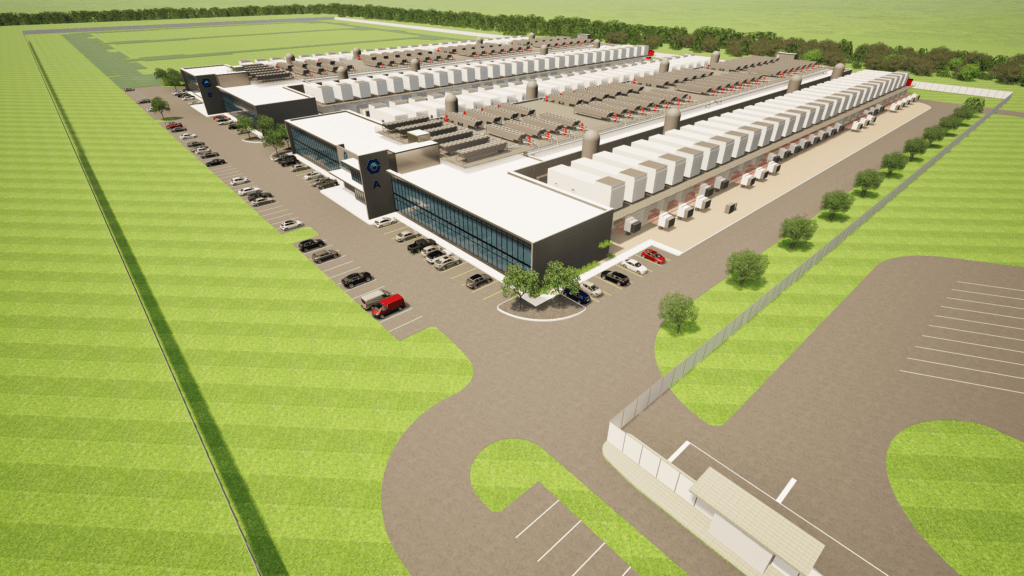
Editor’s Note: The primary evidence is Core Scientific’s November 5 earnings release, SEC Form 10-Q and investor presentation. The November 5 management call transcript corroborates the planned mining exit. Forward guidance is separate from operating results. Both company-supplied facility visuals are archival or illustrative. The featured 1200 × 630 image is an original conceptual editorial illustration, not a photograph. No YouTube playback was claimed or tested.

To donate 5,000 sats, open the article on another screen and scan the original QR code using a compatible Bitcoin wallet. If the wallet supports importing a saved QR image, save the code and scan it on your phone. Confirm the destination before transferring funds: 3C9o19EH5HSiwEPyCTmEKzxhNCbo2X6TTb.
We volunteer daily to ensure the information on this platform is Verifiably True. If you would like to support the research, please scan QR code.
BitcoinVersus.tech is not a financial advisor. Reporting on technology and financial subjects is provided for informational purposes.


Leave a Reply