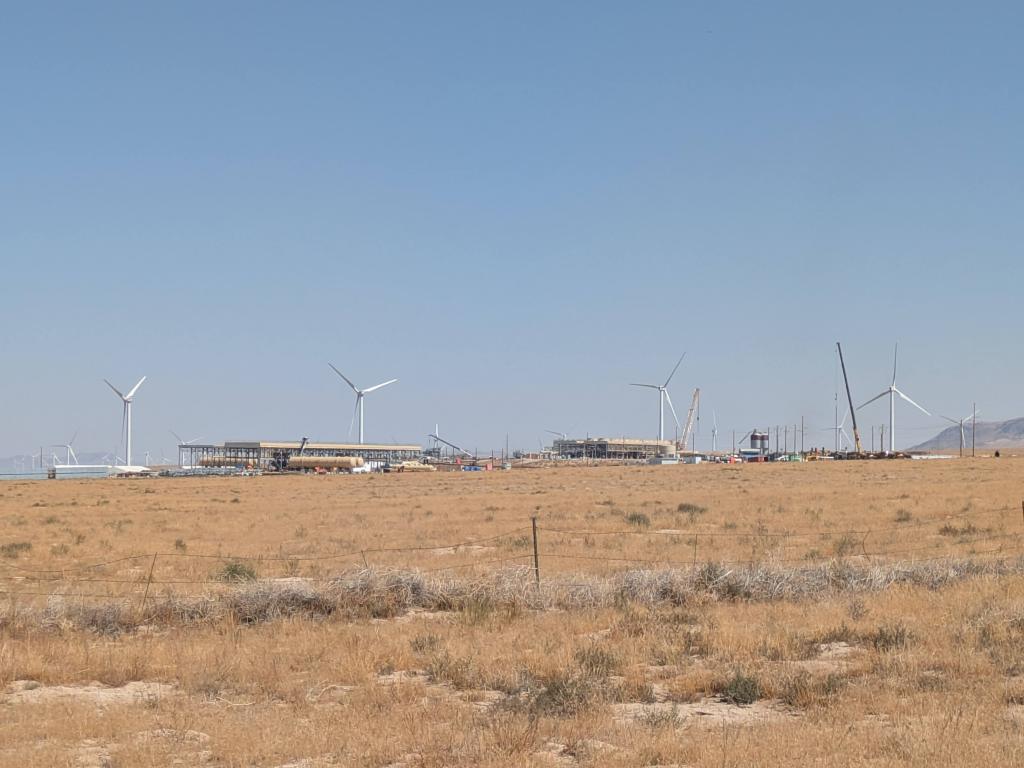
Fervo Energy has secured an additional 105 megawatts (MW) of contracted electrical transmission capacity for Cape Station, its enhanced geothermal development in Beaver County, Utah. The November 18, 2026 announcement identifies Longroad Energy as the transmission partner and the Milford Gen Lead as the delivery route. The agreement increases contracted firm transmission rights from 400 MW to 505 MW, with service expected in 2028 pending final regulatory approvals.
The milestone addresses a critical constraint for electricity-intensive industries: building generating capacity is insufficient if the electrical network cannot deliver its output. The new contract does not establish that 505 MW of geothermal generation is operating today.
CNBC Television, September 4, 2026: an interview at Cape Station discussing geothermal development and Google’s electricity agreement. Background coverage; watch on YouTube.
From underground heat to grid electricity
Enhanced geothermal systems use drilled wells and engineered pathways through hot rock. Circulating fluid carries heat to surface equipment, where a binary-cycle plant can transfer thermal energy to a separate working fluid that drives a turbine and electrical generator. Pumps, cooling fans and other auxiliary equipment consume part of the gross electrical output.
Fervo’s project portfolio identifies approximately 500 MW of construction across Cape Station’s first eleven GeoBlocks and around 900 MW contracted with electricity buyers. GeoBlock 1 reached commercial operation on September 30. The company’s quarterly SEC filing reports grid synchronization and test exports from GeoBlock 2 on November 4. Approximately 100 MW of operating capacity is targeted for early 2027.
What 505 MW actually means
The additional transmission rights represent a 26.25% increase over the previous agreement: 105 ÷ 400 × 100. At a hypothetical continuous 505 MW across 8,760 hours, the arithmetic annual energy equivalent is 4.4238 terawatt-hours (TWh). The incremental 105 MW alone corresponds to 0.9198 TWh under the same idealized assumption.
Neither calculation forecasts actual production. Available geothermal generation, outages, contractual restrictions, transmission losses and grid conditions influence delivered electricity. A transmission reservation is not a capacity-factor measurement or a guarantee of uninterrupted power.
Fervo Energy’s wellsite engineering profile, published in 2025, provides background on drilling operations at Cape Station. Watch on YouTube.
Implications for AI and industrial computing
The SEC filing also documents a 15-year electricity purchase agreement with Google for a 396 MW geothermal project at Cape Station. For an illustrative data center receiving 100 MW at its facility boundary, a power usage effectiveness ratio of 1.20 would imply 83.3 MW of IT load. The remaining 16.7 MW would support cooling, electrical conversion and other facility overhead. No measured PUE or dedicated computing load has been disclosed for the November transmission agreement.
Related engineering coverage includes Google’s Oregon geothermal deal, Mazama’s high-temperature drilling research, ARPA-E’s geothermal research program, and enhanced geothermal development at Nevada’s Blue Mountain plant.
The next engineering milestones
Regulatory clearance, commissioning of additional GeoBlocks, verified net electrical output and commercial delivery under the new agreement will matter more than the headline capacity alone. Reservoir behavior, drilling costs and transmission reliability remain important risks. The American Public Power Association’s November 19 coverage independently reports the agreement, while the company’s filings supply operational context.
Featured photograph: Cape Station Phase I construction, August 31, 2025, Braddah n8 via Wikimedia Commons, CC0. Archival view, not evidence of the November 2026 agreement.
We volunteer daily to ensure the credibility of the information on this platform is Verifiably True. If you would like to support to help further secure the integrity of our research initiative, please scan the QR code below.


Leave a Reply