A security camera or industrial robot does not necessarily need to transmit every observation to a remote data center for interpretation. On November 24, 2026, semiconductor developer Ambarella and foundation-model developer Liquid AI announced a collaboration to optimize local multimodal processing for physical devices. Their initial engineering effort targets Liquid’s LFM3 family and Ambarella’s CVflow acceleration architecture.
Earlier Liquid models are already listed in Ambarella’s developer catalog. Additional compatibility is planned for the CV72, CV75, N1-655 and X7 processors. The agreement does not establish that every LFM3 variant is currently validated on all four platforms. Joint demonstrations are planned for CES 2027.
Why compact models matter at the edge
Embedded systems operate within electrical, thermal and memory constraints that differ from those of server racks. Sending camera frames to a remote model also introduces network dependencies. Local computation can reduce those dependencies, although connectivity may still be needed for software updates, external information and fleet management.
Liquid’s October 27 architecture disclosure describes a 1.7-billion-parameter text model built from three types of sequence-processing blocks. Short convolutions capture nearby information, windowed attention limits interactions to a local token range, and global attention provides access to wider context. The 24-layer design allocates 13 layers to convolution, five to sliding-window attention and six to global attention.
At four bits per parameter, 1.7 billion raw weights would occupy approximately 850 MB in decimal units, before metadata, runtime buffers and contextual state. Liquid reports a roughly 1 GB footprint for the quantized text model. Video and audio workloads have additional requirements, and long prompts can increase working memory substantially.
Silicon designed for sensor-driven computing
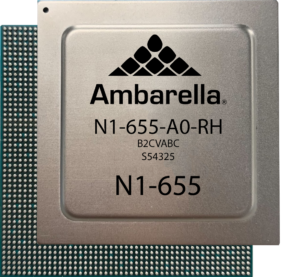
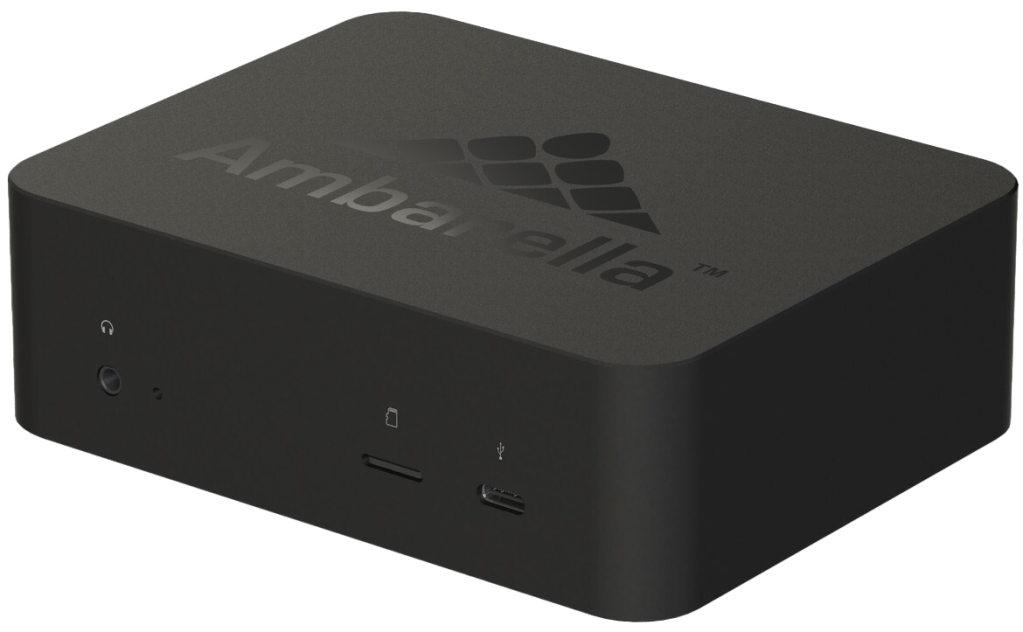
The N1-655 combines eight Arm CPU cores, neural-network acceleration and image processing. The company’s development kit includes 32 GB of LPDDR5 memory and a 10 GbE interface. Unlike a standalone accelerator, such a system-on-chip can integrate several stages of the sensor-to-inference pipeline.
The Cooper Model Garden currently lists Liquid’s 450-million- and 1.6-billion-parameter LFM2.5 vision-language models. The November agreement builds on that existing integration rather than introducing local inference for the first time.
Reliable decisions require more than efficient inference
A compact model can interpret visual events and suggest actions, but it can also misclassify objects or generate incorrect explanations. Industrial deployments require validated control logic, authorization boundaries, fault handling and tests under changing environmental conditions. Neither smaller memory requirements nor local execution alone establishes safety or accuracy.
For infrastructure operators, the practical question is whether distributing inference across many devices lowers total energy and networking costs at an acceptable accuracy level. A valid comparison would include idle power, data transfer, maintenance and the frequency of decisions.
Related BitcoinVersus.Tech coverage includes Ezurio’s M.2 inference card, HyperAccel’s specialized inference processor, Neuronova’s analog processor and integrated robot vision. The next useful evidence from Ambarella and Liquid will be device-specific accuracy, latency, memory and electrical measurements on equivalent workloads.
Featured image: Ambarella’s official N1-655 development kit, an existing hardware platform rather than a newly announced chip.
We volunteer daily to ensure the credibility of the information on this platform is Verifiably True. If you would like to support to help further secure the integrity of our research initiative, please scan the QR code below.



Leave a Reply