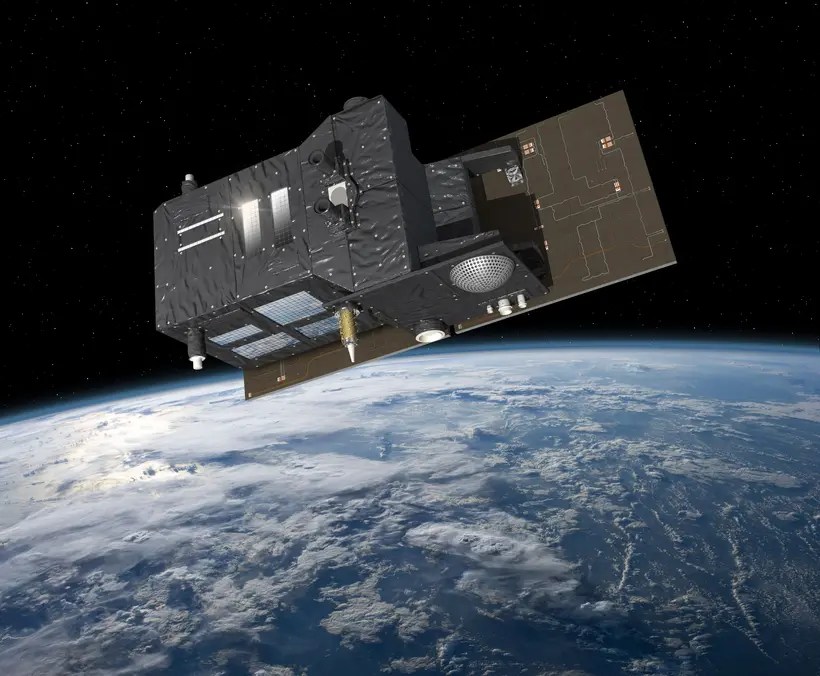
Satellite navigation depends on knowing precisely where Earth is, how it rotates and how its surface moves. The European Space Agency (ESA) announced on November 23, 2026, that it has strengthened the design of Genesis, a spacecraft intended to improve the global coordinate system underlying navigation and Earth observation. The mission remains scheduled for launch in 2029, according to the agency’s latest announcement.
Genesis aims to help scientists establish the International Terrestrial Reference Frame (ITRF) with positional accuracy of one millimeter and stability of one-tenth of a millimeter per year. These are scientific objectives, not demonstrated performance from an operational spacecraft. Achieving them requires more than an accurate navigation receiver.
Four instruments aboard one spacecraft
Modern geodesy, the science of measuring Earth’s geometry, gravity and orientation, combines several independent observation methods. Genesis will bring four such methods together on a carefully characterized platform. According to the European Geosciences Union’s September 2026 mission overview, GNSS observations connect the spacecraft to global satellite navigation networks; laser ranging measures distances through timed optical pulses; DORIS measures the Doppler shift of radio transmissions from terrestrial beacons; and very-long-baseline interferometry (VLBI) links measurements made by widely separated radio antennas.
Each technique has distinct systematic errors and geometric strengths. Combining them on a single calibrated spacecraft helps researchers identify discrepancies between measurement systems. An ultra-stable oscillator provides a common timing reference. Synchronization and knowledge of each instrument’s physical location relative to the spacecraft remain critical to the analysis.
Why ESA redesigned Genesis
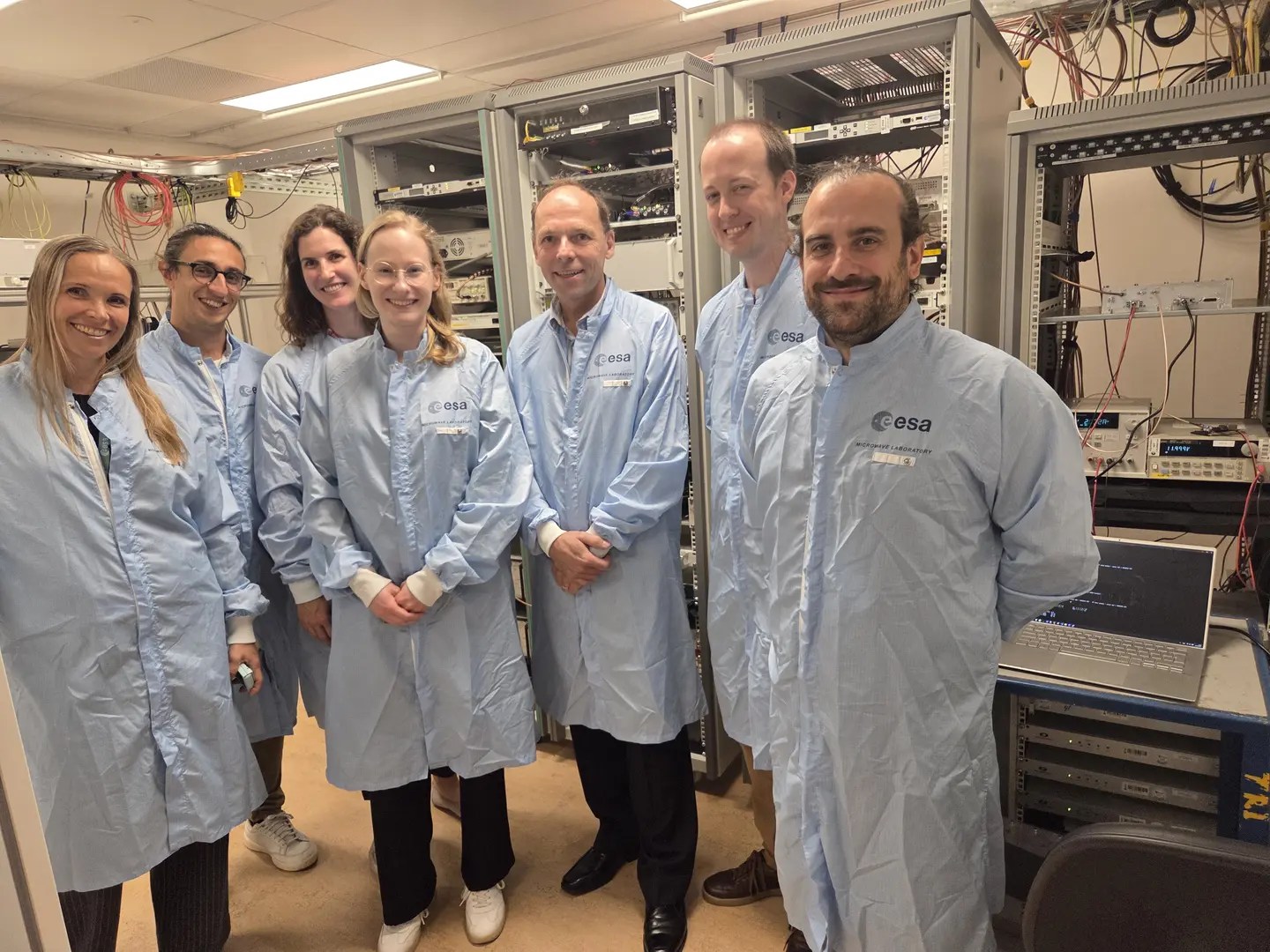
A reference frame must remain stable over extended observation periods. ESA therefore enhanced the spacecraft platform, avionics, electrical hardware, structure, software and instrument redundancy. Additional resilience can help a spacecraft recover from faults rather than prematurely ending its scientific work. The redesign also increases spacecraft size and complexity, requiring updated integration and testing procedures from prime contractor OHB Italia. ESA has not published a new mass or a quantified reliability improvement in its November announcement.
What millimeter accuracy actually means
The mission’s reference-frame targets do not mean that ordinary smartphones will locate themselves within one millimeter. Consumer navigation accuracy remains subject to atmospheric effects, receiver hardware, reflected signals and satellite geometry. The improved reference frame instead provides a more consistent foundation for surveying, precise satellite orbits and long-term observations such as sea-level change.
For scale, a systematic reference-frame drift of 0.1 millimeter per year would accumulate to one millimeter over ten years if it remained constant. The calculation illustrates the difference between accuracy and stability, rather than forecasting the error of any individual instrument.
The next engineering milestone
Genesis must still pass its Critical Design Review, integration, environmental qualification and eventual in-orbit calibration. Related BitcoinVersus.Tech reports examine satellite attitude control, precision optical timing, quantum navigation without GPS and India’s NavIC satellite engineering. Better instruments matter, but Genesis illustrates why calibration and long-term system reliability are equally important to scientific measurement.
Featured image: ESA – D. Ducros, preliminary spacecraft illustration under the ESA Standard Licence. The rendering predates the November redesign.
We volunteer daily to ensure the credibility of the information on this platform is Verifiably True. If you would like to support to help further secure the integrity of our research initiative, please scan the QR code below.



Leave a Reply