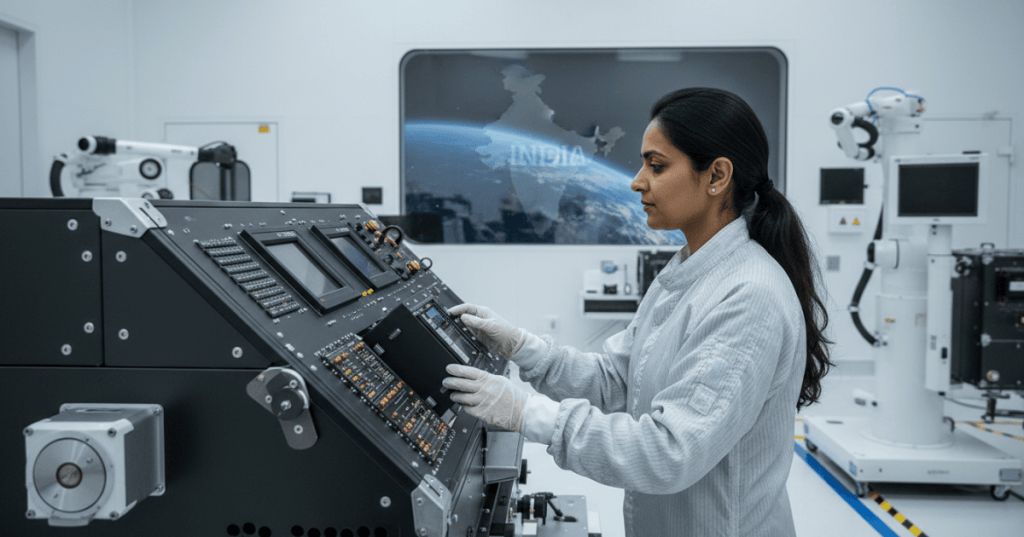
India’s space agency ISRO reported on October 31, 2026, that its new NVS-03 navigation satellite successfully completed its first orbit-raising burn after launching from Sriharikota on October 30. The spacecraft is healthy, but it has not yet reached its planned operating orbit, a distinction that matters after a propulsion-system problem stranded the preceding NVS-02 mission.
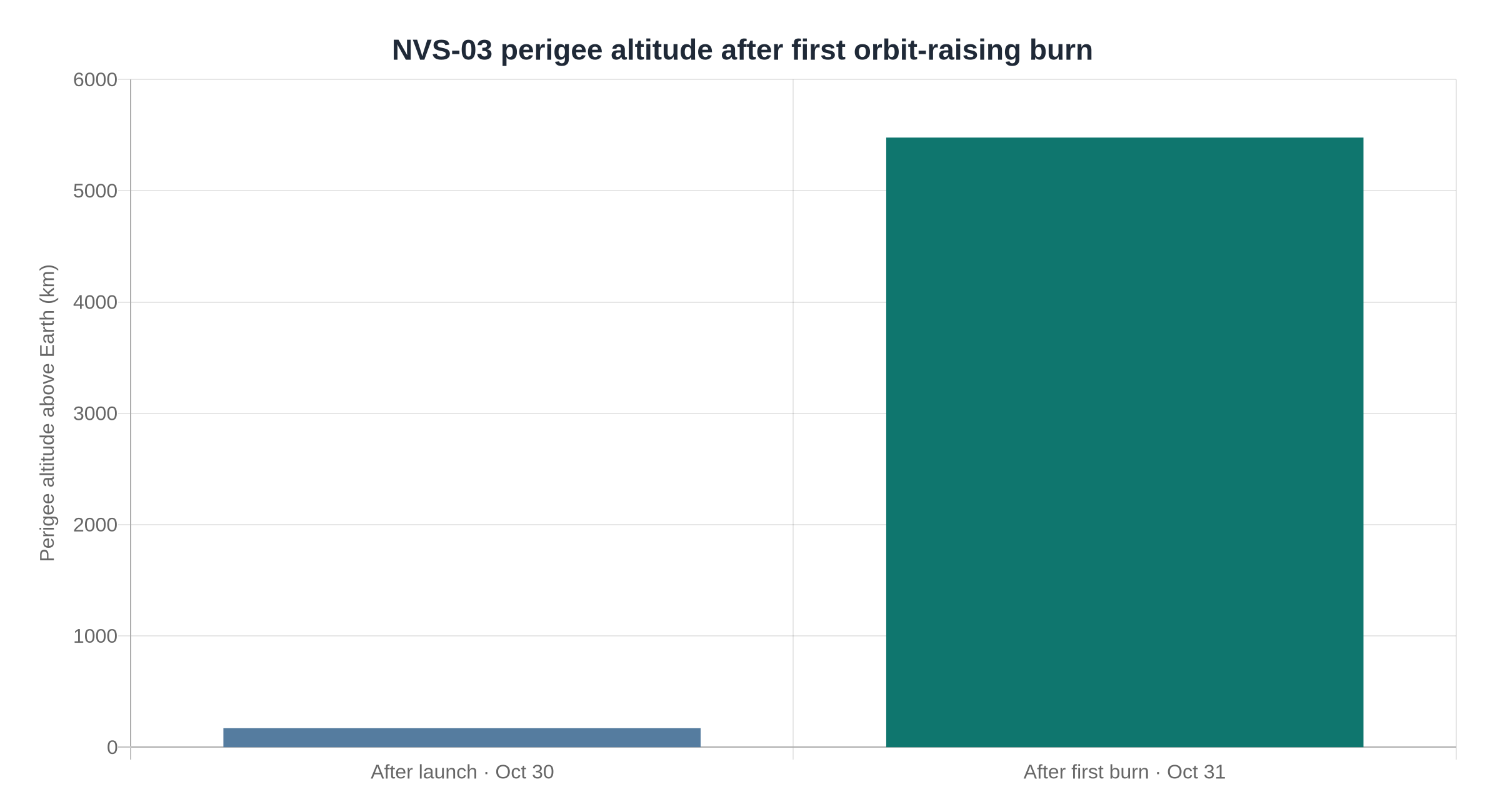
The GSLV-F18 mission, India’s 20th flight of the Geosynchronous Satellite Launch Vehicle, placed NVS-03 into an elliptical transfer orbit from Satish Dhawan Space Centre’s Second Launch Pad. ISRO reports an initial orbit of 170.3 × 38,080 kilometers. This confirms successful launch-vehicle injection, not full commissioning of navigation service.
One successful burn, more to come
During the October 31 maneuver, the satellite’s liquid apogee motor burned for 2,174.8 seconds. ISRO estimates its subsequent orbit at 5,477.6 × 37,833.4 kilometers. Further burns are planned to reach a geosynchronous slot at 111.75 degrees east. Until those operations and in-orbit checks finish, NVS-03 remains a spacecraft in deployment rather than a confirmed operational navigation satellite.
That distinction has a recent precedent. NVS-02 reached transfer orbit in January 2025 but failed to execute orbit raising. An ISRO committee later traced the likely cause to a connector contact failure that prevented a drive signal from reaching the oxidizer-line pyrotechnic valve. The agency said it adopted corrective reliability measures for later missions; successful NVS-03 maneuvering is encouraging, not proof that all deployment risks have vanished.
What NavIC gains
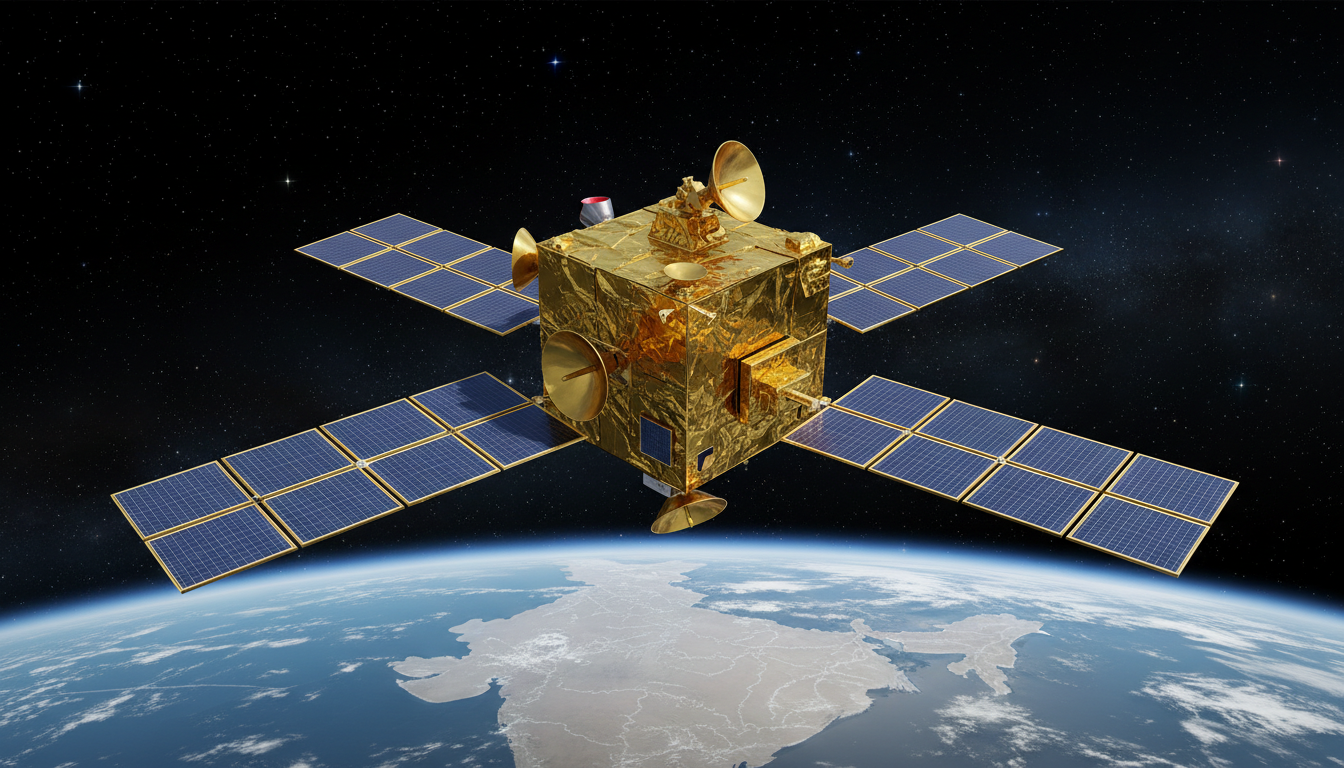
NVS-03 is the third satellite in India’s next-generation NavIC series, intended to maintain regional positioning, navigation and timing services. ISRO says it carries an Indian-built atomic clock alongside other clocks, and transmits L1 in addition to L5 and S-band navigation signals. Coverage is designed for India and an area extending about 1,500 kilometers beyond its borders.
The new L1 signal could make receiver integration easier because L1 is widely used in satellite-navigation systems. Accurate clock signals also support the precision described in our GPS time-server story and network synchronization explainer. However, an extra satellite does not automatically translate to improved accuracy for every smartphone.
The satellite also highlights why space-qualified electronics and reliable in-orbit propulsion matter after liftoff. ISRO’s official site provides a 57-second launch and onboard-camera video, but continued orbital updates—not launch imagery—will determine when NVS-03 is ready to deliver service.
The next milestones are additional orbit adjustments, system checkout and an explicit operational-status announcement. ISRO has confirmed the first burn and normal spacecraft health; a completed geosynchronous insertion or commissioned NavIC service remains a future event.
BitcoinVersus.Tech
BitcoinVersus.Tech Editor’s Note: We volunteer daily to ensure the credibility of the information on this platform is Verifiably True. If you would like to support our work and help further secure the integrity of our research initiatives, please scan the QR code below to donate 5,000 sats. For best results, scan the QR code from a laptop or larger screen.

Bitcoin address: 3C9o19EH5HSiwEPyCTmEKzxhNCbo2X6TTb. On a phone, open the QR image on another screen or copy and verify the address in your wallet before sending.
BitcoinVersus.tech is not a financial advisor. This media platform reports on financial subjects purely for informational purposes.


Leave a Reply